

Argentina’s Trending Moment — and the Real Story Behind It
Argentina’s extra-time escape against Switzerland lit up the global feed, reviving a familiar motif: this team lives to suffer and finds a way late. That narrative is romantic and real — but it’s also incomplete. Tactically speaking, Argentina aren’t improvising survival; they’re engineering it. Our view: the Albiceleste’s box midfield, coupled with a ruthlessly drilled rest defense and game-state mastery, is precisely why they bend but rarely break. And that same platform is custom-built to pull apart England’s double pivot in the semi-final.
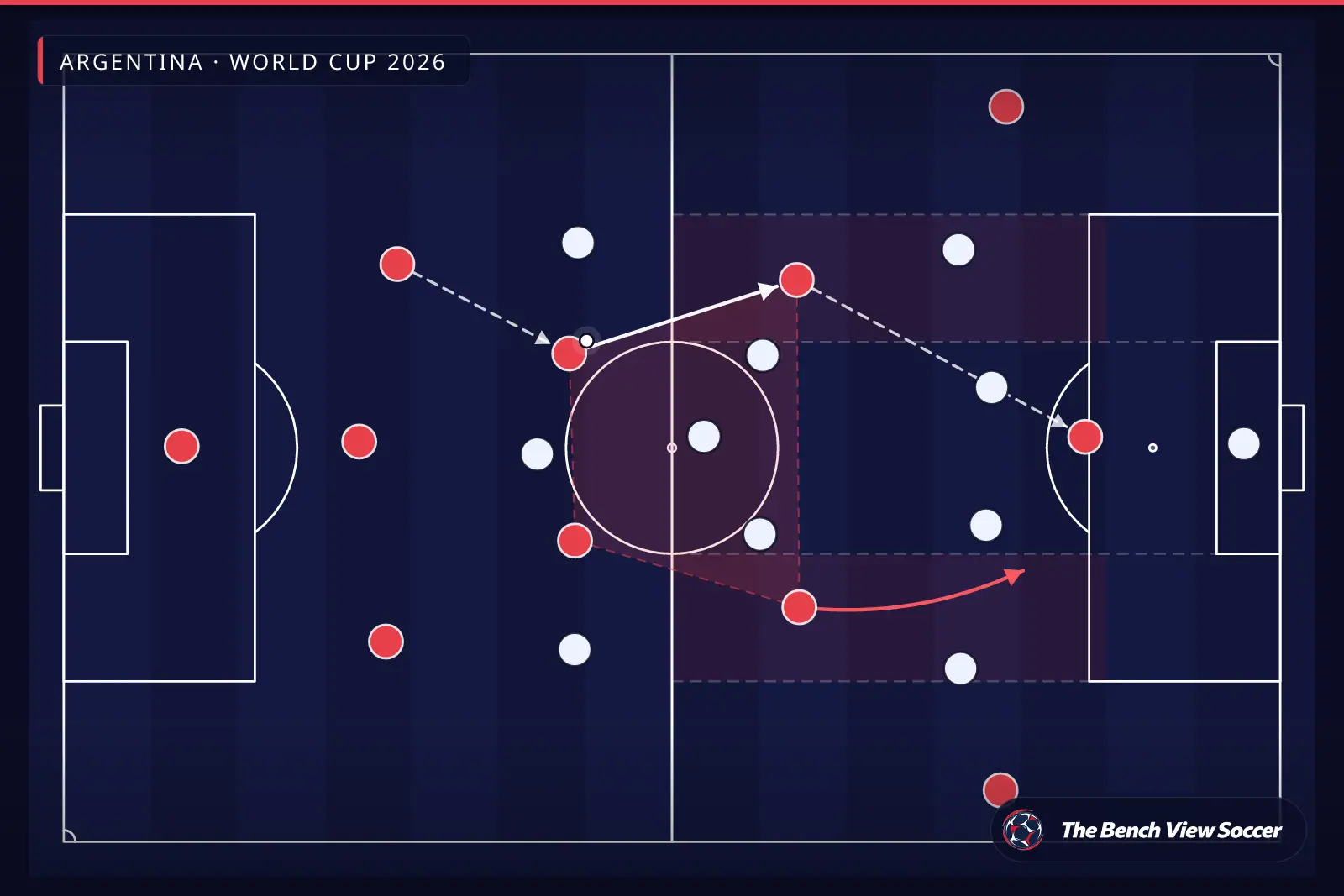
Strip out the noise and look at the recurrent sequences. Argentina place two deep organisers and two high interiors into a compact square around the middle lane, then oscillate between a 2-3-5 and 3-2-5 in possession. They pull you into congestion, then find velocity on the outside or through a third-man in the half-space. When momentum shifts, they downshift cleanly into a mid-block 4-4-2, refusing to concede the middle. That is not survival by accident; it’s a choreography that thrives in suffering’s margins.
The Engine: How Argentina’s Box Midfield Actually Works
Structure first: 2-3-5 to 3-2-5 — and why it matters
Argentina’s ball-possession scheme stabilises games that otherwise turn frantic at World Cup pace. In their standard build, the centre-backs spread modestly, with one full-back (often the left) tucking into the first line to form a temporary back three, while the opposite full-back (often the right) positions as a conservative underlap option. Ahead, a single pivot (frequently a technician comfortable receiving under pressure) pairs with a shuttler (the team’s pacesetter, the press-resistance bodyguard) to anchor the base of the box. The top of the box is occupied by a free-8 and a hybrid forward-creator — one of them commonly drifting into the right half-space to link with the nine.
Why a box? Because it multiplies central reference points. When opponents set out with a double pivot, that pair becomes outnumbered two-versus-four in the most dangerous area without the wingers collapsing. Collapse, and Argentina sprint into the vacated channels with the outer forwards; hold shape, and they bounce third-man passes between the box’s corners until a lane opens.
The profound effect is psychological as much as structural. By supplying repeat, clean central receptions, Argentina keep rhythm in the most volatile phase of knockout football — the middle third under live pressure. It’s how they turn games into patient chess rather than coin flips.
Third-man runs and overload-to-isolate
Argentina’s best attacking actions don’t initially look like chances. They look like a crowd scene in the middle third. That’s deliberate. The box overloads the centre to attract numbers, then a forward peels to isolate the far-side full-back. The triggers are familiar if you’ve been watching this team for years:
- The near-side wide forward pins the last line, stopping defenders from stepping in.
- The high interior drops a half-step to receive to feet, not on the shoulder.
- The deep playmaker opens his body to the far side, inviting pressure.
- Then, the third man — often the nine or the opposite interior — darts diagonally behind the distracted pivot line.
It’s in those micro-movements that Argentina create what coaches call positional superiority. The pass into the run doesn’t need to be perfect; the run has already compromised the defensive shape.
We saw those patterns recur against Switzerland’s compact block. Even when the Swiss active press pushed Argentina into the channels, the box provided quick wall-passes to escape. And here’s the hinge point for England: if the double pivot tracks the dropping interior, the space behind isn’t policed by a centre-back — it’s policed by grass. That’s where Argentina’s half-space diagonals become terminal.
The Suffering Phase: Game-State Mastery by Design
Rest defense that strangles transition
Argentina’s on-ball elegance matters only because their off-ball architecture earns it time. The moment they progress into the attacking half, the team clicks into a compact 3+2 rest defense: three behind the ball (two centre-backs plus a full-back) and two stoppers stationed to collapse on any counter-launch. Those two sit in the diagonals of the centre circle, precisely the lanes England’s transition carriers — think Bellingham’s surge or a winger’s first touch inside — love to attack.
Against Switzerland, that rest defense repeatedly killed off two-pass counters before they became box entries. You could clock the sequences: Argentina overcommit numbers to the right touchline to draw a turnover; the Swiss clip a clearance into the vacated middle; and immediately two Argentine stoppers crash the space, one to win contact and one to take the second ball. “Suffering” on television looks like last-ditch defending. In the data and on the edit suite, it’s actually a pre-placed safety net doing its job.
Touchline pressing traps vs wingback build
Switzerland’s 3-4-2-1 (or 5-2-3 out of possession) presents a specific problem: wingbacks that can break the first line and overload wide spaces. Argentina’s counter was to set traps on the near touchline — forcing play into a predictable corridor where the sideline acts as an extra defender. The trio of near-side wide forward, near-side full-back, and the shuttling midfielder formed a cage: angle the pass outward, jump the return, then punch the turnover into the half-space runner.
This is crucial because England can mirror the same threat through their wingers. If Argentina can set the cage early on the side of England’s less secure full-back and block the out-ball to the pivot with the near interior’s curved run, they neutralise the first domino of England’s attacking rhythm.
Historical Context: Argentina’s Evolving Control Room
Context matters. Argentina have been refining this script for over a decade of tournament football.
- Sabella’s 2014 vintage defended deep and sprinted through a narrow channel, built on compactness and surgical counters. The midfield diamond of that era resembled a proto-box without consistent high-side links.
- The 2021 Copa América and 2022 World Cup sides under Scaloni added ball security and better rest defense, with shuttlers balancing Messi’s free role and full-backs choosing moments, not bombarding by default.
- The 2026 iteration pairs those lessons with the confidence to camp higher for longer stretches. The difference today isn’t individual brilliance (though the captain’s gravity still bends games); it’s the team’s learned ability to meter tempo, compress transitions, and patiently grow a win.
When people say Argentina “find a way,” they’re describing a control room that has been upgraded, tested, and pressure-hardened. The extra-time edge isn’t mystique; it’s marginal gains delivered by repeatable mechanics.
Cause and Effect: Why Switzerland Couldn’t Tilt the Field
Switzerland’s mid-block vs Argentina’s central square
Switzerland aimed to deny verticality by massing a mid-block and shadowing central lanes with their boxy double pivot. It’s a sound plan against most teams. Against a true box midfield, it can become a trap. The Swiss pivots ended up shuttling laterally to close passing angles at the sides of the square, which opened the middle of the square to a wall pass from the deep playmaker to the high interior and out again to the far full-back. The net effect: Switzerland ran shapely routes without ever applying true pressure on the central receiver; Argentina advanced the ball without visible risk.
Pressing triggers that shifted momentum
The second lever was timing. Argentina have become expert at spotting fatigue windows and choosing that moment to raise field height and frequency of traps. It’s not random that their best counter-presses tend to arrive in the last 15 minutes of regulation and in extra-time: the forwards save sprints for those phases; the midfield compresses with shorter gaps; the back line steps up two metres to squeeze the bounce pass. The result is repeat short-field possessions. To the neutral, it looks like “finally getting on top.” To a coach, it looks like a planned sprint phase — a sprint they can execute because the rest defense kept their legs fresh while others chased transitions for 90 minutes.
England Preview: Where the Semi-Final Will Be Won
The double pivot problem England must solve
England’s spine relies on a double pivot to anchor their shape while freeing a roaming 10 — often Bellingham — and a centre-forward who drops to knit play. Against Argentina’s box, that pivot will be simultaneously outnumbered and baited into impossible decisions: step to the high interior and you expose the nine’s diagonal; sit, and the deep playmaker dictates without pressure.
Argentina’s best ploy will be to devote the box’s top-right corner to the England 6’s blindside. That positions a creator in the right half-space, between centre-back and pivot, and forces England’s back line to compress horizontally. Once compressed, Argentina can either:
- Punch a straight-line slip to the nine attacking the channel; or
- Disguise a switch to the far-side winger, who is already in a foot race with the opposite full-back.
The geometry is cruel for double pivots who defend space more than people. England’s pivots are elite defenders, but they can’t be in two places at once. The box creates the “two places.”
Bellingham and Kane: The hinge and the decoy
England’s two biggest problem-solvers are simultaneously Argentina’s two biggest defensive puzzles. Bellingham bursts through lines with and without the ball; Kane manipulates centre-backs by dropping deep. Argentina’s answer is to keep the 3+2 rest defense compact and personal: centre-backs are discouraged from following Kane across the threshold; the base of the box (the two stoppers) must sit where Bellingham wants to receive, not where he is. If Argentina treat Kane’s drop as a decoy and protect the lane behind it, they reduce England’s best patterns to harmless wall passes in front of the block.
Look for a subtle tell: when England’s 10 roams left to create triangles with the winger, Argentina’s near-side stopper has to hold his nerve — delay, don’t dive — while the near full-back stays tight enough to intercept the third-man run. This timing duel will swing the match’s momentum in phases. If Argentina win more of those duels than they lose, England will find width but little depth.
How Argentina Can Attack England’s Double Pivot
Right-side overloads to access the left-side switch
Argentina’s right-sided overloads are a feature, not a bug. By obsessively drawing traffic to the right half-space — with the free-8, the nine, and the right full-back tucked — they make the left winger the actual finisher of moves. It’s overload-to-isolate by design. England’s right flanker (often tasked to stretch and threaten in behind) is not always the most reliable backward sprinter. If Argentina can pin England’s right-back with alternating runs by the nine and the high interior, the far-side switch becomes a runway for an untracked runner.
That switch can be played fast (a diagonal on the deck) or staged (two passes to the deep playmaker, then lofted). Either way, the cue is identical: wait for the England pivot to shade toward the ball and for the far-side winger to start the run early, not late. Early movement wins the race even against equal or superior athletes.
Underlaps vs overlaps: the full-back decision tree
Argentina have generally preferred underlaps from the right full-back to crosses from the endline. The logic is twofold: underlaps keep three players behind the ball for rest defense, and they produce cut-backs from the half-space, which analytics and common sense both love. Against England, the right full-back’s underlap will carry extra value because England’s near pivot must decide whether to follow the interior or plug the lane. If he follows, Argentina get the cut-back; if he plugs, Argentina’s high 8 becomes free at the top of the box for a first-time shot or wall pass. It’s a rigged game tree when the timing is right.
Set-pieces: the quiet Argentine edge
Knockout ties are often decided by dead balls, especially when two teams cancel each other in open play. Argentina have leaned into near-post screens and second-phase shots from zone 14. England’s set-piece defence has improved across cycles, but the core weakness remains the second contact — the half-clearance that lands just outside the area. Argentina structure for that moment by leaving a shooter unmarked at the D and a runner on the back-post blindside. Expect them to crowd the keeper’s sightline with legal screens and target knockdowns rather than clean headers. It’s not glamorous, but it’s decisive.
Selection Questions That Change the Flow
The nine’s profile: Alvarez’s mobility vs a penalty-box 9
The identity of Argentina’s centre-forward will tilt the matchup. A mobile nine who presses, drops and spins can rip England’s double pivot apart by forcing them to track movement horizontally. His pressing also activates the high-phase traps late in games. Conversely, a pure box striker pins England’s centre-backs, which can be useful if Argentina want to cross early and often but risks reducing those precious third-man runs. The coaching staff have toggled this lever before; they’ll do it again based on game state.
The left-back’s role: tuck or run?
On the left, the full-back decision is about the first build-out line. A tucking left-back forms a back three that calms the press and protects against England’s direct counters. A more adventurous left-back stretches England’s right-back and can create the far-post isolation Argentina want. The conservative choice pairs better with a late sprint phase; the aggressive choice chases an early lead. Given the semi-final context, expect conservation early, aggression late.
The captain’s gravity and the minutes game
Every discussion of Argentina’s attack begins and ends with the captain’s gravity. Tactically, his deeper starting points are now an asset for the box: he can act as the upper-right or upper-left corner, drafting defenders with him. The risk is the minutes game — World Cups compress recovery windows. Argentina have built mechanisms to preserve his legs: off-ball, the shape becomes a 4-4-2 with the captain resting up top; in possession, others carry the volume running while he stores energy for the sprints that matter. It’s a marginal-gains approach masked as romance.
Film-Room Sequences That Explain the Plan
There are recurring “Argentina sequences” that, tactically speaking, will define the semi-final regardless of who starts. Coaches will look for these beats:
- A right-half-space wall-pass triangle to escape a trap, flowing into a far-side switch that releases the left winger. The entire point is to move England’s double pivot three steps to the ball, not one.
- A mid-block turnover on the right touchline where the shuttler and right full-back close the gate; the captain receives between the lines, then bounces a first-time pass into the nine’s diagonal run. It’s a five-second action that turns defense into a shot.
- A late-phase counter-press where Argentina’s nearest three sprint forward, the back line holds a daring line on the centre circle, and the second ball drops to an Argentine interior for a shot from the D. This is where “suffer-ball” reveals itself as planned aggression.
Counterargument: Why England Might Break the Box
The fairest pushback is straightforward: England’s athletic range and individual shot creation can blow up the best-laid structures. If England pin Argentina’s right full-back, dominate second balls around the D, and get Bellingham stepping through the first tackle consistently, the box’s numerical edge may never stabilise. A second concern is set-pieces at the other end; if England generate volume, Argentina’s preference for zonal-first marking can leave back-post runners open on delayed curves. And if England’s centre-forward drags the centre-backs too deep, the rest defense becomes stretched vertically — the one state Argentina hate most.
Those scenarios are real and possible. But they demand that England win three or four simultaneous duels — on first contact, second contact, and the first pass after regain — repeatedly. In our view, Argentina’s design stacks the deck such that winning one of those duels isn’t enough to tilt the match; England would need sustained superiority across phases.
What It Means for the Semi-Final and Beyond
Argentina’s extra-time surge against Switzerland shouldn’t be read as fragility. It’s a team that understands clock, space, and risk like a seasoned chess player — conserving queen moves until the board thins. Against England, the opening will likely be measured, the middle throttle controlled, and the late push unapologetic. Expect alternating spells of sterile control and sudden punches — the exact ratio that wrecks a double pivot’s rhythm and patience.
Zooming out, the bigger picture for Argentina is not just one semi-final. It’s a template robust enough to carry a generation shift. The box midfield doesn’t depend on one profile to work; it depends on complementary rhythms. As younger legs cycle in and elder statesmen select their moments, the system still makes sense — a sustainable identity that travels from tournament to tournament.
The Verdict
Argentina don’t survive chaos; they manufacture calm — and from that calm, they spring the single burst that flips knockout games. The box midfield is their lever, the rest defense their safety harness, and against England’s double pivot, the geometry is on their side.
Tactically speaking, this semi-final will be decided in the half-spaces near the England 6s, not the penalty areas. If Argentina win the right to stand still in the middle — to receive, bounce, and switch without panic — England’s spine will be stretched past its comfort. If they don’t, England’s runners will turn the match into a track meet and test Argentina’s last line. Our call: Argentina’s structure is built for exactly this opponent. In a World Cup defined by moments, they’ve built themselves a machine that produces them on demand.
The Bench View app
Don’t just read football — train it
Everything you read here, turned into training you can follow step by step.
Physical training at home
AI daily sessions adapted to your level and position. No equipment needed.
Tactical training courses
Step-by-step courses on positioning, pressing, build-up and decision making.
- 7 days free
- No commitment
- Cancel anytime
Free account: 2 physical sessions + the first tactical course. PRO: 7-day free trial — cancel before day 8 and you pay nothing.
More Analysis
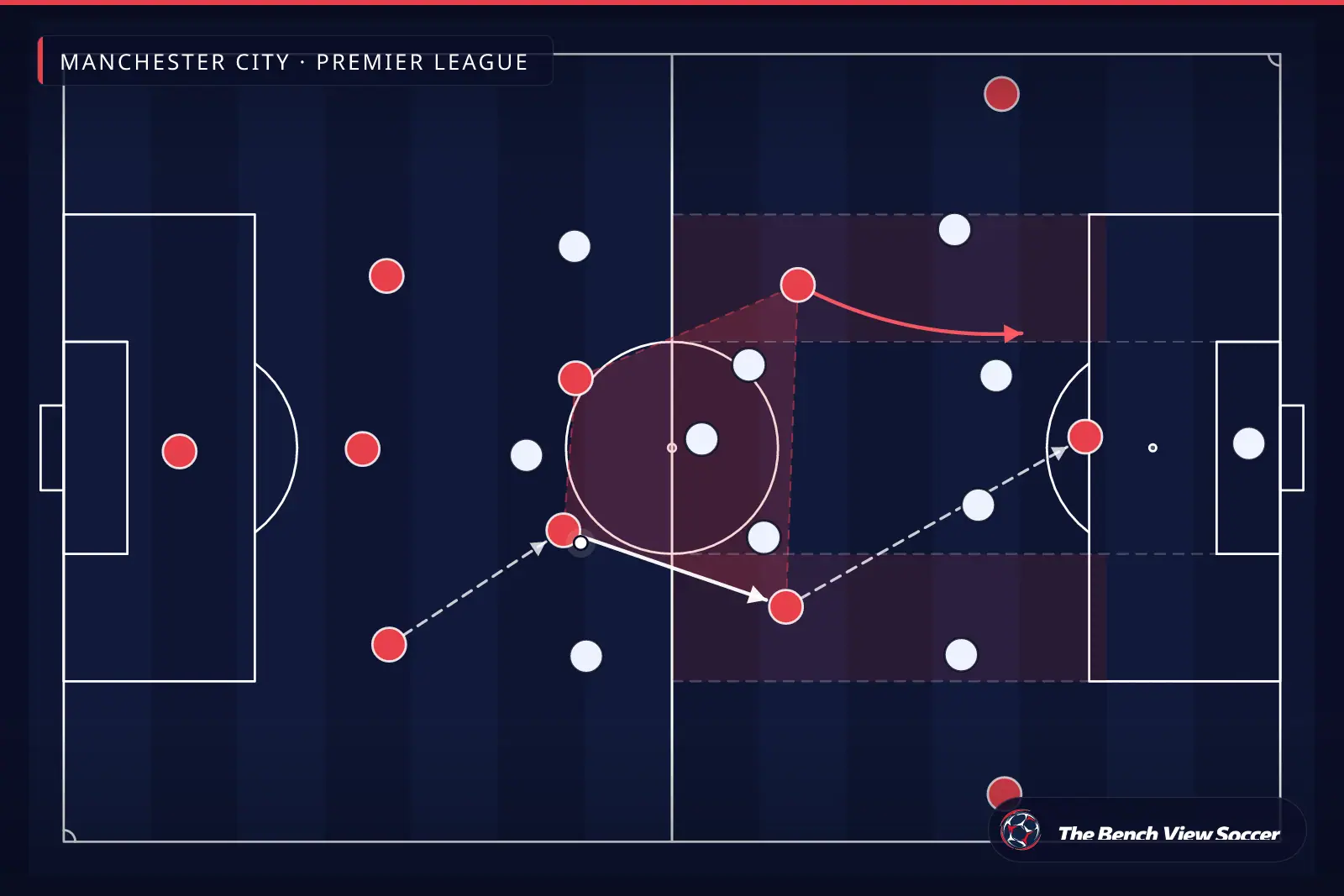
Manchester City: How Gakpo Unlocks Pep’s Left Half-Space Engine
August 25, 2026
Liverpool's Inverted Trent Unlocks Salah vs Newcastle's Press
August 23, 2026
Liverpool's Salah Succession Plan: How Yankuba Minteh Fits Slot
August 21, 2026
Hull City, Fulham and Ipswich: How the Box Midfield Changes Them
August 18, 2026