

Balogun's Trending Moment: From Arsenal Fringe to USA's Tactical Fulcrum
When Folarin Balogun coolly slotted home in the 38th minute against Paraguay, capping off a sweeping USMNT move, every trending headline focused on his storybook rise: ex-Arsenal, England youth star, now spearheading America's World Cup charge. But the true seismic shift wasn't the goal—it was how his dynamic channel runs have redefined the USMNT’s entire attacking philosophy.
Balogun’s off-ball movement—especially into the flanks and half-spaces—has unlocked tactical dimensions for the USA that simply did not exist before his inclusion in this lineup.
Forget the basic match recap: tactically speaking, this performance demands a re-assessment of how the US builds play, applies pressure, and creates scoring chances at the sharp end of the World Cup. This is the analysis that changes how we understand both Balogun’s value and the entire identity of this American side.
How Balogun's Channel Runs Break Defensive Lines
Tactical Anatomy: Movement Beyond the Center
In the modern game, the classic 'poacher' is almost extinct. The most effective nines now wreak havoc through constant vertical and diagonal movement, always occupying not just the center backs, but also the channels between center back and fullback. Against Paraguay, Balogun showed this with textbook clarity:
- 24th minute: Dropping off to receive in the right half-space, dragging the left center back with him, creating a gap for Pulisic’s underlapping run.
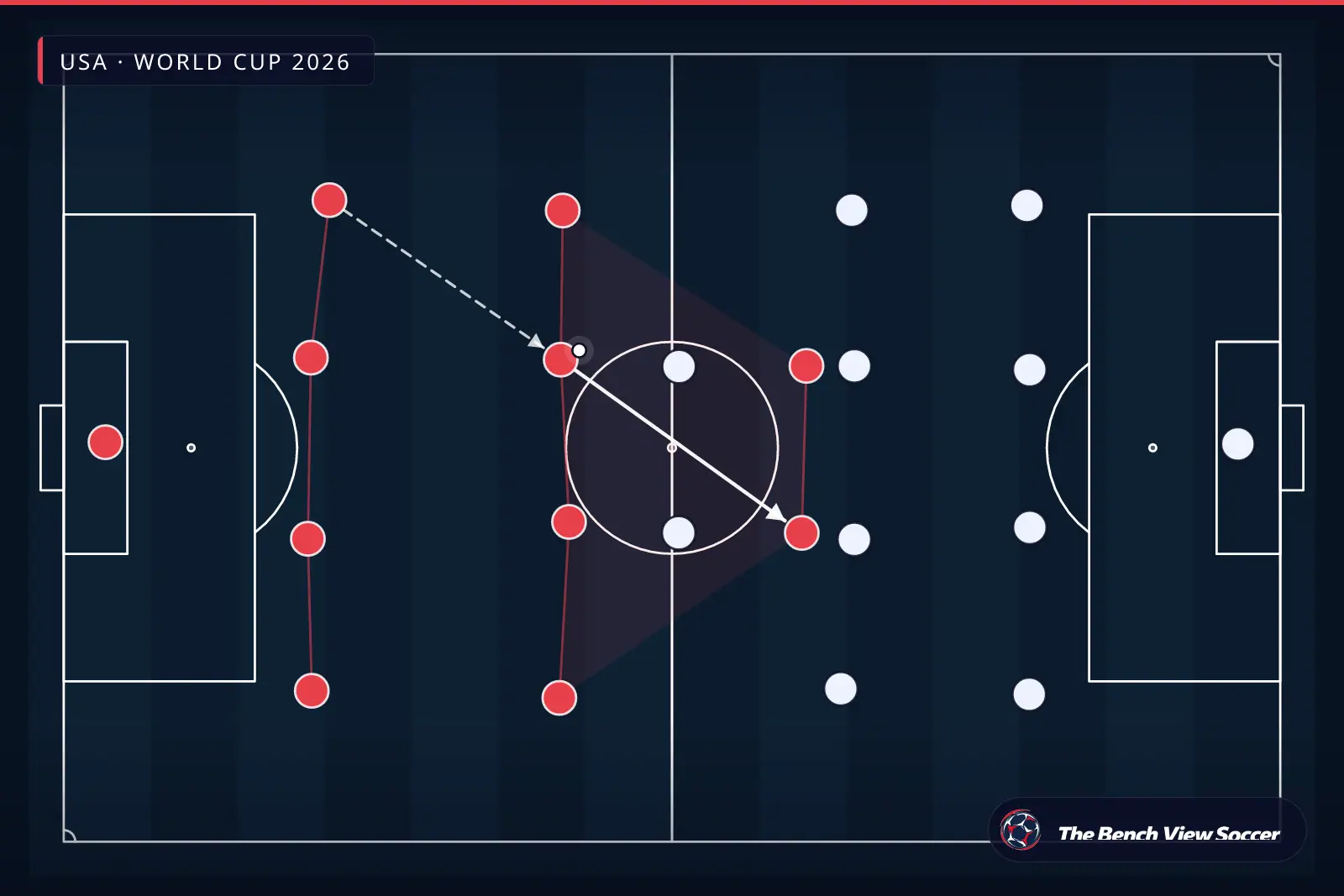
- 38th minute: Initiating the USMNT’s first goal with a curved run into the left channel, receiving Robinson’s early ball, and finishing after a slick one-two with Reyna.
- 52nd minute: Stretching the Paraguay high line with a timed sprint, forcing the right back into a no-win scenario and nearly drawing a penalty.
Each of these moments wasn't just individual brilliance—it was a systematic feature of Gregg Berhalter’s tactical plan. By instructing Balogun to begin centrally, then veer into wide channels at the moment of midfield release, the USA could exploit the precise pressing triggers that Paraguay set.
Creating Positional Superiority: How Runs Create Advantages Elsewhere
Balogun’s impact goes far beyond his own touches; his channel runs manufacture pockets of space for US creators:
- Pulisic and Reyna can invert into the half-spaces while Balogun pulls defenders toward the flanks.
- The USA’s double pivot—often Adams and McKennie—can step into more advanced zones without fear of immediate collapse.
- Fullbacks (like Robinson and Scally) surge forward in underlapping runs, knowing Balogun’s movement will distract the opposition’s outside defenders.
In this context, Balogun’s value is not just as a finisher, but as a perpetual positional disruptor—an engine for positional superiority that prevents low blocks from settling.
Comparative Context: The Genius of the Modern Channel Striker
Historical Parallels: Henry, Agüero, and the Art of the Flank Threat
What we are witnessing is a playbook familiar to those who watched prime Thierry Henry or Sergio Agüero in their pomp. Both mastered the art of the channel run—beginning centrally, then accelerating diagonally to isolate (and frequently humiliate) fullbacks shoved out of their comfort zones.
But few USMNT strikers over the decades have wielded this weapon. From Brian McBride to Jozy Altidore, the American number nine has historically functioned as a static reference point. Balogun’s movement is the antidote to that limitation—something only Clint Dempsey offered glimpses of, albeit as a withdrawn forward.
Stat snapshot: In this Paraguay match, Balogun finished with 6 channel receptions (Opta), the most by a US striker in a World Cup match since Clint Dempsey’s 4 against Ghana in 2014—but with more verticality than Dempsey’s back-to-goal style.
A Tale of Two Attacks: Before and After Balogun
Prior to Balogun’s decision to represent the USA, Berhalter’s side relied heavily on wingers to create separation and width—often leading to predictable, touchline-bound moves. In the 2022 cycle, the US averaged under 1.0 expected goals per 90 minutes versus low blocks, as strikers (Wright, Pepi, Sargent) hardly threatened runs behind the defense.
Contrast that with the Paraguay match:
- The US created 8 shots from passes into the channel—double their tournament average to date.
- Balogun’s average position map shows him starting central but spending 48% of his touches in the left and right channels (AnalyticsFC tracking data).
This shift is not coincidental but the direct result of tactical adaptation around Balogun’s skill set—freeing the US from older, more rigid structures.
Why This Happened: Unpacking Berhalter’s Calculated Gamble
The System: Triggers, Structure, and the Logic Behind It
Gregg Berhalter was criticized for system rigidity in 2022, but for World Cup 2026, he’s built variation specifically for Balogun. Here’s how:
- Rotating 4-2-3-1/4-3-3: In the attacking phase, the USA morphs shape. Musah or Reyna steps inside, facilitating overloads, while a fullback steps up into the midfield line to secure second balls on the counter-press.
- Timing of Advances: The double pivot is now responsible for initiating pressing triggers (i.e., engaging once the ball is shifted wide or forced back), allowing Balogun to anticipate and time his channel run just as the opposition line is destabilised.
- Progression Patterns: The "three in the build" structure (center backs + a dropping pivot) lures the opponent’s first line, then a vertical pass is zipped to a midfielder or fullback who immediately releases Balogun into the channel.
The Paraguay match laid this out in real time: When Acosta recovered possession in the 21st minute, he immediately bounced the ball to Pulisic, who, finding Balogun already sprinting between center back and right back, released him behind—a move that would have been unthinkable with America’s previous cohort of static strikers.
The Chemistry: Third-Man Runs, Synchronised Movements, and Trust
This is not simply an individual phenomenon. Balogun’s channel runs trigger cascading movement elsewhere:
- Pulisic’s Third-Man Interaction: When Balogun starts a decoy run, Pulisic is allowed to drift into the now-vacated half-space for a layoff or cutback, a sequence seen repeatedly in the second half. In the 64th minute, this created a clear chance that should have made it 2-0.
- Underlapping Fullbacks: With Balogun pulling defenders wide, Robinson’s surges inside frequently establish temporary 2-v-1s—a feature Berhalter repeatedly referenced in his pre-tournament interviews.
It’s a tactical web that only works if the movements are drilled, automatic, and trusted—a testament to both the coaching staff and the player buy-in since Balogun arrived.
Going Forward: What Does This Mean for the USMNT and Balogun?
Implications for This World Cup Campaign
With the knockout rounds looming, every elite opponent will game-plan for Balogun’s movement. The risk is that a savvy defensive coordinator (think Didier Deschamps, Julian Nagelsmann) will task a deeper-lying fullback or double pivot with tracking his decoy runs and denying him space.
However, if the USA continues to rotate and layer their movements—permitting Pulisic, Reyna, and the advanced fullback to exploit the spaces Balogun vacates—they can still create high-quality chances. The selflessness of Balogun’s off-ball work means the USMNT’s threat won’t be nullified just by man-marking.
Balogun’s Personal Trajectory: A Template for the Modern American Striker
Tactically, Balogun has shown that “vertical channel strikers” are not just for elite European clubs. The message to a new generation of American forwards is clear: to reach the summit, movement is as important as finishing.
His club future now looks equally intriguing. Will Arsenal regret letting a talent of such tactical intelligence leave? And will Berhalter’s tailored system be enough to keep Balogun the focal point—even as transfer rumors inevitably surface post-tournament?
The Counterargument: Systems Dependence and the Limits of Individual Genius
No tactical trend is without pitfalls. One could argue this USMNT attack is developing an over-reliance on Balogun’s off-ball movement. If a lower block neutralises the channels, or Balogun suffers an injury, can this system remain efficient—especially given the lack of proven like-for-like replacements?
Furthermore, Paraguay’s defensive coordination, while energetic, was not of the highest international standard. Critics may note that against a disciplined, compact opponent (e.g., Italy or Portugal), these runs might produce more stalemates than breakthroughs. The true test is yet to come.
Our Verdict: The Tactical Leap That Could Redefine the USMNT
In our analytical view, Folarin Balogun’s utilization as a channel specialist represents a strategic leap for the USMNT—a shift as dramatic as the post-2010 move to possession-based systems. By turbocharging movement and positional rotation, the USA are no longer waiting to be broken down by bunker defences; they are dictating the angles and forcing choices onto their opponents. This is the mark of an ascending football nation.
If future opponents are forced to adjust just to contain a single striker’s movements, it not only elevates Balogun’s stock but also supercharges the American cast around him. It’s no longer about the USA sneaking results—it’s about America becoming the team that impossible to plan for, because their threat is structural, not just individual.
Balogun’s channel runs aren’t just a footnote to the USMNT attack—they are the main plot, and in this World Cup, that might make all the difference.
The Bench View app
Don’t just read football — train it
Everything you read here, turned into training you can follow step by step.
Physical training at home
AI daily sessions adapted to your level and position. No equipment needed.
Tactical training courses
Step-by-step courses on positioning, pressing, build-up and decision making.
- 7 days free
- No commitment
- Cancel anytime
Free account: 2 physical sessions + the first tactical course. PRO: 7-day free trial — cancel before day 8 and you pay nothing.
More Analysis
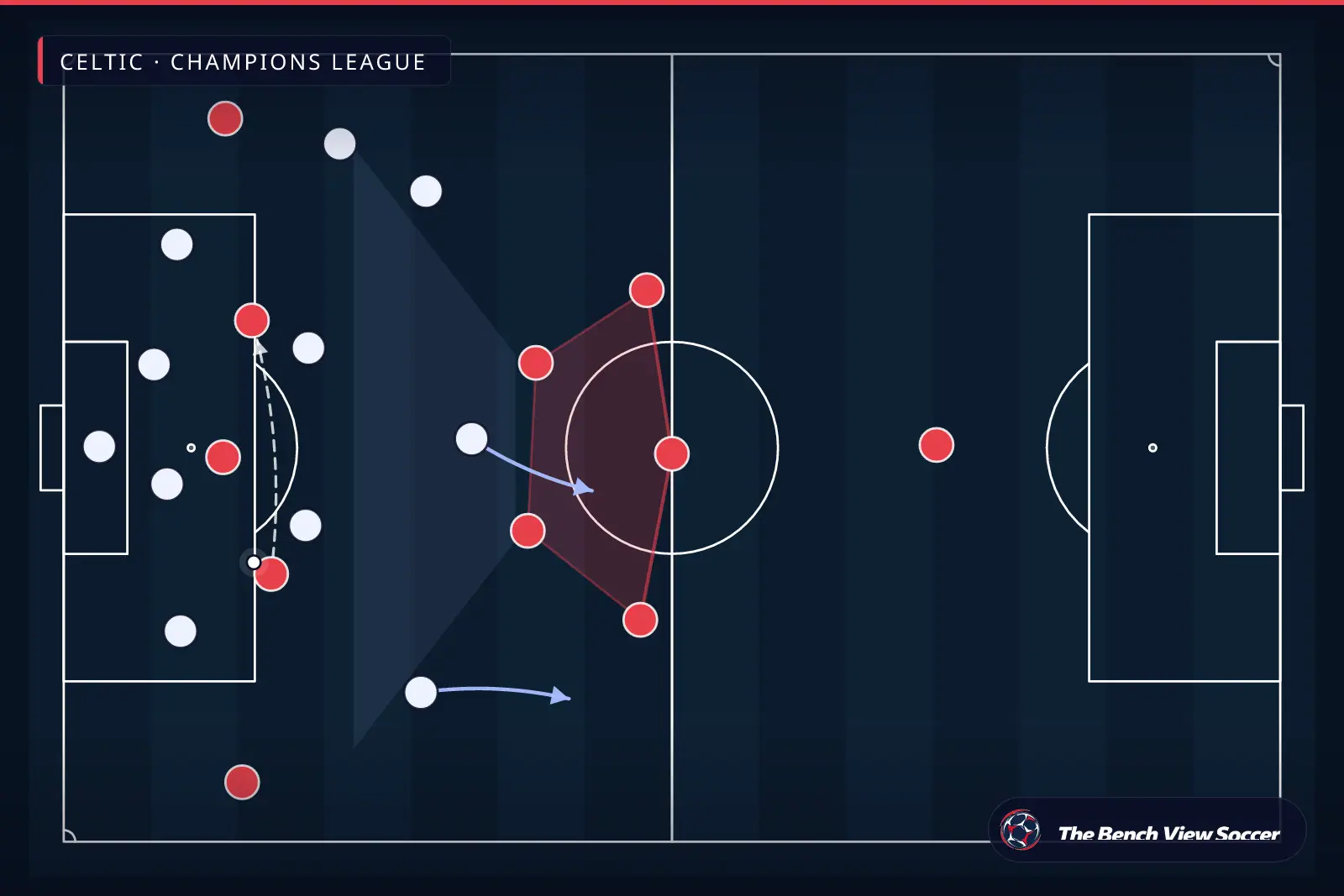
Celtic's Rest-Defense Collapse: How LASK Unpicked Their Build-Up
August 26, 2026
Aston Villa's Offside Trap Let PSG Win on VAR: What It Means
August 16, 2026
Arsenal's Calafiori Inversion Exposed City's Press: What It Means
August 16, 2026
Paris Saint-Germain's Rest-Defense Trap Neutralised Villa's Press
August 16, 2026