Introduction
Transfers are not only about buying “better players”; they are a manager’s fastest tool to change a team’s tactical identity. When Manchester United try to rebuild their midfield in recent seasons under Erik ten Hag, the club’s recruitment choices directly shape how the team wants to play in the Premier League, the UEFA Champions League, and domestic cups. For fans watching European football, this is a useful case study because midfield is where tactics become visible: how the team builds attacks from the goalkeeper, how it presses after losing the ball, and how it protects the defence during transitions (the chaotic moments right after possession changes). United’s midfield story is also a story of trade-offs. A new signing can improve ball progression but weaken defensive security, or add pressing energy but reduce creativity. Ten Hag’s idea is clear: play through pressure, control games with the ball, and win it back quickly. But identity depends on the profile of the midfielders, not just the coach’s plan. That is why transfers like Casemiro, Christian Eriksen, Mason Mount, and Sofyan Amrabat are not random names—they are tactical choices meant to move the team from reactive football toward a more proactive, possession-and-press model.
How It Works
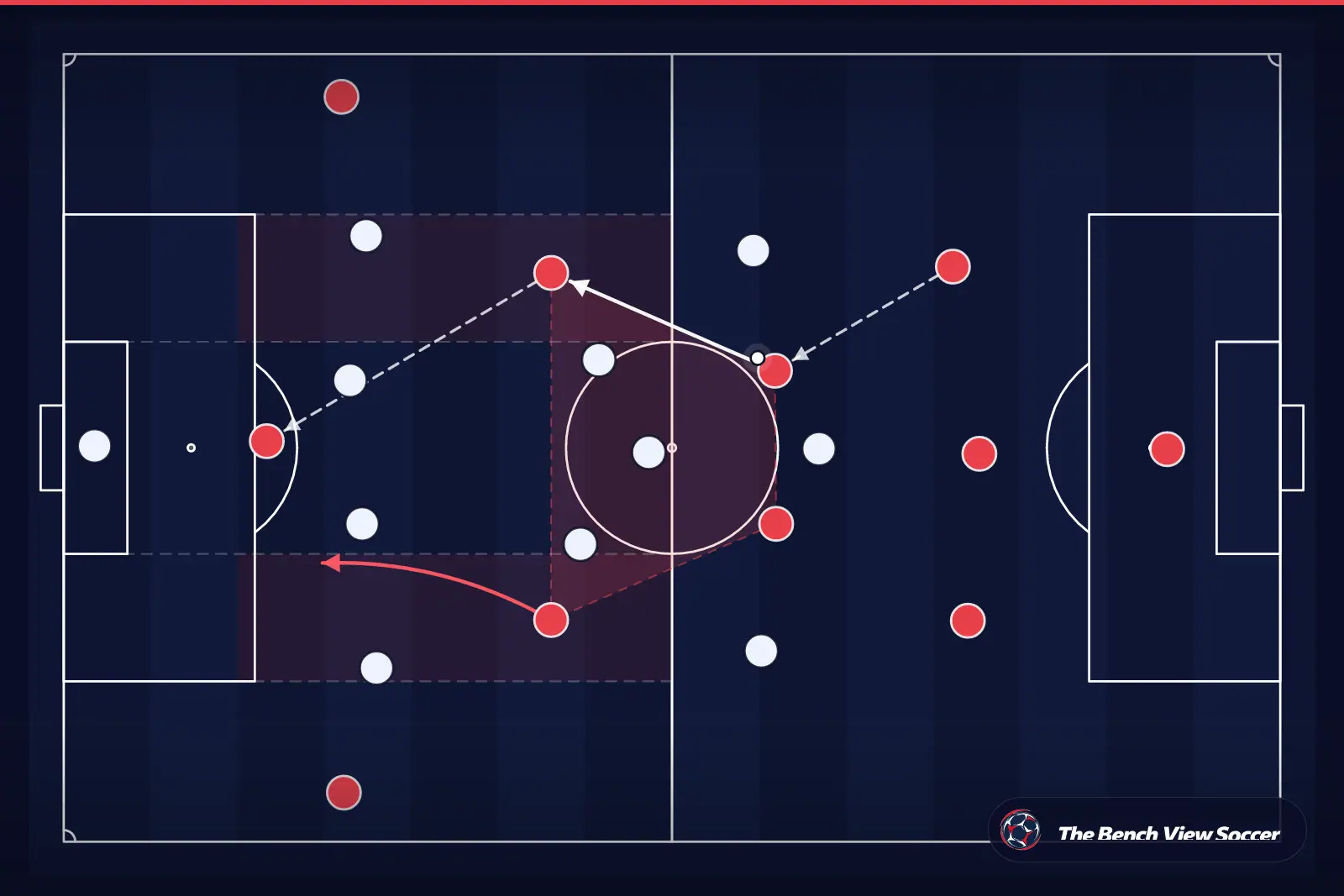
A “midfield rebuild” changes three core phases: build-up (starting attacks), chance creation (attacking structure), and rest defence (how you stay protected while attacking). Ten Hag’s Manchester United want to build with a clear first pass, often from André Onana, and invite pressure to open space behind it. For that, the midfield needs at least one player who can receive with a man close to him, turn, and pass forward. Christian Eriksen helps this because he plays early forward passes and can drop near the centre-backs to form a temporary back three. Casemiro changes the identity in a different way: he is a specialist ball-winner who reads danger and stops counter-attacks, allowing full-backs to go higher. However, the same transfers create new problems if the roles do not fit together. When United use Eriksen and Casemiro as a pair, the team can progress the ball, but it can also struggle to cover big spaces if the press is bypassed. This is where the “No. 8” and “No. 6” roles matter. A No. 6 is the deepest midfielder who protects the defence and starts moves; a No. 8 connects play, supports pressing, and arrives higher. Mason Mount is bought as a high-energy No. 8/10 hybrid who presses aggressively and attacks the box, but if he plays too high and too early, Casemiro is left alone against counters. Sofyan Amrabat, used at times as a No. 6, offers ball circulation and duels, but he is not a single magic solution because the whole structure—centre-backs’ spacing, full-backs’ positioning, and winger tracking—must support the midfield. The tactical identity shifts when transfers change: (1) how many players are behind the ball while attacking, (2) how quickly United can play through pressure, and (3) whether the team presses as a connected unit or as individuals.
Match Examples
The clearest match examples come from the 2022-23 and 2023-24 seasons, when personnel changes force tactical adjustments. In the Premier League 2022-23 match Manchester United 2–1 Manchester City (January 2023), United’s midfield approach is pragmatic: Casemiro anchors, Fred often jumps out to press Kevin De Bruyne, and Bruno Fernandes plays as the main connector for counters. United’s identity here is not long possession; it is compact defending plus fast vertical attacks. The midfield recruitment (Casemiro) makes this possible because he protects space in front of the centre-backs while the rest of the team focuses on transitions. In the UEFA Europa League 2022-23 tie against FC Barcelona at Old Trafford (second leg, 2–1), the midfield battle shows how roles change within the same squad. Eriksen’s ability to find passes between lines helps United escape pressure, while Casemiro’s positioning discourages Barcelona’s central combinations. The key tactical lesson is that a transfer can enable a new “exit route” under pressure—United are not forced to go long every time. Then, in the Premier League 2023-24 match Manchester United 3–2 Nottingham Forest (August 2023), the Mount–Casemiro–Bruno combination creates a very open game. United attack with many players ahead of the ball, and when they lose it, the distances are large. Forest find counters through the middle because Casemiro gets isolated. This match becomes an educational example of why “midfield balance” is not a buzzword: it is about spacing and timing. Finally, in the UEFA Champions League 2023-24 group match Bayern Munich 4–3 Manchester United (September 2023), United’s midfield suffers when defensive transitions are not controlled. Even when United create chances, the lack of stable rest defence allows Bayern to attack quickly through central areas. These matches show how transfers do not just upgrade talent; they reshape spacing, pressing behaviour, and risk tolerance.
Related Concepts & Skills
Training Implications
For coaches, academies, and even amateur teams in India trying to learn from Manchester United’s midfield rebuild, the biggest takeaway is that player profiles must match a clear structure. Start with three actionable training blocks. (1) Build-up under pressure: set a 6v4 rondo (possession game) with two centre-backs, a goalkeeper, a No. 6, and two full-backs versus four pressers. The goal is to play into a “target” midfielder between lines within 10 seconds. Coach the No. 6 to scan before receiving (head checks), open his body to face forward, and use one-touch lay-offs when pressed. Progression: add a rule that the first pass from the goalkeeper must be short, forcing calm decision-making. (2) Defensive transition and rest defence: run an 8v8+2 neutrals game where the attacking team must keep at least two players plus the No. 6 behind the ball. When possession is lost, the nearest three players must counter-press for five seconds (try to win it back immediately), while the No. 6 drops to block the central lane. This teaches the Mount/Bruno-type “jump to press” energy, but inside a structure that protects the middle. (3) Midfield balance patterns: create a patterned exercise with a back four, a No. 6, two No. 8s, and three forwards against a mid-block. Coach one No. 8 to support build-up (showing for the ball) while the other No. 8 attacks the half-space. Rotate roles every five minutes so players learn the difference between a connector and a runner. Use simple metrics: count how many times you lose the ball and concede a counter through the centre. If that number is high, reduce risk by holding one No. 8 deeper or delaying full-back overlap. These drills make the “transfer lesson” practical: identity comes from spacing, timing, and role clarity, not just effort.
The Bench View app
Don’t just read football — train it
Everything you read here, turned into training you can follow step by step.
Physical training at home
AI daily sessions adapted to your level and position. No equipment needed.
Tactical training courses
Step-by-step courses on positioning, pressing, build-up and decision making.
- 7 days free
- No commitment
- Cancel anytime
Free account: 2 physical sessions + the first tactical course. PRO: 7-day free trial — cancel before day 8 and you pay nothing.