

The moment—and the claim: Mbappé’s Golden Boot chase is really a geometry problem
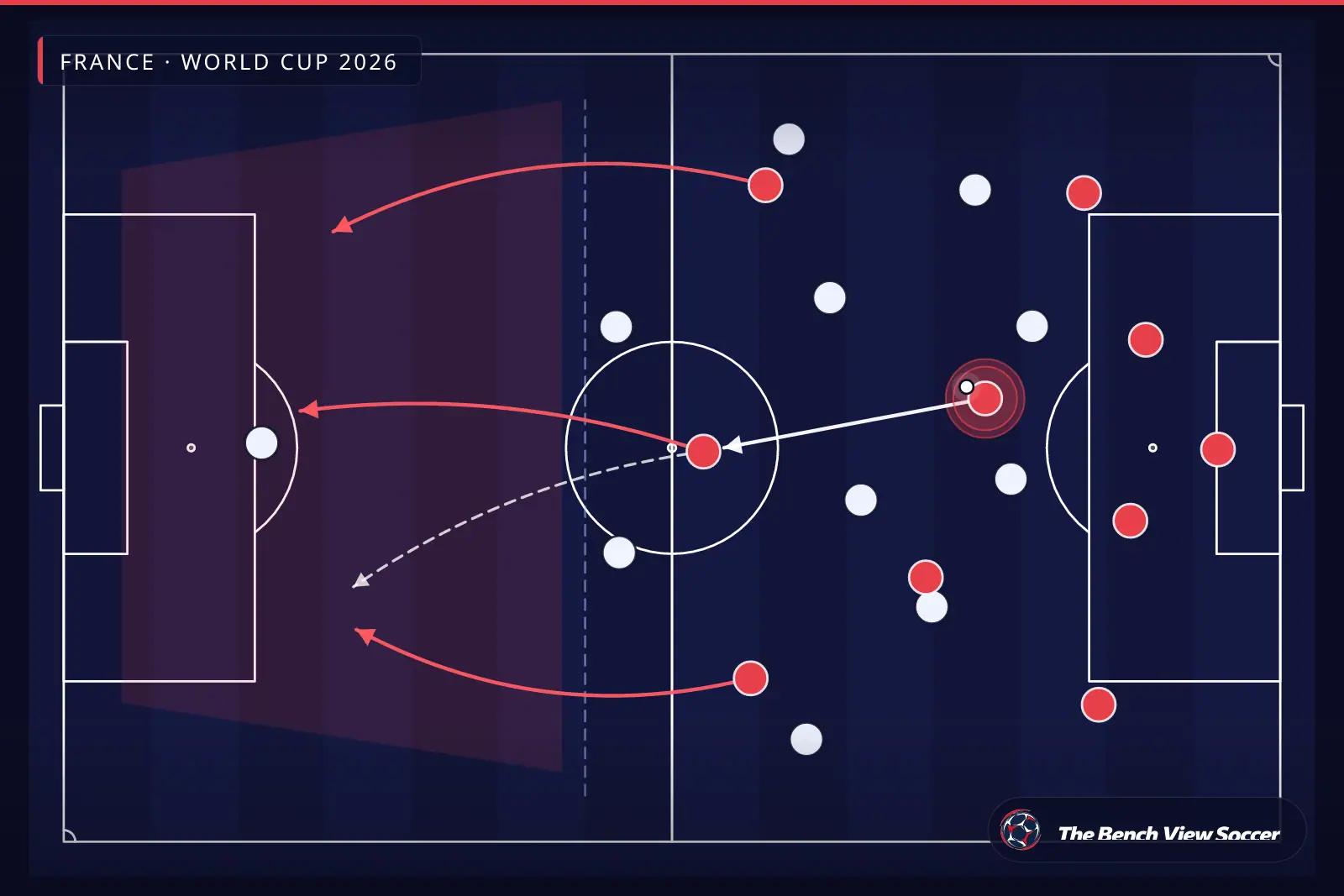
The trending storyline says “Kylian Mbappé is hungry for the Golden Boot.” The tactical truth, in our view, is bolder: France have built a repeatable, tournament-proof scoring machine around the inside-left half-space, and Mbappé is the cutting edge of it. If the Golden Boot is a race, Mbappé’s lane isn’t the center-forward lane—it’s the left channel runway that turns transition scraps into high-value shots at industrial scale.
Analytically speaking, Mbappé’s Golden Boot case rests less on volume than on France’s ability to manufacture the same two yard spaces—again and again—in the inside-left channel where his finishing profile is at its most ruthless.
That’s the angle the headlines miss. This isn’t a general “he’s the best attacker in the world” argument. It’s a specific, replicable pattern: the timing of Mbappé’s acceleration from the left half-space, the role of the striker as a wall and the left-back as a decoy, and the way Antoine Griezmann (or France’s right-sided playmaker of the day) tilts the pitch to isolate the one defender Mbappé wants—then takes him for a ride.
The geometry of Mbappé’s goalscoring: why the inside-left matters
Mbappé has three primary finishing angles when he attacks from the left half-space:
- The across-goal curler: the classic whip to the far post when the defender gives him inside space. It’s low backlift, late reveal, and it uses the backpedaling center-back as a screen. He doesn’t need a big window—just a sliver, created by a micro feint to the endline.
- The near-post slap: the punch through the keeper’s near-post hip when the defender overprotects the far corner. This finish punishes conservative block shapes, and it works because Mbappé’s approach angle is straight enough to keep the keeper guessing until the plant step.
- The cutback smash: the third-man run into the penalty spot off a low cross from the overlapping full-back. Defenses collapse on the baseline runner; Mbappé’s delayed arrive-and-strike is the payoff.
Each of these is tied to a specific sequence of pressing triggers, support positions, and decoy movements that France have been refining since 2018. It’s not about whether he starts as a 9 or a left winger. It’s about getting his first touch facing goal, between the outside shoulder of the left center-back and the inside shoulder of the left back—where the recovery angles are terrible and the keeper’s set position is late.
How France manufacture the runway
Tactically speaking, Deschamps’ France (and the continuity of its principles across cycles) maximize Mbappé by creating a resource: positional superiority in the left half-space. The steps are simple, repeatable, and devastating when executed at speed.
1) Right-side bait, left-side punch
France often begin their best moves away from Mbappé. The right winger holds chalk-on-boots width; the right-sided central midfielder or Griezmann drops into the right half-space to draw a press. The first trigger is a horizontal bait. Center-backs shuffle; a full-back cheats. When the opposition’s six shows even half a body toward the ball, the diagonal lane opens.
The release is either a raked switch from the right eight, a flat drive from the right center-back, or a wall-pass cascade: right winger into Griezmann, bounced into the striker, laid off to the advancing left-back—a third-man action that isolates Mbappé versus a single defender, with the back line sliding a beat too late.
2) The striker’s gravity—pin and wall
France rarely ask the striker to be the primary finisher when Mbappé is heating up. The No. 9’s job, tactically, is twofold: pin the near-side center-back on the last line, and be the wall player for a first-time set. It’s thankless and brilliant. When the nine receives a vertical feed between the lines and plays back into midfield, the defense compresses centrally—creating a vacuum into which Mbappé sprints.
On the rare occasions the center-back follows the striker into midfield, Mbappé gets what he lives for: a race channel against a full-back with open grass behind. Either way, the geometry favors the left-sided thrust.
3) Theo (or the LB) as the decoy
France’s left-back—think Theo Hernández or anyone with similar athletic release—runs the overlap even if the pass rarely comes. That overlap pins the opposition right-back’s hips to the touchline. It matters because it removes the defender’s favorite tool against Mbappé: the inside-out shepherding angle. With the full-back hips turned, Mbappé’s cutback route is live and his far-post curler becomes a 50–50 read for the keeper.
4) The first touch that breaks the line
Mbappé’s technical superpower isn’t just speed. It’s how the first touch deposits the ball one stride ahead and toward goal, never square, making the defender commit at a bad angle. The touch-choice decides the finish-angle two steps early. It’s why his shot quality looks effortless: he’s scripted the keeper’s set before the defense has even fully shifted.
Transition supremacy: why France want chaos on their left
France can batter set defenses with these patterns, but their golden stretch comes from structured chaos—the “win, find, and fly” sequence:
- Win: A right-sided press funnels the opponent’s exit pass into the middle third. The moment the ball carrier takes a backwards or square touch—a classic pressing trigger—France’s right eight jumps. Turnover forced.
- Find: The recovery pass skips the obvious safety option and goes diagonally to Mbappé early, often via Griezmann as a one-touch distributor. The key here is tempo: two touches are too many; it needs to be one. Every extra touch invites the opponent’s six to screen the lane.
- Fly: Mbappé receives while already accelerating. The striker takes a near-post run to pin. The left-back is already on the outside track. Now the menu opens: curler, slap, or cutback smash.
This transition ecosystem is why, tactically speaking, Mbappé is more reliable than a classic penalty-box nine in tournament football. Knockout games tighten. Space disappears between lines. But there is always a phase of disorder—after a clearance, a ricochet, a half-win in midfield—when the opposition is stretched. France are built to identify that micro-phase and deliver the ball to the exact square meter where Mbappé is unguardable.
Historical context: this pattern didn’t appear overnight
The seeds were there in 2018. Mbappé’s breakout against Argentina illustrated the principle: win the middle, burst the channel, finish with minimal backlift. By 2022, the mechanism matured. France leaned into the left-sided dominance even more, and Mbappé’s scoring profile reflected it—arrivals at the far post, diagonals off baseline runners, and lightning diagonals when Griezmann found him across the field. He finished as Golden Boot winner in 2022—tactically, a validation of France’s channel-first approach.
What’s striking is how France’s build-up conservatism and forward explosiveness coexist. Earlier champions leaned on a reference nine or a creative 10 to accumulate shots. France have a reference channel. It’s a different path to the same mountain, and Mbappé is the climber who makes it viable at the highest gradient.
Why this works now: personnel, roles, and repeatability
There are four systemic reasons this left-channel supremacy is even more potent at World Cup 2026:
- Balanced right side: Whether it’s Griezmann or a right-sided midfielder comfortable receiving under pressure, France have a stabilizer who can survive a press and ping diagonals. That’s vital. Without it, Mbappé receives too late and too wide.
- Athletic left-back: The overlap decoy can’t be optional. The moment the full-back stops threatening, the opponent’s right-back can sit on Mbappé’s inside shoulder. France’s selection logic has consistently prioritized left-backs who can sprint into space repeatedly.
- A selfless nine: France’s coaches prize the wall-and-pin profile. The nine may not fill highlight reels, but he determines the shape of the last line and the quality of Mbappé’s touches.
- Press-scheme synergy: The team’s pressing structure shunts turnovers to the right middle third, where the diagonal switch to Mbappé is shortest and hardest to anticipate. It’s design, not coincidence.
Comparative lens: Mbappé vs Messi vs Haaland—different roads to the same award
The Golden Boot lens tends to flatten difference. But the routes are distinct:
- Messi’s path: deeper starting positions, more touches in central lanes, and creative orchestration that can spike shot volume through combination play and penalties. If Argentina control games, Messi’s touches accumulate and his team craft high-quality central shots for him and others. His finishing is elite, but the shot geography is more varied and often contingent on positional play depth.
- Haaland’s path: classic penalty-box menace off crosses and through-balls, with devastating runs across the front of center-backs. He thrives when his side sustain waves of pressure and deliver repeat cutbacks. If Norway were at this tournament level as favorites, his xG accumulation would be terrifying; in tournament football, variability of service can lower his ceiling but raise his floor—he needs fewer touches to threaten.
- Mbappé’s path: a high share of shots originating from the left half-space and transition scenarios. His Golden Boot viability increases with every additional transition per match. Whereas Messi can thrive in control and Haaland in siege, Mbappé thrives in a controlled storm created by France’s asymmetry.
Tactically speaking, this matters for opponents. Deny Mbappé transition windows and his shot volume drops. Deny Messi central progression and he will still create set-piece and penalty value. Deny Haaland service from wide overloads and he may go quiet, but one diagonal and he’s through. Three different problems; all three brutal to solve.
Micro-patterns to watch in the group stage
In our view, the following micro-details will tell us whether the Golden Boot arc is live for Mbappé:
The depth of his starting position out of possession
When Mbappé defends as a high left forward (double-shouldering the full-back and near-side center-back), France regain and he is immediately goal-facing. If he drops deeper into a flat midfield line, his first touch is more likely to be back-to-goal and outside the box—dampening shot quality. Watch where he stands on France’s mid-block line; it predicts his next two minutes of threat.
The timing of France’s right-to-left switch
If the switch happens before the opponent can rotate the six, Mbappé isolates a full-back. If it comes late, the double-team arrives and France must reset. Griezmann’s body orientation is the tell: open hips, one touch, diagonal laser—Mbappé shot. Closed hips, two touches, recycle—threat diluted.
The striker’s angles on first contact
When the nine takes first contact on his back foot and plays around the corner, Mbappé’s lane is lit. When the nine drops too deep or receives square, the line compresses and Mbappé is forced wide. It’s not highlight-grabbing, but these millisecond details separate a two-shot half from a six-shot half for France’s No. 10.
Low block vs high line: two different Mbappés
We tend to discuss “Mbappé the sprinter,” but tournament football often gives him two distinct defensive looks and he adapts accordingly.
Versus low blocks: the patience play
Against compact fives, Mbappé’s best moments come from underlapping runs off the nine’s outside shoulder. Instead of hugging the touchline, he dismounts into the half-space and arrives unmarked for cutbacks. The key enabler is the left-back providing constant width to keep the wing-back honest. In these matches, Mbappé’s shot volume may look modest, but chance quality stays high because he’s shooting from the penalty spot corridor.
Versus high lines: the accelerator
Against bold presses, Mbappé’s role is to threaten depth every time France beat the first line. Even decoy sprints matter: they stretch the second line and create short diagonals for midfielders. Here, the nine’s pin is less important than the early pass timing. A half-second delay turns a 1v1 into a 1v2. France’s best chance at a multi-goal Mbappé performance comes when opponents insist on holding 40 meters of space at their back.
Set-pieces and penalties: marginal gains that decide boots
The Golden Boot is often decided at the margins. Set-pieces and spot-kicks matter. If Mbappé remains on primary penalty duty for France, that adds high-probability goals to his ledger without compromising the left-channel plan. On corners, France subtly tailor routines to create a second ball at the far post for Mbappé to attack from the blindside—he doesn’t need to win the first header; he needs the drop in his corridor. Those are 0.20–0.30 xG chances in crowded boxes that don’t require elaborate playmaking. Tournament football is cruel; successful teams squeeze every drop from these phases.
Cause and effect: why France chose this ecosystem
In tactical terms, a national team can’t train club-level automatisms across an 11-month season. So you choose patterns that are simple, robust, and fit your best player. France’s left-channel ecosystem is deliberately minimalist: three predictable roles (wall nine, decoy LB, diagonal distributor), one predictable outlet (Mbappé), and a devastating set of two-touch solutions. The cause—design simplicity—produces the effect: repeatable high-value shots under stress.
This also inoculates France against game-state variability. Leading? The left channel is an out-ball that flips the field and buys territory. Trailing? It creates the exact shots teams find hardest to prevent under pressure. Tied and tense at 65’? It forces the opponent’s back line to defend running backward, where mistakes multiply.
What opponents can actually do about it
There’s no silver bullet, but there are pragmatic suppressors:
- Tilted back five: Play a back five that overweights the right side. This lets the right wing-back press France’s left-back without abandoning Mbappé. The right center-back can then step into the half-space to meet Mbappé early.
- Reverse the pressing trigger: Don’t jump on France’s right-sided bait. Force them to recycle through the left center-back, where the diagonal into Mbappé is longer and easier to read. If you must press, spring from the middle, not from your right touchline, to keep your six pinned in Mbappé’s lane.
- Inside-out doubling: Show Mbappé the touchline on his first touch, then meet him with a recovering six on his second. The double must be synchronized; if the six arrives late, Mbappé cuts inside and shoots through the screen.
- Tactical fouls early: Interrupt the first two transitions. Tournament refereeing often allows one “tactical” stop in midfield before cards. Use it on Mbappé’s supply line, not on Mbappé himself—he’ll spin you and win a dangerous free-kick.
Even then, it’s risk management, not eradication. Mbappé needs only a couple of clean looks to turn a game—or a Golden Boot race.
Counterargument: Is France too balanced for a Golden Boot binge?
The most compelling counterview is that France’s evolved attack now spreads goals more widely. With multiple elite outlets, Mbappé could trade some shot volume for gravity—pulling defenders so others finish the moves. Add in the possibility that opponents will stack their right side to suffocate his channel, and you have a scenario where France cruise but Mbappé’s tally stays human. There’s also the calendar reality: tournament scheduling compresses recovery, and if France emphasize game management over chaos creation, transitions drop—so do Mbappé’s chances.
It’s a fair case. Tactically, if the nine becomes more of a co-finisher than a wall, or if the left-back doesn’t threaten the overlap, the ecosystem loses force multipliers. Mbappé still creates danger, but the conveyor belt is slower and narrower. The Golden Boot often rewards systems that shamelessly feed one finisher. France sometimes choose the higher-percentage team play over the star’s volume. If that balance tilts too far, Mbappé’s individual ceiling dips.
Rebuttal: balance is the fuel, not the brake
In our analysis, however, France’s “balance” is what makes Mbappé’s volumes sustainable. Because others can and do score, opponents can’t commit triple coverage to Mbappé without hemorrhaging elsewhere. The very act of respecting France’s right side and central runners keeps Mbappé’s corridor open for the moments that matter. Golden Boots aren’t won by twelve low-xG snatches; they’re won by eight to ten high-xG shots across five to seven games. France’s current ecology is optimized to generate precisely that—high-quality, low-friction looks in the left channel, not scattergun efforts from everywhere.
What it means for France’s tournament trajectory
If Mbappé’s left-channel machine hums, France get three compounding benefits:
- Lower stress game states: Early goals from that corridor tilt matches into France-friendly scripts—opponents must come out, creating even more transition chances and safer control phases.
- Defensive economy: Playing with a lead means France can sit in a compact mid-block more often, conserving energy and minimizing exposure to turnovers in bad zones.
- Bench leverage: With games under control, France can rotate late without sacrificing structure; the roles are clear, the patterns stable. Fresh legs on the left overlap or in the wall nine role keep the engine firing without compromising identity.
For Mbappé personally, a second Golden Boot would cement the tactical thesis around him at international level: he isn’t merely an outstanding forward; he’s the era’s best left-channel finisher in transition football. That’s a career-shaping narrative, and it travels well beyond one tournament.
Scouting the micro-battles likely to define Mbappé’s haul
To anticipate whether he’s on pace in any given match, monitor these telltales:
- First 15 minutes: Did France find him with two or more early diagonals before the opponent’s six settled? If yes, the channel timings are on.
- Set-piece crumbs: Are second balls off France corners dropping in the left corridor? If the opponent stack is zonal and heavy near post, the far drop will be live, and Mbappé feasts.
- The nine’s heatmap: If the striker’s touches cluster between the lines rather than on the last shoulder, Mbappé is more likely to get layoff-into-sprint moments instead of static 1v2s.
- Left-back overlap volume: Count the sprints. Five-plus overlaps by halftime usually correlate with Mbappé getting a cutback smash look by 60'.
Training-ground tweaks that could turn good into unstoppable
There are two small, coachable details that could further weaponize the pattern:
- Pre-programmed third-man bounce: Rehearse a right touchline rondo where the right winger plays back to the right eight, one-touch into the nine, set to the left eight, and immediately out to Mbappé. It’s a five-pass chain in under three seconds that forces the opponent to cross-load twice. Do it twice early and their six will stop pressing—France own the middle thereafter.
- Inverted left-back feint: Once per half, invert the left-back into midfield and let the left winger hold the width for a phase. This baits the right-back to step inside, then France can spring Mbappé outside-to-in with the right center-back stepping in to pass. It’s the same finish, created by a different door—confusion equals time and time equals goals.
Reading the Messi and Spain angles in the broader tournament picture
Much of the global chatter pits Mbappé’s goals against Messi’s orchestration and Spain’s wave of possession-laden control. Tactically, these forces can coexist; tournaments are ecosystems with multiple niches. Spain can deny opponents oxygen by squeezing possession; Messi can decide tight games via central superiority and penalty equity; Mbappé can break structures that look otherwise unsolvable. If France and Spain collide, watch the right-sided Spanish interior’s positioning—it will decide how many diagonals Mbappé sees. Against Argentina, the dance centers around who controls the middle third without surrendering the channels; whichever six wins the screening duel will either cap or unleash Mbappé’s runway.
Why the Golden Boot talk matters tactically, not just narratively
The Golden Boot conversation often drifts into storyline territory. But seen through a tactical lens, it reveals the heart of France’s design philosophy. They don’t need Mbappé to touch the ball 70 times; they need him to touch it 10 times in the two square meters that matter. That’s the system. That’s the bet. And in knockout football, it’s a good one.
The decisive verdict
Strip away the headlines and the hymns and here’s the football truth: Mbappé’s Golden Boot chase is the product of systemized chaos in the inside-left corridor. France have the pieces—the right-sided bait, the wall-playing nine, the overlapping left-back, and the diagonal distributor—to manufacture the same decisive pocket of space repeatedly under tournament pressure. Messi’s route runs through command of the center; Haaland’s through siege of the box. Mbappé’s runs through a lane most teams can’t close for 90 minutes without breaking elsewhere.
In our view, if France hit their right-to-left switches on time and keep the left-back sprint threat constant, Mbappé won’t just be in the Golden Boot conversation—he’ll be setting the terms of it. The geometry is sound, the roles are clear, and the finishes are the kind he’s been rehearsing on the world’s biggest stages for eight years. Opponents can delay the inevitable; they rarely delete it.
That’s why, tactically speaking, the Golden Boot is less a hunger narrative and more a blueprint question. And France, with Mbappé at full tilt in the inside-left, have the cleanest blueprint in the tournament.
The Bench View app
Don’t just read football — train it
Everything you read here, turned into training you can follow step by step.
Physical training at home
AI daily sessions adapted to your level and position. No equipment needed.
Tactical training courses
Step-by-step courses on positioning, pressing, build-up and decision making.
- 7 days free
- No commitment
- Cancel anytime
Free account: 2 physical sessions + the first tactical course. PRO: 7-day free trial — cancel before day 8 and you pay nothing.
More Analysis
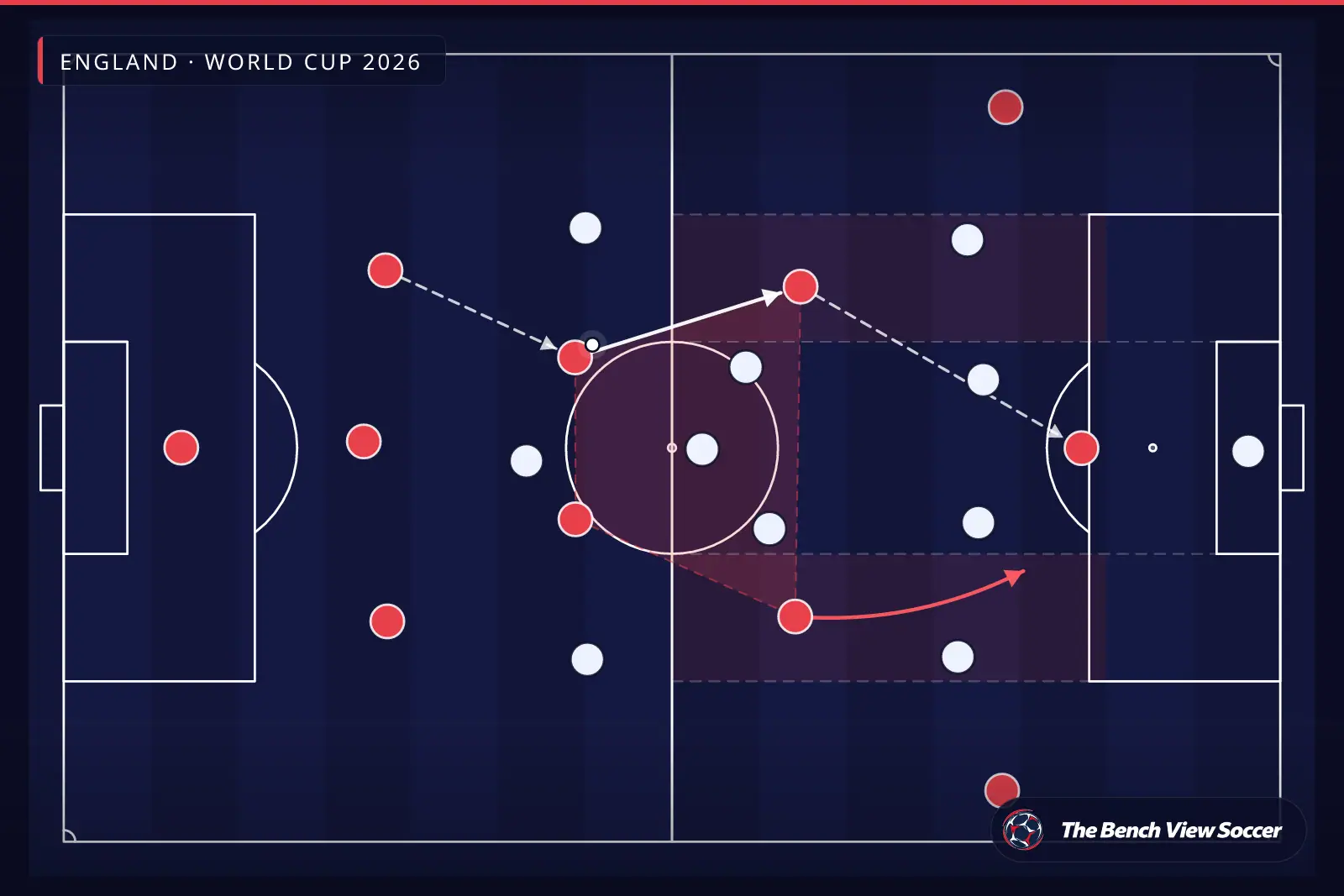
Jude Bellingham's Half‑Space Gravity Is England’s Real Edge
July 16, 2026
Why Erling Haaland Vanishes for Norway: No Width, No Cutbacks
July 12, 2026
Cristiano Ronaldo: Why Portugal Must Rethink Their Pressing Plan
June 28, 2026
Harry Kane's False-9 Gravity Is Powering England's Box Overloads
June 28, 2026