

Mo Salah’s Trending Moment: From Poacher to Egypt’s Architect
The football world hit pause on analysis-by-numbers Sunday when Mohamed Salah did what few expected: he dropped deep, pulled the strings, and rebuilt Egypt’s World Cup attack in his own creative image. Trending debate has rightly focused on the star duel between Salah and Kevin De Bruyne at World Cup 2026—iconic goal scorers set for what could be their final grand-stage head-to-head. But while most attention centres on Salah's goal threat, the real story emerging in the Egyptian camp is his tactical evolution from ruthless finisher to playmaking force. This isn’t just Salah’s swansong; it’s a transformation with the power to redefine Egypt’s ceiling for a generation.
Salah’s shift from pure goal-scorer to creative hub is Egypt’s tactical wild card—one that could disrupt World Cup orthodoxy and change how we judge his legacy.
How Salah’s New Role Breaks the Template
Unlocking Egypt’s Half-Spaces With Salah as Initiator
Tactically speaking, there’s a seismic shift underway. Egypt’s set-up—previously predicated on keeping Salah high and wide on the counter—has recalibrated in Qatar and now the USA. Instead of hugging the right touchline, Salah is increasingly inverting into the right half-space, receiving on the turn between the lines and dictating play as an advanced creator.
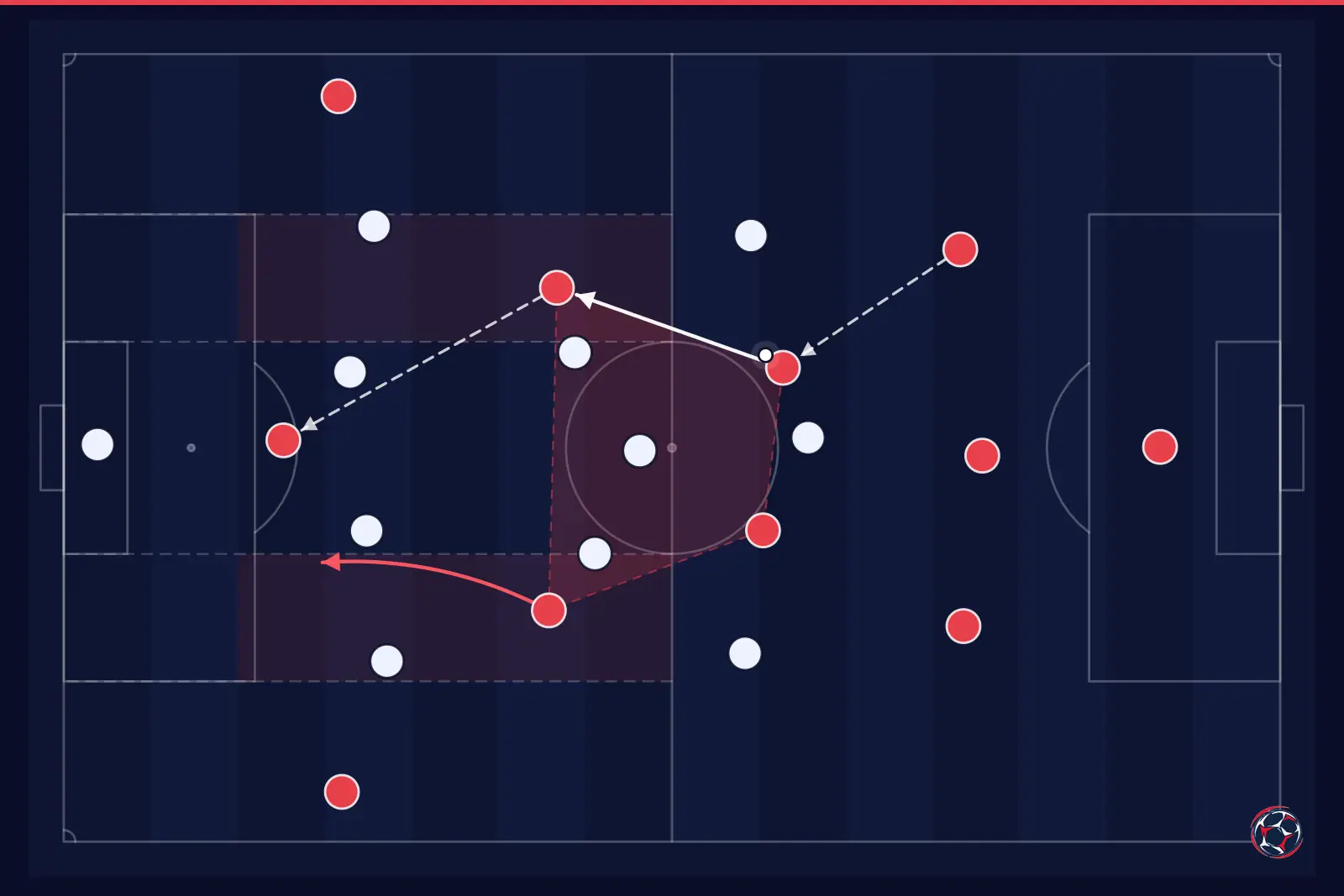
A controlled possession sequence in the 19th minute against Iran offered the best snapshot: Salah, initially occupying his classic wide position, suddenly underlapped midfield anchor Elneny, collecting between Iran’s midfield and defensive lines. Within two touches, he released a disguised reverse ball into the box for Ramadan Sobhi’s late run—carving out a high-xG chance from a zone statistical models previously marked as low Egyptian output.
This wasn’t a one-off. Over 90 minutes, Salah completed 11 progressive passes (nearly double his World Cup 2018 average) and attempted 4 through balls—each originating from central or half-space zones, not the wing. Egypt’s positional structure flexed to enable this: both fullbacks held wider and deeper, while Trezeguet inverted to the left half-space to balance the system. For fans of positional play, it’s a notable tilt toward the models Barcelona and Spain have re-popularised—except the talent axis now runs through Salah, not a midfield metronome.
Why This Tweak Matters: Playmaking Parameters and Positional Superiority
The immediate payoff? Egypt are creating more high-quality chances in settled possession than at any major tournament since 2010. Salah’s presence between the lines forces opposition double pivots to collapse inwards, opening lanes for his overlapping fullback or a third-man run from midfield—a role embodied in the 39th-minute attack where Nene broke free when Salah’s movement drew two Iranian markers out of the lane. Tactically, this gives Egypt a pathway to break down low blocks, not just hit in transition.
This is positional superiority by design. By making Salah the playmaking trigger—a Catalan-style ‘false winger’—Egypt access numerical overloads in areas where they previously played at a deficit. Diagrammatically, imagine Salah drifting centrally ahead of the double pivot, with left-sided winger and overlapping fullback maximizing the width. The team achieves a 3-2-5 structure in possession, made possible only by Salah’s ability to receive, turn, and find the next pass under pressure.
Comparative and Historical Context: Who Has Walked This Path?
The False Winger: From Lionel Messi to Mohamed Salah
Historically, the move echoes the tactical redefinition seen with Lionel Messi’s 2014 World Cup campaign. Back then, Messi dropped off the forward line to build from deep, helping Argentina outplay the press. The difference: Messi acted as a central playmaker, while Salah is tasked with toggling between touchline and interior as the right-sided ‘10’—a hybrid not seen at international level since Arjen Robben’s best Oranje years. The tactical literature is clear: turning a world-class finisher into your main creative conduit is high-risk, high-reward. When it works, as with Messi, you reach finals. When it doesn’t, teams can stutter for want of target-men presence.
Premier League Parallels: Is This Salah’s De Bruyne Switch?
In the Premier League, Salah’s creative output surged post-2022 as Liverpool’s system shifted him inside, echoing Kevin De Bruyne’s role at Manchester City—another prolific right-sided creator able to unlock bunkered blocks. But Egypt don’t have City’s pressing traps or supporting cast. Salah bears the burden not only as finisher but as initiation point—a one-man orchestra required to break lines, not just finish crosses. It’s a structural experiment rarely attempted outside the club ecosystem.
Why Has This Evolution Happened Now?
Personnel, Pressing, and the Perils of Predictability
There are three interlocking causes for Egypt’s new approach:
- Stale attacking returns in old systems: Egypt’s prior World Cup and AFCON campaigns saw them create fewer than 7.0 xG over 4–5 matches, ranking among the least creative quarter-finalists in recent international tournaments. Relying on Salah as an outlet made them predictable; double-teams near the touchline choked their transition game.
- Emerging midfield profiles: The rise of a Barcelona-schooled teenager—tipped by Egypt’s coach as Salah’s heir—gives Egypt ball retention and passing range through the centre that simply did not exist in 2018 or 2022. Salah, older and wiser, can now trust his midfield enough to vacate the front line and orchestrate deeper.
- Salah’s statistical transformation: Since 2024, Salah’s per-90 creative stats (progressive passes, key passes) have aligned more closely with elite playmakers than pure finishers. His 0.28 expected assists per 90 for Liverpool last season was a career high, all while maintaining a 0.55 xG per 90 goal output. The numbers suggest his dual role—goal threat plus creator—is no fluke.
Tactical Triggers: Spotting the New Pressing Patterns
Perhaps most telling are Egypt’s new pressing triggers. When Salah drops into midfield in build-up, Egypt often executes an asymmetric press, morphing into a lopsided 4-1-4-1 without the ball. Salah starts central to initiate first pressing triggers before drifting wide as Egypt forage for turnovers. This tactical wrinkle—unique among World Cup sides—lets Salah conserve energy while remaining the first point of transition if Egypt win the ball high.
The Ripple Effects: For Egypt, Liverpool, and World Cup 2026
Egypt’s Upside: From Outsiders to Disruptors?
Tactically, unlocking Salah as a playmaker could elevate Egypt from counter-attacking dark horses to genuine disruptors. Teams prepping to park in a mid or low block against “standard Salah” now face layered threats: third-man runs, cutbacks from deep, and the rare prospect of Egypt dominating territory. This rebalances World Cup 2026’s tactical arms race, placing Egypt alongside sides like the US, Spain, and Japan who have embraced fluid, multi-channel attacks.
Liverpool Lessons: A Roadmap for Salah’s Club Legacy
For Liverpool, there’s food for thought. Salah’s positional reinvention in the World Cup offers a template for prolonging his prime as physical burst wanes. Expect to see a Liverpool variant next season with Salah regularly inverting into creative hubs, especially when paired with line-hugging fullbacks like Alexander-Arnold. The club’s analytics team will be watching his World Cup key pass numbers closely—could a late-career De Bruyne transformation be on the cards in the Premier League?
Why Salah-De Bruyne Parallels Matter Now
World Cup 2026’s Salah-vs-De Bruyne narrative isn’t just about two legends in their twilight—it’s about who adapts fastest. Both, in different ways, have become their national team’s primary creative and structural reference point. The difference is that while Belgium now build everything through De Bruyne, Egypt’s gamble is asking Salah to orchestrate and finish, upping the stakes with every touch.
A Counterargument: Is Creative Salah Worth the Risk?
Naturally, there are risks. Moving Salah away from the box could neuter Egypt’s most reliable goal source—especially if supporting runners aren’t clinical. Promising as the Barcelona-trained teen is, this is still a generational bet. Opponents could set pressing traps in central areas, isolating Salah and depriving Egypt of verticality. There is historical precedent for this: both Arjen Robben’s Netherlands and Lionel Messi’s Argentina struggled when their “wide playmaker” concepts met ultra-disciplined defensive blocks that ignored wide threats and shrank the centre.
There’s also a psychological angle: does shifting Salah’s responsibilities late in his career place undue burden on Egypt’s supporting cast? If results stall, there’ll be calls to revert to classic counterplay, keeping Salah high and wide.
The Final Word: Mo Salah, Tactically Reborn, Is Egypt’s Trump Card
Yet, the overriding evidence—statistical, technical, and tactical—backs the move. In our view, Salah’s evolution into a creative-engine-cum-goal-threat has launched Egypt into tactical relevance on the global stage. It offers new routes to goal, raises their floor against deep defences, and re-energises a national side long pigeonholed as one-dimensional. If Egypt surprise this summer, it won’t just be due to Salah’s finishing but his orchestration: a tactical gambit with the power to shift not just matches but an entire footballing discourse.
Should Egypt’s hybrid Salah model succeed, it could redefine how world-class ‘wide forwards’ stay decisive even as age asks for new tools. The World Cup, and Liverpool’s future, may hinge on how far this experiment can go.
The Bench View app
Don’t just read football — train it
Everything you read here, turned into training you can follow step by step.
Physical training at home
AI daily sessions adapted to your level and position. No equipment needed.
Tactical training courses
Step-by-step courses on positioning, pressing, build-up and decision making.
- 7 days free
- No commitment
- Cancel anytime
Free account: 2 physical sessions + the first tactical course. PRO: 7-day free trial — cancel before day 8 and you pay nothing.

More Analysis
Jude Bellingham's Half‑Space Gravity Is England’s Real Edge
July 16, 2026
Why Erling Haaland Vanishes for Norway: No Width, No Cutbacks
July 12, 2026
Cristiano Ronaldo: Why Portugal Must Rethink Their Pressing Plan
June 28, 2026
Harry Kane's False-9 Gravity Is Powering England's Box Overloads
June 28, 2026