

Netherlands’ Double Pivot Revolution Captures World Cup 2026 Spotlight
The world saw headlines after the final whistle: the Netherlands, perhaps written off by few but feared by anyone with tactical sense, have stormed the World Cup 2026 conversation once more. Away from darts headlines and liveblogs, something more profound is unfolding from the Oranje. The Netherlands’ tactical overhaul—built upon a novel, ultra-fluid double pivot and layered midfield rotations—has placed them among the tournament’s most intriguing teams, and perhaps the one with the highest upside left in the draw.
Tactically, the Dutch are no longer wedded to 4-3-3 orthodoxy—this evolution toward a transformative double pivot is the most significant since Cruyffian total football, yielding positional superiority and pressing resistance not witnessed in previous Dutch generations.
From Trending Moment to Tactical Breakthrough: A New Dutch Identity
In the wake of noisy headlines—whether in darts or in the wake of a group-stage victory—the footballing world is fixated on “results.” But at The Bench View Soccer, we look for the deeper shift. For the Netherlands, it’s the double pivot that has made them both unpredictable and uncontainable.
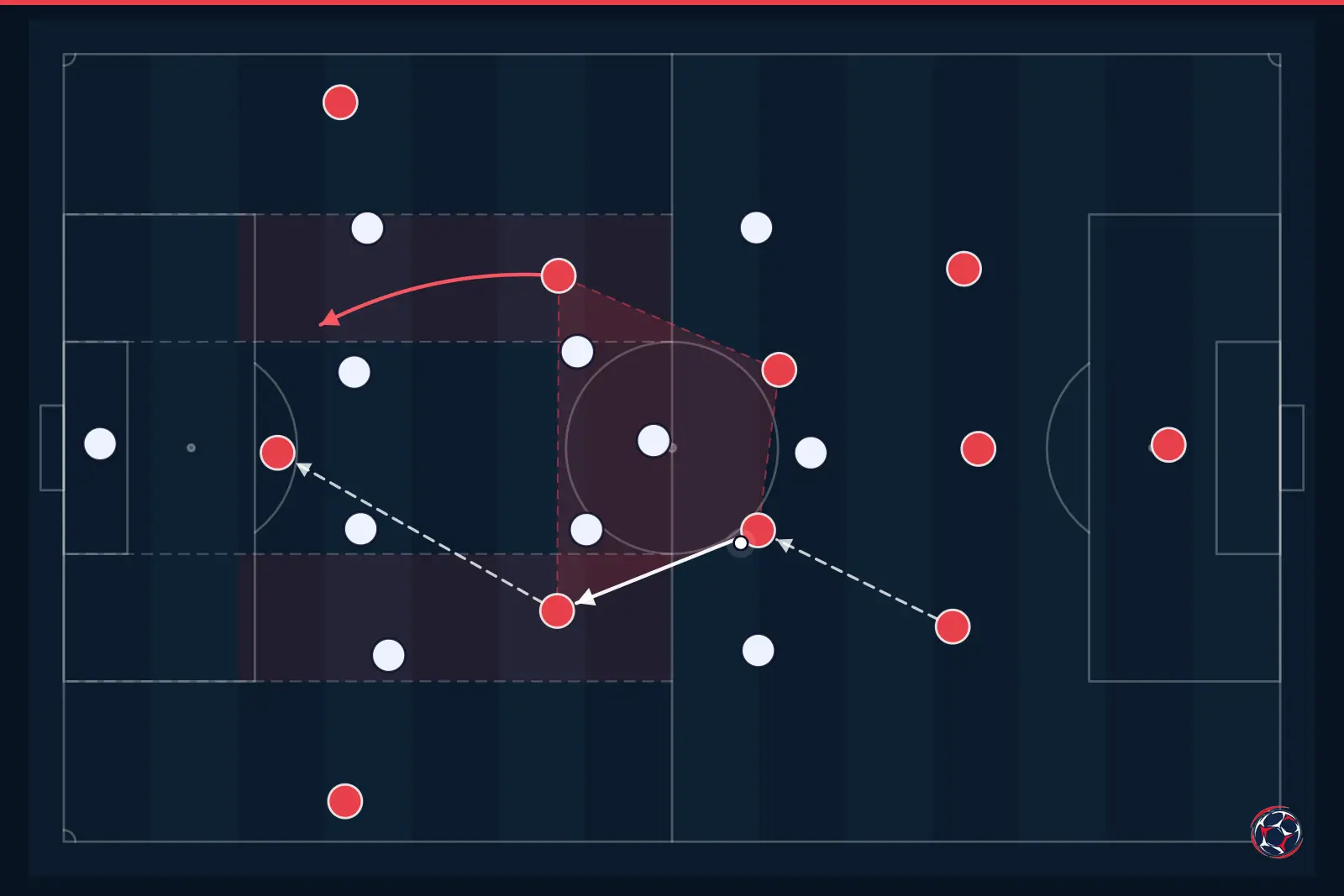
Let’s set the scene: the Netherlands’ 3-1 victory over Japan (World Cup 2026 Group C, June 14th) was not only a scoreline but a stage for ideas. The Dutch blended versatility with control, continually morphing from a 4-2-3-1 in build-up into a 3-2-5 in attack, with De Jong and Veerman as hybrid pivots. Every time Japan set a pressing trigger in the 18th minute, Netherlands split one pivot (Veerman) into the left half-space and dropped the other (De Jong) nearly between the centre-backs. By the 33rd minute, the dual-pivot dynamic saw the ball in the central lane, but the space being created in the right and left channels—virtually pulling Japan’s press apart.
Why does this matter? Because the Dutch have consistently found ways to break first and second lines of pressure not with individual dribbling, but with rotational movement, positional intelligence, and overloads generated centrally then exploited wide by advancing fullbacks. Against Japan, the movement between the 63rd and 72nd minutes was a masterclass in midfield occupation, unlocking their forwards’ underlapping runs and third-man combinations.
Dissecting the Double Pivot: Roles, Movements, Triggers
What has changed, tactically speaking? This World Cup cycle sees Netherlands abandoning the traditional 4-3-3—replacing the lone holding midfielder with a symmetrical, adaptable double pivot. Here’s how it worked in the crucial Japan match—and why no bulletin summarized it:
- Staggered Pivots: Unlike static pairs, Frenkie de Jong operates as the deep conduit, while Joey Veerman pushes forward to fill the left half-space or drop wide to create diamond build-up shapes. This staggering allows them to constantly outnumber the Japanese press in central zones.
- Trigger Responses: When Japan’s front two pressed in the 24th minute, De Jong dropped adjacent to the right centre-back, inviting pressure then passing to an inverted left back who had moved into midfield—creating instant 3v2 superiority.
- Full-back Inversions: Both Dutch full-backs (Dumfries, Ake) took turns inverting. When Dumfries moved inside in the 45th minute (39:30 on the clock), it pulled Japan’s midfielder out wide, opening a lane for Gakpo to drop in, receive, and immediately attack the vertical seam.
- Third-man Runs & Underlaps: Neither Gakpo nor Xavi Simons stayed fixed; rather, motion in behind was triggered by Veerman feinting forward, attracting a defensive pivot, while Simons would break inside for a cut-back. The second Netherlands goal came from precisely such a movement in the 54th minute—a third-man run through the right half-space following a central overload.
In effect, every phase was engineered to force opposition midfielders to make impossible choices, resulting in either an open progression lane or a free runner beyond the opposition defense. The result tactically: positional superiority in the central and half-space channels—a classic Guardiola-Johan Cruyff heritage, modernised for 2026 football.
Historical Context: Not Your Typical Oranje
How does this compare with Dutch teams past? Every generation since the original “Total Footballers” has struggled to balance ideology (total positional freedom) with practical needs (midfield stability against elite pressing). Let’s recall:
- 2010 Finalists: Van Bommel and De Jong as destroyers, rigid 4-2-3-1, low risk—but stifled creative progress under pressure.
- 2014 Van Gaal: Three at the back, Robben as a counter spear—systemic discipline, over-reliance on moments vs. deep blocks.
- Euro 2020: 3-5-2, but often stagnated, poorly coordinated between midfield and wingbacks, susceptible to press traps.
This 2026 iteration is uniquely hybrid: the midfield is both shape-shifting and functionally secure. While Cruyff would rotate his pivots in a carousel, Koeman’s system deliberately staggers—never one line, always at least two vertical options and a diagonal escape route. The result is a dominance in the half-spaces unseen since Ajax’s golden years under De Boer and ten Hag domestically.
Cause and Effect: Why This System Is Working Now
So, tactically speaking, what has prompted this evolution—and why is it succeeding?
The answer is rooted in both player and context:
- Profile Fit: De Jong’s press resistance and Veerman’s spatial awareness make a double pivot not only logical, but essential. Unlike previous Dutch midfields built on inversion alone, this pairing creates both a build-up platform and attacking launching pad.
- Modern Tournament Demands: High-pressing, energy-rich group stage opponents (as seen with Japan, the USMNT, and Morocco) punish slow horizontal shuffles. A split double pivot gives Netherlands two first-receivers at all times—forcing opposition blocks to stretch width and depth simultaneously.
- Attacking Fluidity: The freedom for Simons and Gakpo to vacate their starting positions, make runs off the shoulder, and double-up centrally is only possible because of the mid-pivot coverage—allowing constant, dynamic occupation of half-spaces without risking transition exposure.
The net effect? Netherlands can both dictate possession and select their moments to accelerate pace, switching from intricate nursemaiding in deep build-up to rapid vertical progressions. This unpredictability overwhelms structured presses and denies compact blocks the comfort of numerical security.
Minute-by-Minute Tactical Sequences: Evidence from the Japan Match
Let’s break down key instances:
- 18th minute: Dutch build-up morphs as Lorentz Ake moves into an inverted full-back role just as Veerman moves high, pulling Japan’s left midfielder out, creating a pocket for De Jong to turn and drive.
- 37th minute: Netherlands face a momentary high press trap. Rather than forcing a panicked clearance, the double pivot calmly triangulate—De Jong to Veerman, back to De Jong, then out to Dumfries advancing on the underlap, bypassing four Japanese shirts.
- 54th minute: The pivotal underlapping sequence: Veerman’s decoy movement forward pulls the anchor, Xavi Simons rotates inside from the half-space, and receives a split pass for a third-man run behind—culminating in the Dutch’s second goal.
- 63rd-72nd minutes: Multiple Dutch midfield rotations force Japanese substitutions and shape adjustments—evidence that their positional approach was dictating not just play, but Japan’s reactions.
Comparative Lens: How Does This Stack Up Against Other World Cup Powers?
Let’s measure the Dutch framework against three critical peers:
- Spain (2026): Still possession-dominant, but rely heavily on single pivot with wider overloads and less central flexibility. Netherlands’ dual-pivot layering makes them less susceptible to central turnovers.
- France (2026): 4-3-3 with a traditional DM (Tchouaméni), but some structural rigidity in transitions. The Dutch have shown greater adaptability between phases—pressing, build-up, and counterpress.
- Argentina (2022-2026): Famous for double pivots (Paredes & De Paul) in winning the last World Cup—yet Argentina’s model saw much less lateral movement and more vertical compactness. The Dutch hybrid is more expansive in both transition and structure.
In short, most rivals lack the specific two-man, staggered midfield shield the Dutch deploy. The only close parallel might be the modern Manchester City under Guardiola—where double pivots and underlapping fullbacks generate positional superiority and passing escape lanes against the world’s best presses.
Counterargument: Is This System or Just Player Quality?
No analysis is complete without the alternative view. Some pundits argue that the apparent Dutch mastery is a function of individual player brilliance, not systemic design. After all, Frenkie de Jong’s unique press-resistance and Veerman’s tactical intelligence offer rare ingredients not easily replicated. Could another midfield pairing execute this?
This is a valid concern. Yet the evidence from successive matches—each using similar rotations and triggers, even when Veerman has been replaced by Gravenberch—suggests system over serendipity. The structure creates the time and space, while elite technical players amplify the returns. One could argue that against a more compact, lower-block opponent, this system could stutter without those precise feet and confident ball carriage. The true test will come against teams who refuse to press and instead defend in deep, narrow blocks—eliminating the transitional value of layered pivots.
Implications for the Tournament and Beyond
The major implication? The Netherlands are arguably the most tactically flexible ‘big’ nation at World Cup 2026. Their ability to seamlessly shift between a double pivot build-up and high-positional attacking occupation means they can adapt to almost any opponent. Much like the golden-era Dutch, they’re making ideology functional—this time with the ballast needed to reach the latter rounds.
For their rivals, the challenge is clear: either find a way to unlock the double pivot—which so far only intense man-oriented presses have rattled—or risk being played into submission via repeated positional switches. For the Netherlands, the lingering question is whether this system can hold up under the highest defensive intensity and pressure of late-stage knockout football. But in group stage play, the signs are overwhelmingly positive.
Looking further ahead, European clubs are watching with interest. The success of Netherlands’ midfield model—combining deep passing circuits, advanced full-back movements, and third-man runs—will almost certainly inform future tactical directions both at international and elite club level.
Conclusion: The Double Pivot Era—Bold, Brilliant, and Built for Progress
In our view, the Dutch double pivot revolution is no gimmick—this is the emergence of 21st century positional football, grounded in tactical clarity and executed with technical excellence. The Netherlands aren’t just back—they’re different, and that’s more dangerous than ever.
The tactical takeaway? Netherlands are using their double pivot not just as a launchpad, but as the engine driving both stability and innovation at World Cup 2026. If imitation is the sincerest form of flattery, expect to see pivots and rotations scrawled across tactical whiteboards in club HQs across Europe—and far fewer dismissals of the Dutch as mere football romantics. This is a team with both vision and structure, and in international football, that’s a rare and winning combination.
The Bench View app
Don’t just read football — train it
Everything you read here, turned into training you can follow step by step.
Physical training at home
AI daily sessions adapted to your level and position. No equipment needed.
Tactical training courses
Step-by-step courses on positioning, pressing, build-up and decision making.
- 7 days free
- No commitment
- Cancel anytime
Free account: 2 physical sessions + the first tactical course. PRO: 7-day free trial — cancel before day 8 and you pay nothing.
More Analysis
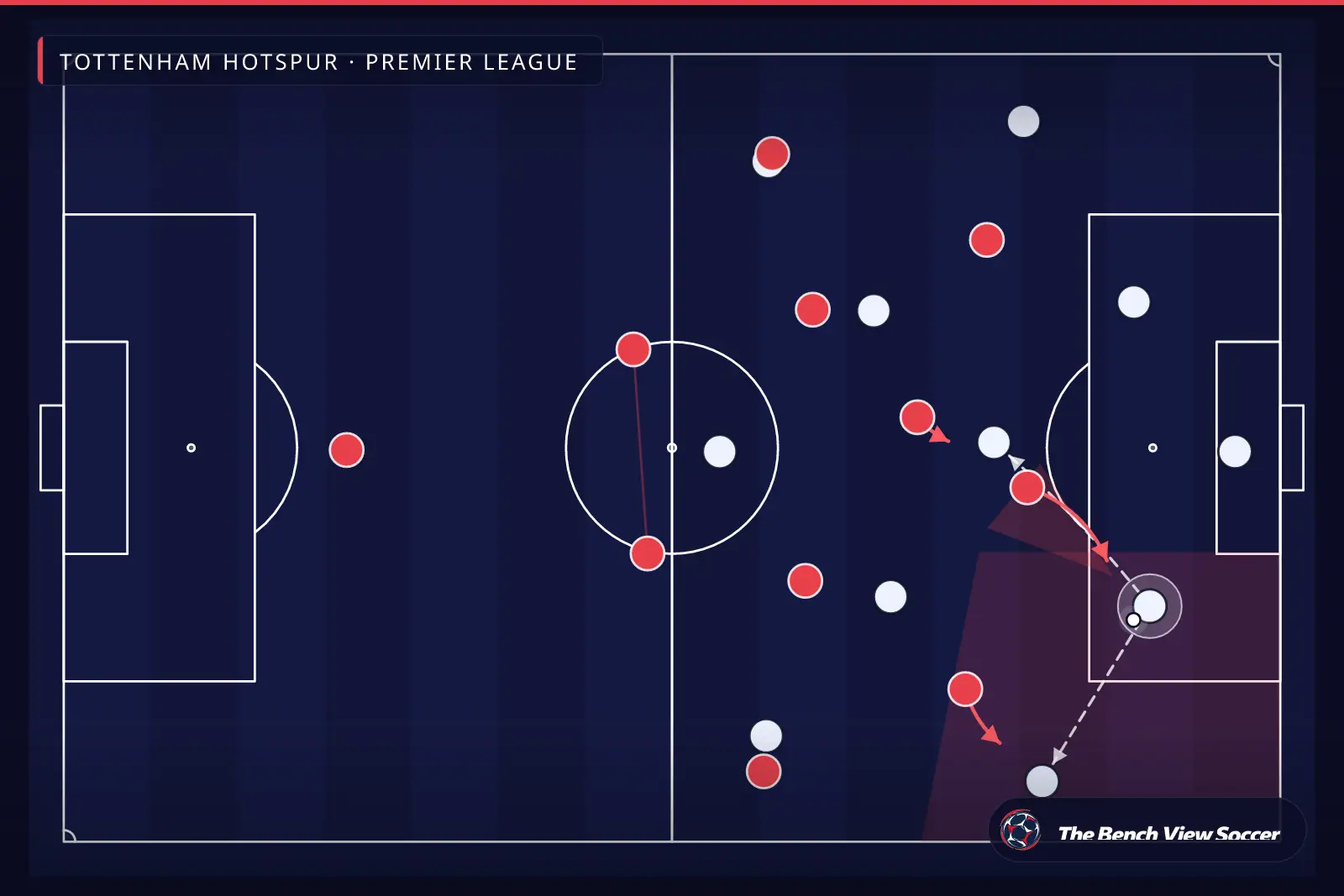
Tottenham Hotspur: How World Cup 2026 Is Warping Their Press
August 27, 2026
Chelsea's 3-2-5 Rest-Defense Is the Real Champions League Edge
August 27, 2026
Aston Villa's Box Midfield Is the Premier League's Real Edge
August 26, 2026
Chelsea's Box Midfield Is Fueling Chaos at the Cottage — Why
August 24, 2026