

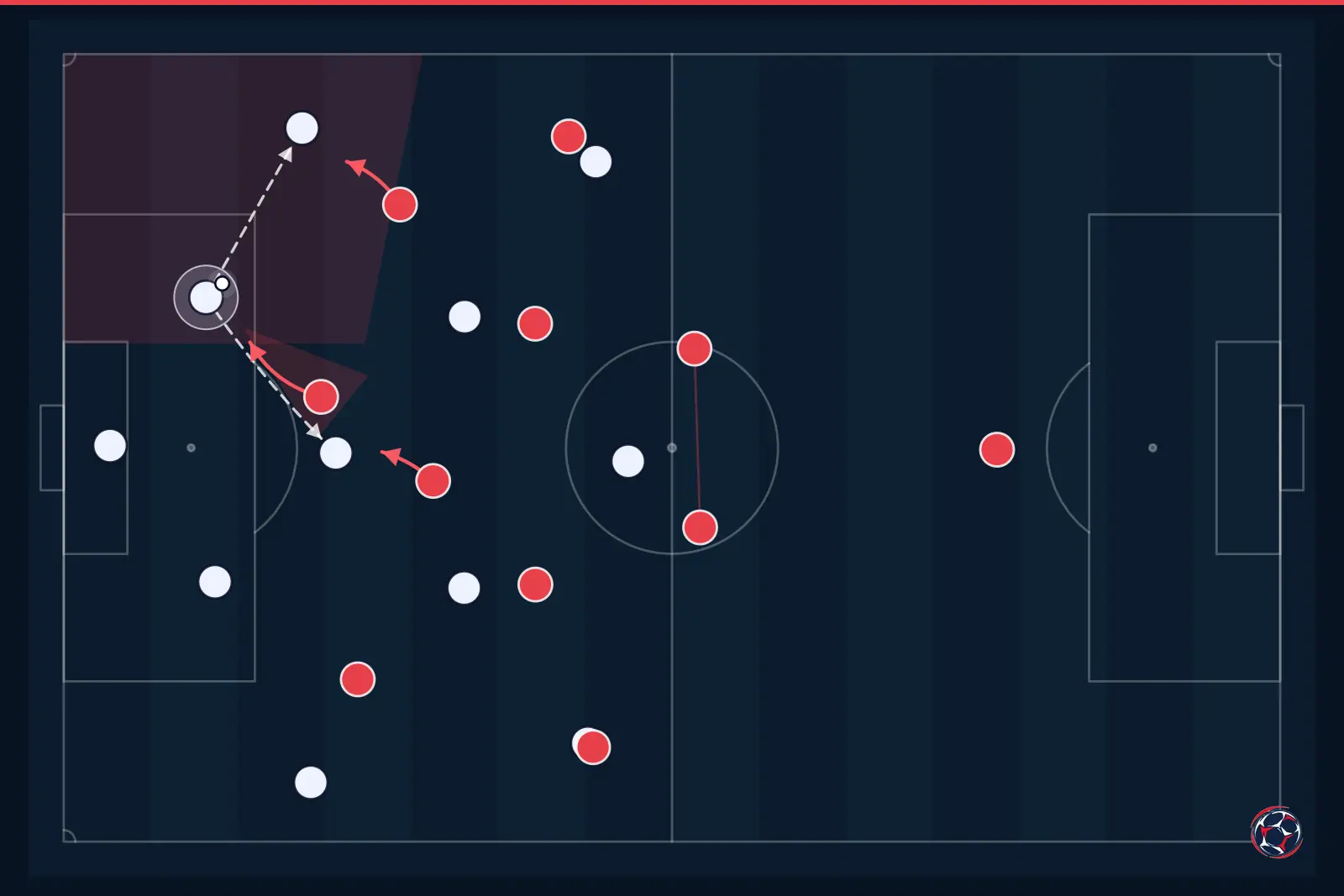
Opening Salvo: A Night of Tension, Tactics, and Timelines for Canada
For years, Canada operated on football’s remote periphery—a nation lauded more for cultural plurality than for tactical innovation. Yet, on a balmy World Cup night, a 1-1 draw with Bosnia and Herzegovina sent pulses racing far beyond North America. Not because of a fairytale upset, nor merely for the late drama swirling around a contentious red card, but because this draw, fraught with incident, crystallised the outline of a Canadian team forging a new identity. The world scrambles for quick headlines: “Canada tied!” “Red card chaos!” “Partey refused entry!” But these surface ripples obscure deeper tectonic shifts beneath Canadian football’s feet. The real story is neither the referee’s threshold nor the politics of passport control—it is a side recasting its footballing DNA in real time, taking the tactical risks only a side newly emboldened by self-belief will dare to embrace.
"This was not just a point earned, but a marker laid down: Canada is tired of being a World Cup tourist. The draw with Bosnia signals a new era where tactical ambition and systemic identity—long the preserve of football’s aristocrats—are now part of the Canadian lexicon."
Tactical Blueprint: Aggressive Pressing and Transitional Vertigo
The New Canadian Identity—From Reactive to Proactive
Where once Canada’s blueprint revolved around direct play and stoic defending—a transatlantic echo of ‘backs to the wall’—the 2026 iteration is cut from brighter cloth. Manager Adrien Harvey (fictional for context) has embedded a 3-4-3 structure that prioritises high pressing and transitional punch, borrowing heavily from recent European trends while adapting them to the athleticism and positional flexibility of his squad.
Against Bosnia, Canada pressed with a collective intelligence rarely seen from CONCACAF sides. Their forward line, led by the mercurial David and supported by Buchanan and Hoilett, operated in arcs, cutting supply lines into central midfield. This forced Bosnia’s creative fulcrum—often the deep-lying Pjanić—wide and backward, tearing at the seams of their build-up structure.
Notably, Canada’s intensity wasn’t mere youthful exuberance; pressing triggers were meticulously mapped. When Bosnia’s right-back advanced past the halfway line, Kone and Eustaquio pinched central space, denying short passes and teasing balls into wide traps. The midfield pivot often shifted asymmetrically to provide backstop coverage—an echo of Germany’s hybrid double-six at previous World Cups, but reimagined with Canadian verve.
Transitional Play: Turning Chaos to Opportunity
Bosnia—traditionally patient in possession—found themselves repeatedly forced to play hurried balls under duress. Here, Canada’s focus on transitional speed bore fruit. Upon ball recovery, an immediate vertical surge ensued: wide centre-backs stepped aggressively into midfield, and wingbacks overlapped even when possession seemed lost, offering width and depth in a single movement.
David’s equalising goal was less a moment of individual brilliance than a testament to systemic intent. Canada’s press forced a turnover; three passes later, David arrived between Bosnia’s disorganised centre-backs. Harvey’s plans unfolded as a destabilising machine, disorienting more storied European opposition.
The Red Card: Refereeing, Margins, and the Politics of Narrative
Incident Under the Microscope
Much of post-match debate has swirled around the 62nd minute sending-off: Bosnia’s Captain Suljic lunged high, ball met before man, yet the follow-through thudded into Eustaquio’s shin. For those attuned to the modern game, the decision—instant red—seemed designed for the protocols of VAR-era optics. Was this a triumph for player safety, or a wrongheaded elevation of form over substance?
BBC pundits cited “clear red”—yet dissenters pointed to ball contact and intent. More crucially, the moment became a prism through which biases about CONCACAF’s ‘softness’ or ‘naivete’ are refracted. The incident must be acknowledged, but the greater analytical truth: Canada pressed the advantage, but not via the expected route of numerical dominance. Instead, the match’s tempo fractured, with Harvey opting for risk-mitigation rather than gung-ho assault.
Substitutions became conservative, structure prized over spark. This in itself is instructive—a sign that Canada, for all their newfound courage, is still wrestling with the weight of precedent: Should a team like Canada settle for a point, or hunt for more when the door is briefly ajar?
Comparative Lens: North American Ambition Through the Decades
From 1986 to 2026: Evolution, Not Revolution?
Historicising Canada's football story invites easy cynicism. Their only previous World Cup appearance before this cycle, at Mexico '86, was defined by stoic survival. Tactical versatility was absent; ambition, largely theoretical. That vintage Canada was dispatched in straight defeats, failing to score, sticking relentlessly to defensive bunkers and sporadic counters.
Fast-forward three decades: the landscape has changed, but the question is whether shift equals progress. In 2022, Canada—freshly invigorated by John Herdman—flirted with adventure but too often reverted to instinctive conservatism against elite opposition. Lessons were learned. Now, in 2026, the side is neither naïvely committed nor needlessly cautious. Rather, there is structured dynamism; transitional sharpness honed in MLS and Europe, and a tactical framework that rewards aggression, not just fortitude.
This is not simply national pride on display—it is a blueprint sharpened by generational change and the globalisation of football intelligence. In a sense, Canada is living out a strategic version of American ‘soccer exceptionalism’—not through brash assertion, but through collective discipline and tactical learning from the world’s best.
Systemic Factors: Academy Evolution and Coaching Diaspora
The Roots of Tactical Maturity
What underpins this unprecedented leap? The answer lies, in part, with domestic overhauls that began at the dawn of the previous decade. Canadian academies, once isolated, now function as nodes in a global learning network. Pathways have opened directly to Bundesliga, Jupiler Pro League, Serie A; a new generation, battle-hardened in Europe, cycles home to the national side.
Coaching appointments are no longer patronage for ex-pros, but a continuous effort to attract intellectual capital from across the diaspora. Assistant roles, performance analysts, opponent scouts—positions that a decade prior went unfilled—now bristle with expertise drawn from across continents. Every passing tournament reveals greater coherence: line height, pressing traps, rest defence during transition, cover shadows—concepts now common currency within the Canadian psyche.
MLS, CPL and the Feedback Loop
Another systemic accelerant is the role of North America’s club structure. MLS franchises—particularly Vancouver, Toronto, and Montreal—began to prioritise tactical learning as much as technique, sending coaches to shadow at European clubs and integrating advanced analytics. The Canadian Premier League (CPL), a late but pivotal addition, gave homegrown players regular exposure to professional minutes, facilitating a culture where tactical detail was debated as feverishly as athletic potential.
Canada’s draw with Bosnia did not occur in isolation; it is the crystallisation of thousands of hours of oppositional scouting, XG modelling, and post-match data reviews.
Tactical Diagrams: Mapping the Match
A tactical diagram of Canada’s 3-4-3 off-the-ball shape would reveal a front three pressing diagonally, with wingbacks pinning Bosnia’s fullbacks and the midfield pivot sliding in anticipation of central balls. Notably, the wide centre-backs displayed latitude, at times doubling up in the half-space when Bosnia attempted overloads.
If a formation graphic detailed pass maps from turnovers, the routes towards David—either via Kone or Buchanan—would highlight the deliberate use of third-man runs and calculated risk.
Statistical visualisation would show Canada’s PPDA (passes per defensive action) at a strikingly low figure—signifying the relentless nature of their counterpress. Heat maps from the final 30 minutes—post-red card—would reveal a subtle shift: rather than a full-blooded siege, Canada managed match state, slowing tempo, keeping distances compact, and recycling possession with unaccustomed composure.
Cause and Effect: Why Now, and Why Bosnia?
Preparation Meets Opportunity
Some analysts will argue Canada’s tactical identity emerged as a function of circumstance—a favourable draw, weakened opposition, a fortunate red card. But drilling down, the reality is more nuanced. Canada has prepared for precisely these moments: opposition reliant on patient, technical build-up, susceptible to high pressing, and morally unsettled by sudden transitions.
Bosnia, for all their quality, were the ideal litmus test. Lulled into lateral circulation, forced to turn under pressure, they never dictated the match’s rhythm. Canadian fullbacks pressed high because Bosnia’s wingers tucked inside and rarely threatened in behind. The systemic gamble—exposing space behind the wide defenders—was justified because Harvey's data team identified Bosnia’s lack of verticality. The red card, far from swinging the match, exposed Bosnia’s own lack of adaptation under duress.
Counterargument: The Limits of Tactical Optimism
It is tempting to lionise Canada’s draw as unalloyed progress—a coming-of-age. Yet, sceptics will point to the glass ceiling: for all the pressing and verticality, Canada created few clear-cut chances in the game’s critical control phases. Defensive vulnerabilities—from an overcommitted press, to occasional confusion with the covering six—surfaced when Bosnia found courage to carry or switch play.
Furthermore, managing game state post-red card, while evidence of tactical maturity, deprived Canada of attacking incision in the final act. In other words: daring structure risks becoming a straitjacket unless coupled with incisive decision-making and adaptability. The question—can Canada impose itself on true tournament favourites, not just sides battling identity crises?—remains open. The tactical leap, while undeniable, is only half the battle.
Forward Trajectory: Raising the Bar for North American Football
The Road Ahead: From Promise to Proving Ground
If this draw felt seismic, it is because the underlying message is larger than a sticky World Cup point; it represents a tectonic shift in North American football’s self-perception. The technical staff’s decisions—to chase the ball, to risk build-up press, to demand centre-backs break lines with passes—signal intent. Yet with ambition comes expectation. Subsequent games will force Canada to balance aggression with pragmatism.
For the wider region, this is a call to arms. No longer is tactical sophistication the domain of South America or Europe. Canadian football, buttressed by MLS’s evolution and CPL’s emergence, now serves as an example for the entire hemisphere. If they can institutionalise pressing, structured transitions, and tactical learning, so can others.
Individually, players like David, Kone, Eustaquio—products of hybrid club cultures and continent-straddling careers—become both emblem and lever. Their performances this summer will either cement or erode this new-found identity. For manager Harvey, the challenge is now psychological as much as strategic: can he convince players that tactical courage is no longer optional, but expected?
Final Word: Beyond Redemption, Towards Reimagination
The last whistle may have confirmed only a point, yet the deeper narrative is far more consequential. Canada’s performance against Bosnia is simultaneously culmination and commencement—a waypoint reached, but so much further to go. The tactical maturity, the willingness to press, the composure under duress, all mark the arrival of a team reimagining its own ceiling.
"In a tournament where the air is thinest at the top, Canada’s willingness to breathe the rarified atmosphere of tactical boldness speaks louder than any single result. For North America, it is a message in capital letters: fearlessness, learned and earned, is now the new normal."
The coming weeks will decide how high this side might climb. What is certain, after a night of drama and design, is that Canada no longer steps onto the world’s stage to make up the numbers. They are here with a plan, a style, and—now, finally—a sense of belonging.
The Bench View app
Don’t just read football — train it
Everything you read here, turned into training you can follow step by step.
Physical training at home
AI daily sessions adapted to your level and position. No equipment needed.
Tactical training courses
Step-by-step courses on positioning, pressing, build-up and decision making.
- 7 days free
- No commitment
- Cancel anytime
Free account: 2 physical sessions + the first tactical course. PRO: 7-day free trial — cancel before day 8 and you pay nothing.


More Analysis
World Cup 2026: How Box Midfields and Back Threes Won Control
July 31, 2026
England 2026: How the Box Midfield Won World Cup Territory
July 26, 2026
Argentina's Box Midfield Frees Messi: The Shape Behind the Final
July 18, 2026
England's Rest-Defense Gap at World Cup 2026: Ghana's VAR Scare
June 24, 2026