Introduction
Real Madrid’s modern identity is often described with glamorous words—stars, comebacks, Bernabéu magic—but the repeatable tactical engine behind many big wins is simpler: they thrive when the game breaks into fast transitions. A transition is the moment a team switches from defending to attacking (or attacking to defending). In Europe’s biggest competitions like the UEFA Champions League and La Liga, Carlo Ancelotti’s Madrid frequently looks most dangerous in those first few seconds after winning the ball, when the opponent is spread out and their defensive shape is not set. For fans used to highlight reels, this is the “why” behind many of those clips: Madrid deliberately creates conditions for quick, vertical attacks and trusts elite decision-makers to punish tiny mistakes. This article explains how Madrid structures the pitch, what player roles make transitions explosive, and how training habits turn these moments into a repeatable weapon rather than pure spontaneity.
How It Works
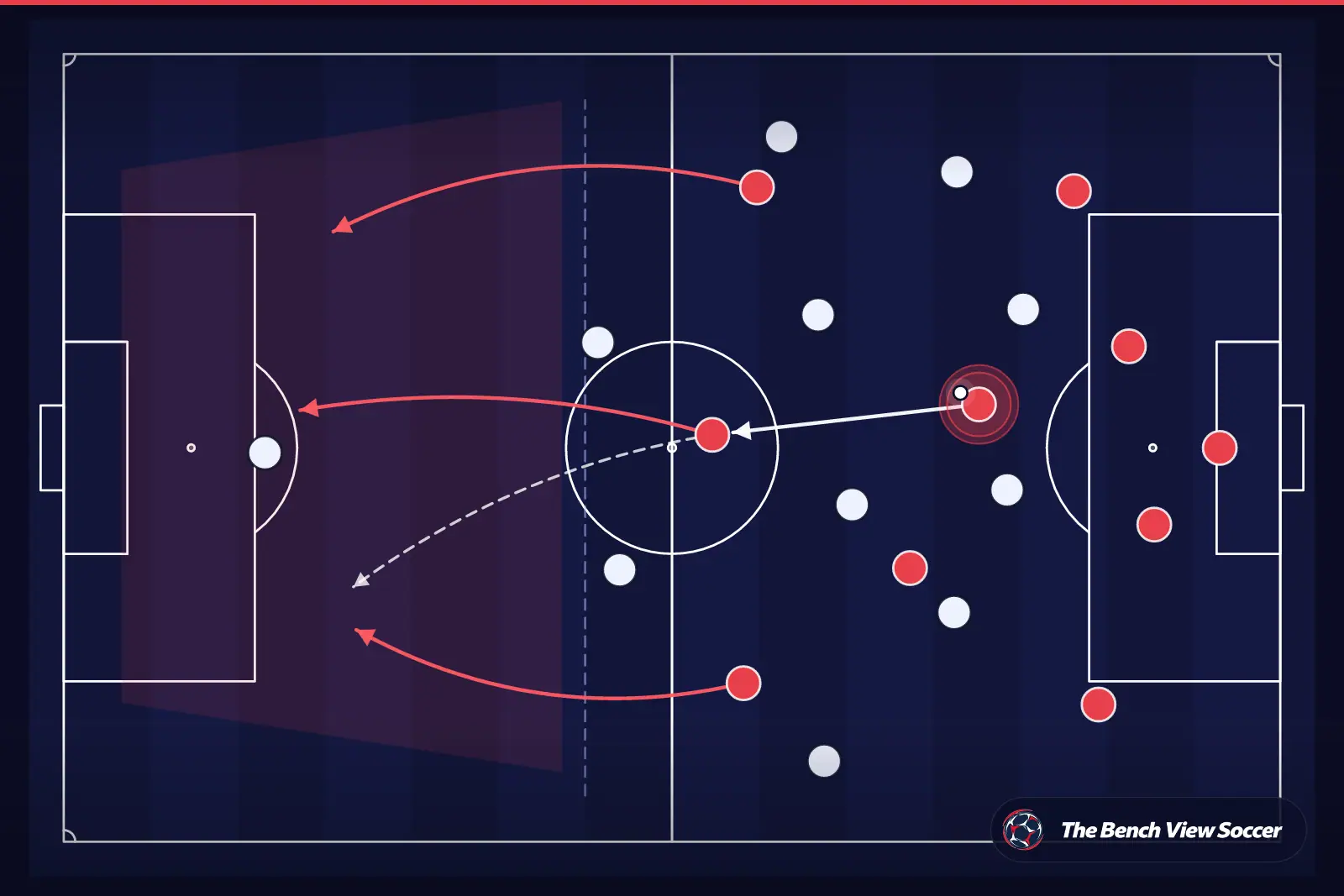
Real Madrid’s transition strength comes from three linked ideas: compact defending, immediate forward options, and ruthless speed of execution. When Madrid defends, they often keep a relatively compact block—meaning the team stays connected vertically (front-to-back) so passing lanes into the middle are crowded. This makes ball wins more likely in central zones or just after a forced wide pass. The moment they regain possession, Madrid looks for a “first pass forward,” not a safe sideways pass. That first pass is often into a runner (like Vinícius Júnior), into a receiving forward (like Jude Bellingham arriving between lines), or into a switch that isolates a 1v1. Their fullbacks (for example, Dani Carvajal) can underlap or overlap, but the key is that they don’t all fly forward at once; there is usually at least one holding presence (often Aurélien Tchouaméni, or a midfielder dropping) to secure rest defence—players positioned to stop the counter if the attack breaks down. Madrid’s forwards then attack space, not just feet: one player stretches the last line, another attacks the half-space (the channel between fullback and centre-back), and a third arrives late for cutbacks. Because Ancelotti gives freedom in the final third, the structure is more about principles—verticality, spacing, and timing—than rigid patterns. This balance lets them look spontaneous while still being consistently dangerous in the same types of moments.
Match Examples
A clear reference point is the 2023–24 UEFA Champions League run under Carlo Ancelotti. In the semi-final second leg versus Bayern Munich at the Santiago Bernabéu (2023–24 UCL), Madrid’s decisive moments come from chaos created by quick attacks after regains, second balls, and rapid box occupation—Joselu’s late goals are not “slow build-up masterpieces” but outcomes of sustained pressure where transitions inside the opponent’s disorganized shape matter. Another strong example is Real Madrid vs Manchester City in the 2021–22 Champions League semi-final second leg. Madrid spends long phases defending, but when they win the ball, they immediately look for Vinícius Júnior in space or for a quick connection to Karim Benzema, turning City’s advanced positions into a weakness. In La Liga 2023–24, matches where Madrid faces high lines or aggressive fullbacks show the same plan: quick diagonals into wide runners, then a fast second action—either a cutback to arriving midfielders like Bellingham or a near-post run to finish. Even when the opponent has more possession, Madrid’s transition intent shapes the game: they bait pressure, win the ball, and attack before the opponent can restore defensive distances. The common thread across seasons and opponents—whether City under Pep Guardiola, Bayern, or domestic rivals—is that Madrid treats the first 5–10 seconds after a regain as a prime scoring window.
Related Concepts & Skills
Training Implications
If you coach a school team or play 7v7/11v11 in India, you can train Madrid-style transitions with simple, concrete drills and clear rules. Start with a 6v6 + 2 neutral players in a 40x30m area: the team that wins the ball has 8 seconds to attempt a shot or enter a “scoring zone” near the box. This forces immediate forward play and teaches players to scan before receiving. Add a rule that the first pass after regain must be forward or diagonal (not straight sideways) unless blocked—this builds the habit Madrid relies on. Next, coach roles in transition: assign one “security player” (your Tchouaméni role) who stays behind the ball when others break, and rotate that role so everyone learns rest defence. For timing, run a pattern-based drill: 3 attackers vs 2 defenders starting from a midfield regain—wide runner sprints, central player holds for a bounce pass, third player arrives late at the edge of the box for a cutback finish. Coach the decision: if the defender drops, carry the ball; if the defender steps, slip a pass into space. Finally, train defensive-to-attack switching with a “two-goal transition game”: after a shot or turnover, the other team attacks the opposite direction immediately. Your coaching points should be measurable: first action within 2 seconds, at least one run in behind on every regain, and one player always protecting the centre during the break.
The Bench View app
Don’t just read football — train it
Everything you read here, turned into training you can follow step by step.
Physical training at home
AI daily sessions adapted to your level and position. No equipment needed.
Tactical training courses
Step-by-step courses on positioning, pressing, build-up and decision making.
- 7 days free
- No commitment
- Cancel anytime
Free account: 2 physical sessions + the first tactical course. PRO: 7-day free trial — cancel before day 8 and you pay nothing.