

Introduction
Arriving late in the box is one of those small, repeatable details that separates good teams from great ones. For a central midfielder or playmaker, the ability to time a run into the penalty area — arriving after the first wave of attackers — creates overloads, adds unpredictable threat and opens space for teammates. It is not just about scoring: late arrivals stretch defensive attention, force extra cover, and change opponents' defensive priorities.
This article breaks down the principle for intermediate players and coaches: how to read cues, where to run, the role of supporting runs, and how managers at elite clubs have used this tactic to create goals. We will connect the tactical logic to precise positional details and practical training ideas so coaches can cultivate the timing, angles and decision-making that make late runs a repeatable weapon.
Tactical Breakdown
What 'arriving late' actually does
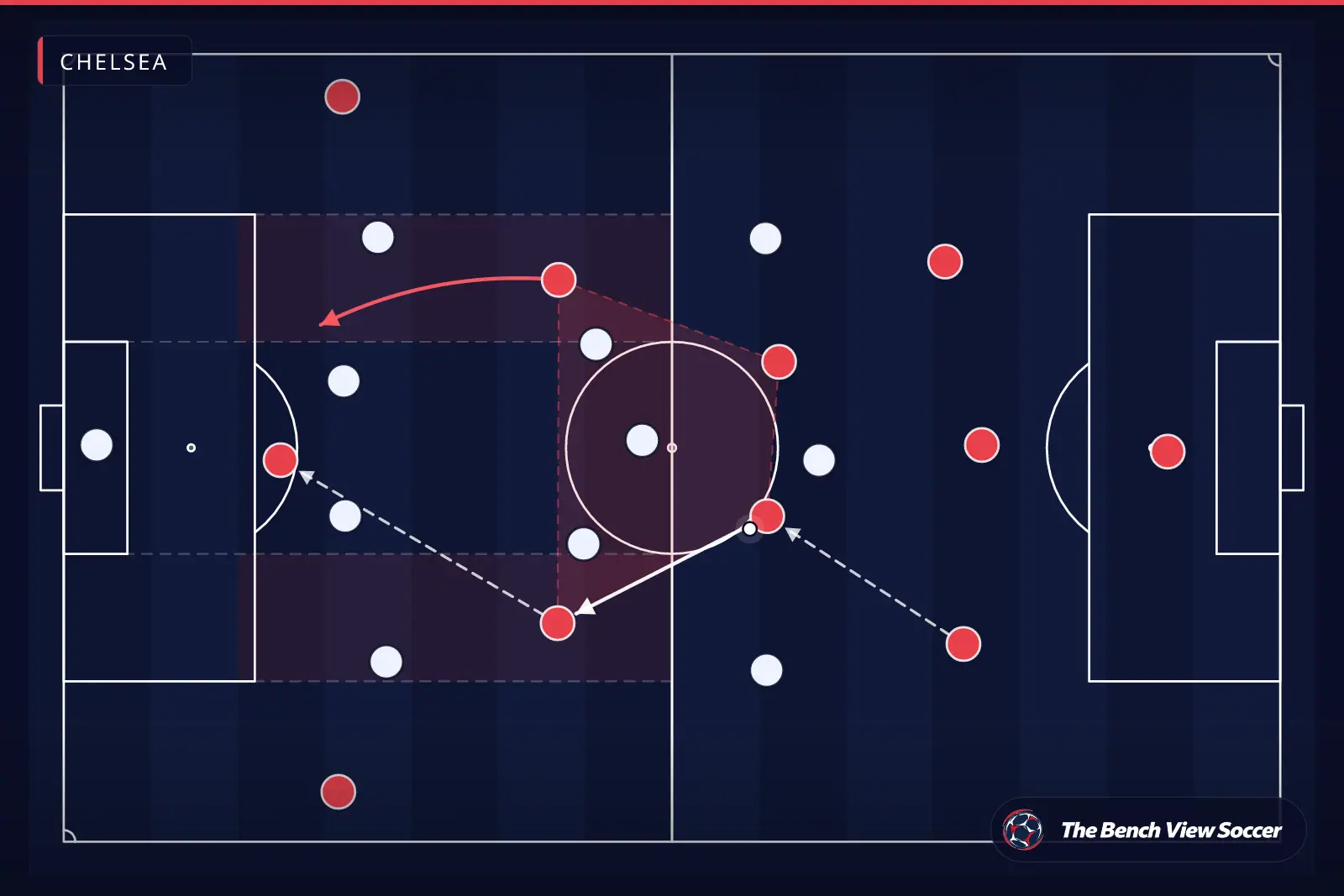
Late runs into the box are a timing and spatial concept. The midfielder delays his forward movement until the ball is committed toward the final third or an attacking wide player. By entering late, the midfielder appears in the half-space or central lane after defenders have either keyed on ball-carriers or committed to initial runs, creating mismatches or pockets of space.
Key positional details:
- Starting position: A touch deeper than the first line of attack (around the top of the box) to preserve vision and spring the run.
- Trigger cues: A vertical pass into the channel, the winger taking the fullback wide, or a third-man combination near the corner of the penalty area.
- Running angle: Diagonal toward the far post or across the six-yard box — not straight through the crowded central lane — to avoid being blocked and to attack the space vacated by defenders.
- Support structure: A second midfielder covers the vacated zone; wide players and fullbacks provide overlap and create the passing lane.
For playmakers, this requires balancing creation and finishing: the same player must recognize when to pick the final pass or commit to the run, and that decision is coached by repetition and situational cues rather than static positioning.
Real Match Examples
Elite examples and how they use the detail
Frank Lampard is the archetype: as a player at Chelsea he accumulated goals by timing runs from the edge of the box, often arriving after the ball had been worked wide or played into the penalty area. Lampard's runs forced defenders to split attention between initial attackers and the arriving midfielder, producing second-ball chances and open shots.
At Manchester City under Pep Guardiola, Ilkay Gündogan and Kevin De Bruyne have regularly executed late entries. Guardiola's patterns — quick wide switches and overloads in the half-space — create the triggers for a deeper midfielder to explode into the box between the center-back and fullback. The result is a player arriving with momentum to finish or to exploit rebounds.
Thomas Müller at Bayern Munich offers a slightly different template: as a Raumdeuter, he times his movements to occupy vacated zones often near the penalty spot. While Müller is more of an attacking midfielder/second striker, the concept mirrors what central midfielders do in many top teams: read the route of the attack, delay, and occupy the decisive zone with a run that defenders struggle to track.
Key Principles
Key principles coaches must remember
- Timing beats speed: A perfectly timed run arriving a split-second late is more dangerous than a faster run that arrives too early and is marked.
- Communication and cover: When a midfielder vacates his zone to run, another player (covering midfielder or fullback) must occupy the space to prevent counter-attack vulnerability.
- Vary the angles: Teach runs toward far post, near post pulls and late checks to the penalty spot to make the run less predictable.
- Use triggers: Base runs on clear triggers — specific passes, winger actions, or third-man combinations — so players stop guessing and start reacting consistently.
Training Implications
How to train arriving late into the box
Training should progress from isolated repetitions to game-like sequences. Start with pattern-work: practice the attacking sequence (wide player beats fullback, cutback or cross, midfielder times run) at low speed, focusing on the trigger and the angle of attack. Use a drill with a playmaker, one wide player, one crossing player and the arriving midfielder — repeat until runs are consistently timed.
Advance to conditioned games: 6v6+2 neutral practice where the neutral players create overloads and the target midfielder must score after a trigger pass. Add constraints that reward successful late arrivals (extra points for goals from arriving midfielders) to shape behaviour. Include defensive transition work so covering players learn to occupy vacated zones. Finally, use video review and GPS data where available to show the exact timing and distance of successful runs; players learn visually as much as physically.
Apply This in Your Game
Reading about tactics is one thing. Our training units teach you to execute these concepts in real match situations.