Introducción
France a menudo frustran a los rivales no tanto por la presión constante, sino por un bloque bajo compacto que hace que el terreno de juego parezca más pequeño. Bajo Didier Deschamps, la idea es simple: proteger primero el centro, obligar a jugar por las bandas y estar listo para contraatacar con velocidad. Para los aficionados indios que aprenden tácticas, “compacto” básicamente significa que el equipo mantiene distancias cortas entre jugadores—de delante a atrás y de lado a lado—de modo que los pases a zonas peligrosas se vuelven difíciles. Por eso France puede parecer tranquila durante largos periodos y aun así mantener el control. Sus delanteros no siempre persiguen; en su lugar bloquean las líneas de pase centrales, guían el balón hacia zonas menos amenazantes y confían en que los mediocampistas y defensas ganen las segundas jugadas. Este artículo desglosa cómo construyen ese bloque compacto, por qué es tan difícil jugar a través de él y qué hacen los equipos atacantes para romperlo—sin asumir que ya conoces los términos tácticos.
Cómo funciona
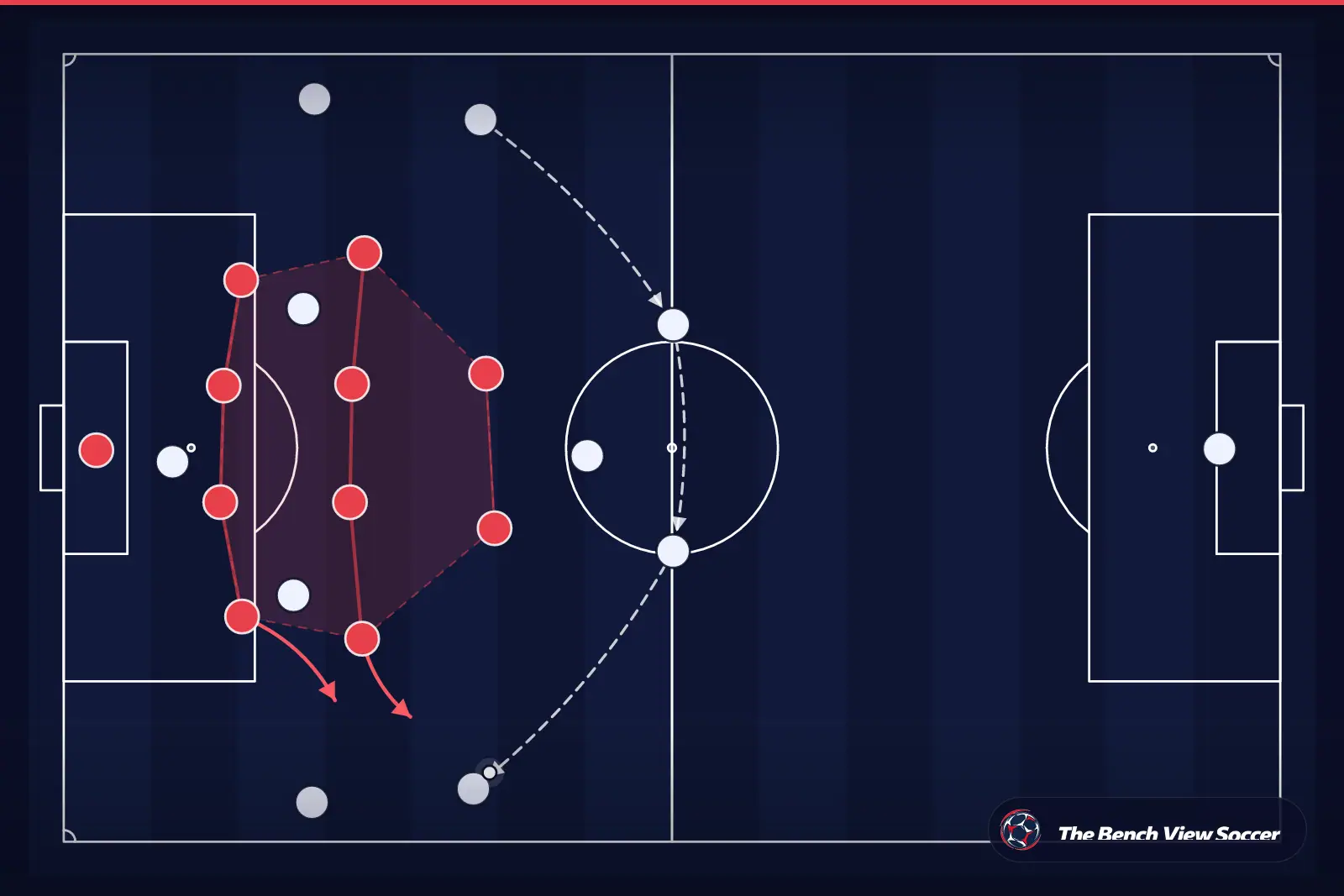
La defensa compacta de France suele aparecer en un 4-4-2 o 4-2-3-1 según el personal, pero los principios clave se mantienen constantes. Las dos líneas (la defensa de cuatro y la línea de cuatro del mediocampo) se mantienen próximas, con la línea del mediocampo cayendo rápidamente para proteger la “zona 14” (el espacio central justo fuera del área). Los jugadores de delanteras angulan su presión en lugar de salir a toda carrera hacia el balón. Este desplazamiento curvo importa porque bloquea el pase fácil al mediocampo central y obliga al rival a jugar hacia la línea de banda. Una vez que el balón se abre, el extremo de France sale a presionar, el lateral se mantiene conectado por detrás de él, y el mediocentro del lado del balón se desplaza para frenar una conducción hacia dentro. Mientras tanto el extremo del lado contrario se interna para mantener al equipo estrecho, dejando al lateral opuesto ligeramente libre a propósito. Ese es el intercambio: France prefieren conceder circulación por las bandas antes que penetración por el centro. Cuando el rival intenta jugar un pase vertical al pie del delantero, el central de France se aproxima fuerte y un mediocentro cubre por detrás—creando una mini “trampa” alrededor del receptor. En el momento en que se recupera la posesión, France buscan inmediatamente el primer pase en profundidad al espacio, a menudo al canal entre lateral y central, lo que castiga a los equipos que comprometen demasiados jugadores para romper el bloque.
Ejemplos de partidos
Un claro ejemplo de la compacidad de Francia aparece en la 2018 FIFA World Cup en los octavos de final contra Argentina (4–3). Durante largos tramos Francia se sitúa en un bloque medio: la línea del mediocampo se mantiene estrecha, se limita el acceso central de Lionel Messi, y Argentina son a menudo empujados hacia centros desde las bandas. Cuando Francia recupera el balón, rompen con carreras directas—las transiciones de Kylian Mbappé atacan repetidamente el espacio que dejan los laterales adelantados de Argentina, mostrando el esquema "defender compactos, contraatacar rápido". Otro ejemplo es la semifinal de la 2022 FIFA World Cup contra Morocco (2–0). Morocco intentan combinar por el centro con pases cortos y desmarques del tercer hombre, pero las líneas de Francia se mantienen conectadas y protegen las zonas centrales; Morocco crea sus mejores momentos cuando sobrecargan por las bandas y atacan el área rápidamente antes de que Francia se reorganicen. En la UEFA Euro 2024, los partidos de la fase de grupos de Francia muestran el mismo patrón: los rivales circulan con paciencia, pero las ocasiones son escasas porque Francia bloquea las entradas centrales y fuerza centros desde ángulos menos ideales. En estos torneos, el tema recurrente es que para romper a Francia se necesita algo más que la posesión: los equipos requieren movimientos coordinados para desplazar el bloque, crear un jugador libre en el espacio entre líneas, o explotar el espacio del lado alejado antes de que Francia se desplace.
Conceptos y habilidades relacionados
Implicaciones para el entrenamiento
Para entrenar tanto el bloque compacto a la francesa como los métodos para romperlo, las sesiones deben ser específicas y medibles. Para defender: realiza un ejercicio de fase de juego 10v8 o 11v10 en el que el equipo defensor se sitúa en un 4-4-2 de bloque medio. Establece una norma: las líneas defensivas deben permanecer a 25–30 metros desde la línea del delantero hasta la línea defensiva (usa conos para marcar la profundidad máxima). Entrena la presión del extremo: sale a presionar solo cuando el balón va a la banda; si no, se pliega hacia dentro para proteger el centro. Añade una condición de puntuación para los defensores: recuperar el balón y completar un primer pase progresivo en 5 segundos para simular la intención de contraataque de Francia. Para atacar: utiliza un 8v8 + 2 jugadores neutrales en los carriles del medio espacio para fomentar el juego entre líneas. Da a los atacantes dos objetivos: (1) marcar de forma normal, y (2) marcar “goles por cambio de juego” completando un cambio de campo y luego entrar en el área en 8 segundos—esto entrena la idea de mover el bloque y atacar el lado contrario antes de que se desplace. Incluye una restricción de 'tercer hombre': un gol cuenta doble si el pase final llega desde una carrera de tercer hombre (A a B a C). Finalmente, entrena la toma de decisiones en los centros: en lugar de balones esperanzadores, exige tres tipos—pase atrás desde la línea de fondo, centro temprano por detrás de la línea defensiva, y centro raso y potente por el área de seis metros—porque los equipos compactos defienden la primera oleada pero pueden ser vulnerables a las carreras bien sincronizadas de la segunda oleada.
La app de The Bench View
No solo leas fútbol: entrénalo
Todo lo que lees aquí, convertido en entrenamiento que puedes seguir paso a paso.
Entrenamiento físico en casa
Sesiones diarias con IA adaptadas a tu nivel y posición. Sin material.
Entrenamiento táctico
Cursos paso a paso de posicionamiento, presión, salida de balón y toma de decisiones.
- 7 días gratis
- Sin compromiso
- Cancela cuando quieras
Cuenta gratis: 2 sesiones físicas + el primer curso táctico. PRO: 7 días de prueba gratis; cancela antes del día 8 y no pagas nada.