Introduction
Liverpool under Jürgen Klopp becomes famous in the Premier League and UEFA Champions League for a simple but ruthless idea: lose the ball, then win it back immediately. This is what many call “gegenpressing” (German for “counter-pressing”). For fans used to thinking of defending as something that starts only when the opponent settles into possession, Liverpool offers a different lesson: the best moment to defend is often the instant after you attack. The opponent is unbalanced, their players are spread out, and the ball-carrier rarely has perfect passing options. Liverpool’s gegenpress is not just sprinting wildly; it is organised pressure that aims to either steal the ball or force a rushed clearance. It also connects directly to how Liverpool attacks—because winning the ball high up the pitch often creates quick shots, cut-backs, and one-touch combinations. Understanding their approach helps you read matches more clearly: you start noticing why certain passes feel “unsafe,” why Liverpool’s midfield looks like it is swarming, and why opponents sometimes look panicked even when they technically have possession.
How It Works
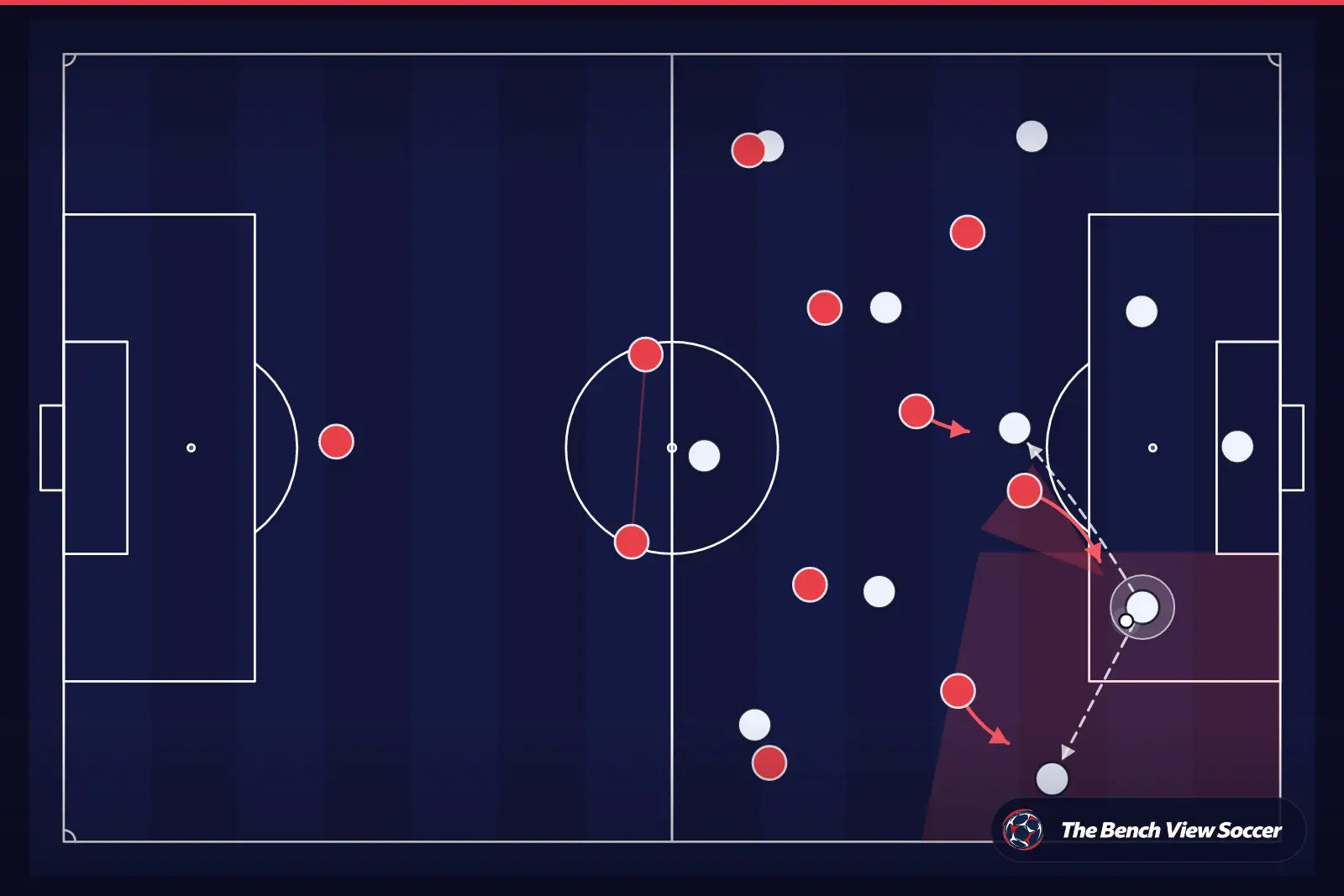
Liverpool’s gegenpress works like a coordinated net that tightens around the ball the moment possession is lost. The first defender is usually the player who loses it or the nearest player—his job is to delay, block the forward pass, and force the opponent into a predictable direction. Around him, teammates take “cover shadows” (they position their bodies so they press one player while also blocking a passing lane to another). The key is compactness: Liverpool keep the distance between their front line, midfield, and defence short so that when the press starts, support arrives within two or three steps, not ten. They often funnel play towards the touchline, where the sideline acts like an extra defender and the opponent has fewer exits. In Klopp’s Liverpool, the wingers and full-backs are vital: the winger presses the receiver while the full-back steps up to trap any down-the-line escape. The nearest central midfielder locks the inside passing option, and the centre-back holds a high line to squeeze space. The objective is not always a clean tackle—sometimes the win is a forced long ball, which Liverpool’s centre-backs and midfield can contest and pick up second balls. In other words, the press is designed to create either immediate regains or “bad” opponent possessions that Liverpool can win on the next action.
Match Examples
A clear example is Liverpool vs Barcelona in the 2018–19 UEFA Champions League semi-final second leg at Anfield. Liverpool’s goals are memorable, but the pressure patterns matter too: when Barcelona try to play out, Liverpool’s front players jump aggressively to the ball side, with midfielders stepping in to cut central lanes. Barcelona’s first pass after regaining possession often becomes hurried, and Liverpool’s compact shape makes it hard for Lionel Messi’s team to find calm progression. Another strong reference point is Liverpool vs Manchester City in the 2019–20 Premier League at Anfield (Liverpool win 3–1). City under Pep Guardiola normally build patiently, but Liverpool’s counter-press after losing the ball in wide areas frequently forces City to play faster than they prefer, leading to loose clearances and transitions. You also see it in Liverpool vs Tottenham Hotspur in the 2018–19 Champions League final: the match is tense and low-flow, yet Liverpool’s immediate pressure after losing possession reduces Tottenham’s ability to counter at speed, pushing Spurs into longer, lower-percentage passes. Across these matches, the repeated theme is the same: Liverpool’s “five-second” reaction after losing the ball turns opponent possession into discomfort, and that discomfort creates attacks without long build-up.
Related Concepts & Skills
Training Implications
To train a Liverpool-style counter-press, start with habits, then add structure. First, run a 5v5 + 2 neutral “transition rondo” in a 20x20 metre grid: when a team loses the ball, they have five seconds to win it back; if they succeed, they get a bonus point. Coach the nearest player to press instantly while a second player covers the most dangerous forward pass, not the nearest man. Second, use a “touchline trap” drill: set a channel along one side (8 metres wide). Play 6v6, but points count double if you win the ball inside the channel; this teaches players to angle their runs to force play wide and then close exits. Third, add a back line and practise rest defence: in an 8v8 to big goals, demand that at least two defenders and one midfielder stay connected behind the ball during attacks; when possession is lost, those players step up to squeeze space and win second balls. Finally, build communication rules: the presser shouts “go” to trigger the swarm, while the cover player shouts “inside” or “line” to indicate which lane is being blocked. For Indian amateur teams, the biggest actionable focus is spacing: keep 8–12 metres between lines in small-sided games so players can actually arrive to support the press, rather than pressing alone and getting played around.
The Bench View app
Don’t just read football — train it
Everything you read here, turned into training you can follow step by step.
Physical training at home
AI daily sessions adapted to your level and position. No equipment needed.
Tactical training courses
Step-by-step courses on positioning, pressing, build-up and decision making.
- 7 days free
- No commitment
- Cancel anytime
Free account: 2 physical sessions + the first tactical course. PRO: 7-day free trial — cancel before day 8 and you pay nothing.