Introduction
Liverpool’s “gegenpress” becomes a global buzzword under Jürgen Klopp, but for fans trying to read tactics on TV, it is easier to understand as a simple idea: lose the ball, win it back immediately, and attack before the opponent is organised. It is not just running a lot; it is coordinated, pre-planned pressure that uses teammates as moving “walls” to close passing lanes. In the Premier League and UEFA Champions League, Klopp’s Liverpool often looks most dangerous in the five seconds after losing possession, because the opponent is facing their own goal, their teammates are spread out, and their first touch is rarely perfect. This article breaks down the triggers (what starts the press), the traps (where Liverpool tries to steer you), and the risks (what can go wrong). We also connect it to other tactical ideas and finish with practical training advice that grassroots teams can actually use.
How It Works
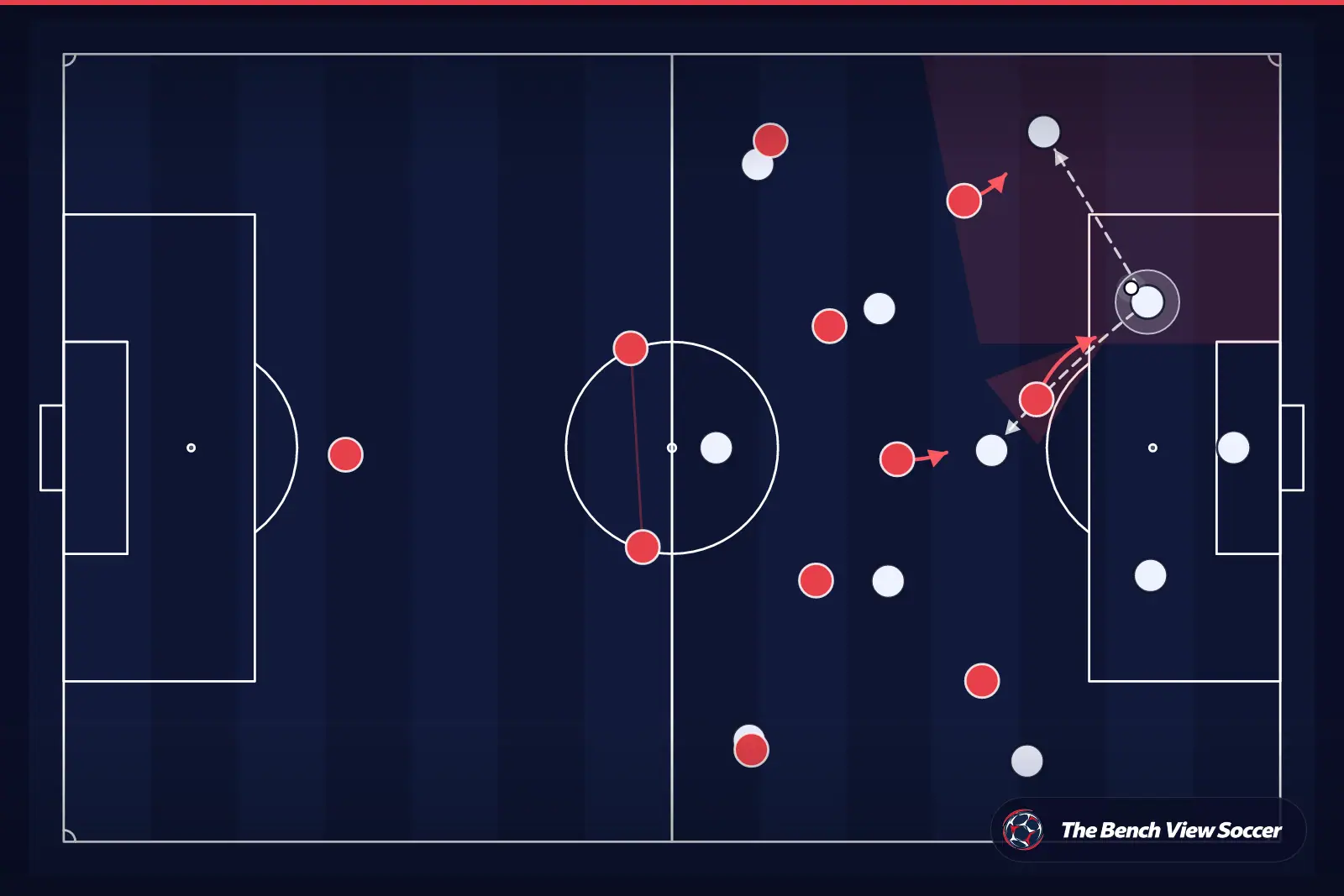
Liverpool’s gegenpress works like a chain reaction built around cues. The first trigger is the moment Liverpool loses the ball in the opponent’s half: the nearest three or four players instantly sprint to the ball zone, not to tackle blindly but to block the simplest exits. A second trigger is a poor first touch or a pass played into a player with their back to goal (a “pressure-facing” receiver). A third is a sideways or back pass near the touchline, because the sideline becomes an extra defender and limits the opponent’s angles. The trap is steering: Liverpool often presses in a curved run so the ball carrier is shown toward the wing, while the inside passing lane is blocked by a midfielder or forward. When the ball is forced wide, the full-back steps up, the winger/forward presses from the outside-in, and a midfielder covers the half-space to prevent an escape pass. Behind the press, the back line holds a relatively high position to compress the field—this reduces the space the opponent can play into, but it also increases danger if the press is broken. The key detail: Liverpool presses to win “useful” balls, not just any ball. If they regain possession centrally, they attack immediately with a vertical pass into Mohamed Salah, Sadio Mané (in earlier seasons), or a runner from midfield. If they win it wide, they often look for a quick cut-back or a fast switch to the far side before the opponent can shuffle across.
Match Examples
A clear example appears in the 2018–19 UEFA Champions League semi-final, Liverpool vs Barcelona (4–0 at Anfield). Barcelona tries to play out after short recoveries, and Liverpool’s front players press in a way that blocks Sergio Busquets and forces play toward the flanks. When Liverpool regains the ball, they attack instantly before Barcelona resets, turning defensive moments into chances. Another strong reference is the 2019–20 Premier League season, especially Liverpool vs Manchester City at Anfield (3–1). Pep Guardiola’s City is usually elite in build-up, yet Liverpool’s pressing triggers—pressing on back passes to the full-back and jumping on receiving touches facing their own goal—create rushed clearances and regain moments that lead to fast attacks. For a contrast that shows the risks, look at the 2020–21 Premier League match Liverpool vs Aston Villa at Villa Park (7–2). Villa escapes pressure by playing early forward balls and using runners to attack the space behind the high line; once the first wave of pressure is bypassed, Liverpool is exposed in open grass. Finally, in the 2021–22 Champions League group stage, Liverpool vs AC Milan at San Siro (2–1) shows a more controlled version: Liverpool presses aggressively in bursts, but also chooses moments to drop into a compact shape, illustrating that gegenpressing is not “all the time”—it is timed and situation-dependent.
Related Concepts & Skills
Training Implications
To train a Liverpool-style gegenpress in an actionable way, start with a “5-second rule” drill. In a 6v6 or 7v7 small-sided game, every time a team loses the ball, they must try to regain it within five seconds; if they do, they get an extra point or keep possession automatically. This builds the instinct of immediate reaction. Next, coach the curved pressing run: set up a 4v4+2 neutral possession box where defenders can only win the ball if they force play to one side, teaching players to angle their runs to block the inside pass. Add a touchline trap drill: play in a narrow channel with mini-goals, rewarding regains within two passes when the ball is forced to the sideline. For the “rest defense” part, use an 8v6 transition game: the attacking team keeps two defenders and one holding midfielder behind the ball at all times; if the press is beaten, those three must delay the counter until teammates recover. Finally, make communication a non-negotiable coaching point: assign simple keywords like “Lock” (press now), “Show wide” (steer to touchline), and “Hold” (stop jumping, reset compact). Indian grassroots teams often run a lot but press randomly; these drills teach synchronisation, angles, and protection behind the press—exactly what makes Liverpool’s gegenpress more than just intensity.
La app de The Bench View
No solo leas fútbol: entrénalo
Todo lo que lees aquí, convertido en entrenamiento que puedes seguir paso a paso.
Entrenamiento físico en casa
Sesiones diarias con IA adaptadas a tu nivel y posición. Sin material.
Entrenamiento táctico
Cursos paso a paso de posicionamiento, presión, salida de balón y toma de decisiones.
- 7 días gratis
- Sin compromiso
- Cancela cuando quieras
Cuenta gratis: 2 sesiones físicas + el primer curso táctico. PRO: 7 días de prueba gratis; cancela antes del día 8 y no pagas nada.