Introduction
Liverpool’s high press is one of the most recognisable out-of-possession behaviours in modern European football. From Jürgen Klopp’s Champions League nights to their Premier League title run, the idea stays consistent: win the ball back quickly, close to the opponent’s goal, and attack before the defence can reset. For fans new to tactics, think of the press as an organised “hunt” rather than random running. Liverpool’s forwards and midfielders move like a net—one player pressures the ball, while teammates block the obvious passes so the ball-carrier feels trapped. The goal is not only a tackle; it is also forcing a hurried pass that Liverpool can intercept. This article breaks down three key parts: the triggers that tell Liverpool when to jump, the traps that funnel opponents into risky areas, and the most common opponent responses—going long, playing through, or switching sides. Understanding these patterns helps you watch matches with a coach’s eye, not just a fan’s emotion.
How It Works
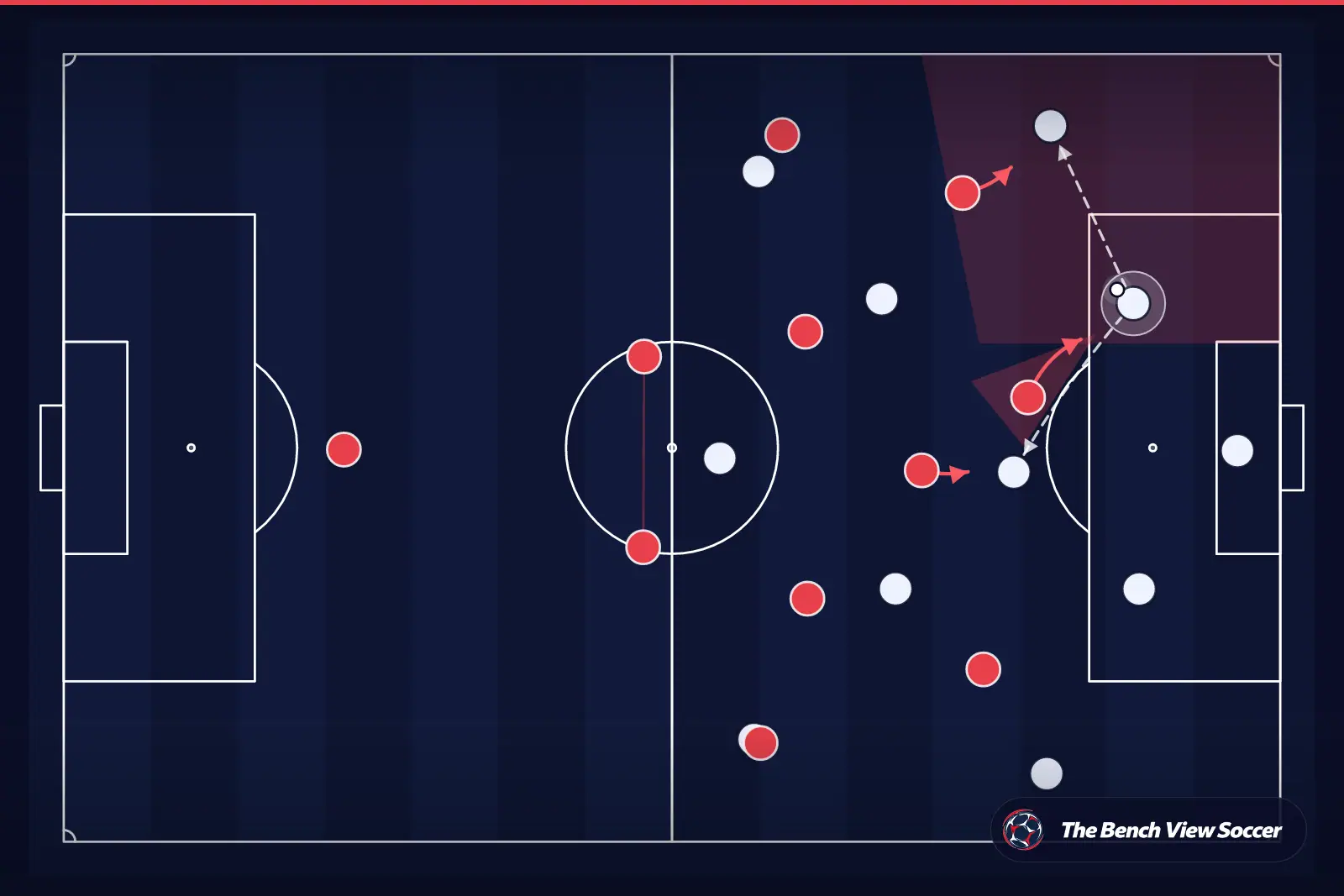
Liverpool’s high press works because it links pressure on the ball with smart positioning away from the ball. The first concept is pressing triggers—specific moments that signal “go now.” Liverpool often jump when the opponent plays a slow pass back to the goalkeeper, takes a poor first touch, receives with back to goal, or passes into a wide area near the touchline. The second concept is the pressing trap. Liverpool do not always try to win the ball everywhere; they try to steer the opponent into predictable zones. A common trap is in the wide channel: the winger presses from outside-in (so the opponent cannot easily pass down the line), the full-back steps up to lock the outside option, and a central midfielder shifts across to block the inside passing lane. Meanwhile, the striker (often moving from the centre) positions to cut off the pass into the nearest centre-back or defensive midfielder. This creates a “crowded triangle” around the receiver. Another trap is around the opponent’s number 6 (the holding midfielder). Liverpool’s forward line positions to screen that player, meaning the centre-backs cannot simply pass into midfield. When the ball is forced wide, Liverpool press aggressively and look for immediate regains. When the press is beaten, the team reacts with counter-pressing: the nearest players sprint toward the ball to delay the counter and force a safe backward pass. Even if Liverpool do not win the ball instantly, they often win territory, because opponents clear long under pressure and Liverpool can attack the second ball.
Match Examples
In the 2018–19 UEFA Champions League semi-final second leg at Anfield, Liverpool vs Barcelona shows the press as an emotional and tactical weapon. Liverpool press Barcelona’s build-up with Roberto Firmino’s replacements and the wide forwards closing centre-backs while midfielders step up to contest loose touches. The key is how Liverpool turn pressure into repeat attacks: each regain or forced clearance keeps Barcelona defending, and Liverpool’s rhythm never drops. Another clear example is Liverpool vs Manchester City in the 2019–20 Premier League at Anfield. Pep Guardiola’s City normally play through pressure, but Liverpool’s press triggers appear when City circulate slowly across the back line. Liverpool’s forwards curve their runs to block central passes, forcing City wider, where the touchline helps Liverpool trap. City respond with quick switches and brave passes into midfield, but that also increases risk—one loose touch invites a turnover and a transition attack. A third example is the 2021–22 Premier League match Manchester United vs Liverpool at Anfield (Liverpool win 4–0). United attempt to build short, but Liverpool jump on backward passes and hesitant touches. The press becomes a scoreboard tactic: each successful trap creates another shot, another corner, another wave. United’s main response is to go long, but Liverpool’s centre-backs and midfielders read the long ball early and compete for second balls. Finally, in the 2022–23 Premier League match Liverpool vs Arsenal at Anfield (2–2), you see the opponent adjusting. Mikel Arteta’s Arsenal try to bait the press with short passes, then release quickly into the space behind Liverpool’s first line. Arsenal also use quick third-man combinations (pass, set, and play out) to escape the trap. The contrast across these matches teaches a key lesson: the press is powerful, but opponents can prepare counter-solutions if they stay calm and coordinated.
Related Concepts & Skills
Training Implications
To train a Liverpool-style high press, you need clarity on roles, distances, and communication. Start with a 6v6 + 2 neutral possession drill in a 30x25 metre area. The pressing team earns 2 points for winning the ball within 6 seconds, and 1 point for forcing the ball out of play. This scoring teaches players that “good pressing” includes forcing mistakes, not only tackles. Coach three triggers: (1) any back pass to the goalkeeper, (2) any lateral pass between centre-backs, and (3) any first touch that bounces away from the receiver. When a trigger happens, the nearest player presses at speed, and two teammates immediately mark passing lanes rather than chasing the ball. Next, build the wide trap with a structured 7v7 in two thirds of the pitch, with channels marked near each touchline. Condition: the build-up team must pass through a wide channel at least once before scoring. This forces realistic wide receptions under pressure. Coach the winger to press outside-in, the full-back to step up to lock the line, and the near central midfielder to block the inside lane. Use simple coaching language: “Angle your run to show them where you want,” “Arrive as the ball arrives,” and “One presses, two cover.” Finally, train the counter-press with a transition game: 5v5 in a 25x20 area, but every time possession changes, the team that lost the ball must win it back within 5 seconds or retreat behind a marked line. This teaches the key habit Liverpool show: immediate reaction after losing the ball. Track three measurable targets each session—number of regains in the opposition half, seconds to first pressure after loss, and how often the opponent is forced long. These are simple metrics even amateur Indian teams can record with a phone and a notebook.
The Bench View app
Don’t just read football — train it
Everything you read here, turned into training you can follow step by step.
Physical training at home
AI daily sessions adapted to your level and position. No equipment needed.
Tactical training courses
Step-by-step courses on positioning, pressing, build-up and decision making.
- 7 days free
- No commitment
- Cancel anytime
Free account: 2 physical sessions + the first tactical course. PRO: 7-day free trial — cancel before day 8 and you pay nothing.