Introduction
Liverpool’s “press” looks like chaos to new viewers, but it is actually a series of planned moments when the team collectively decides: now we hunt. Those moments are called press triggers—specific cues (a bad touch, a sideways pass, a receiver facing his own goal) that tell the nearest Liverpool players to sprint, block passing lanes, and force the opponent into a mistake. For fans watching the Premier League or UEFA Champions League, learning triggers is the easiest way to “read” Liverpool without getting lost in constant running. Under Jürgen Klopp, Liverpool’s identity is built on winning the ball quickly and attacking immediately after. Even as the squad evolves and the midfield changes, the logic stays consistent: press as a unit, trap the opponent near the touchline, and pounce when the ball goes to a predictable zone. This guide breaks down what Liverpool look for, how the press is coordinated, and why it creates chances that feel sudden but are actually rehearsed.
How It Works
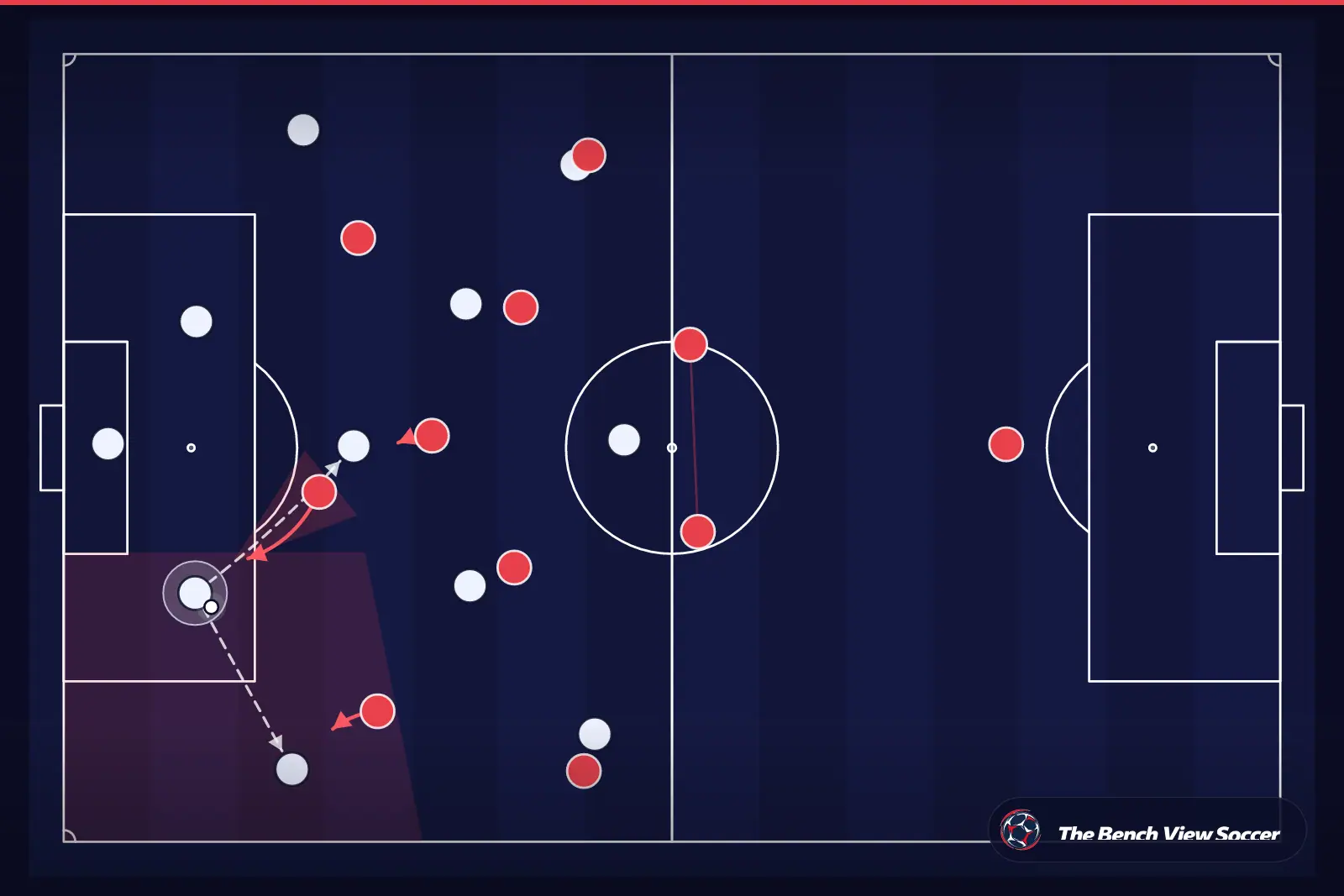
Liverpool’s press triggers usually start with information, not emotion. The first cue is the opponent’s body shape. When a defender or midfielder receives facing his own goal, Liverpool press because the next pass is limited and often slow. The second cue is the type of pass: a bouncing ball, a pass played slightly behind the receiver, or a square pass across the back line. These passes buy Liverpool time to arrive. The third cue is location. Liverpool press harder when the ball moves into wide areas, because the touchline acts like an extra defender; it removes one side of the receiver’s options. In practice, the front three (or front line) initiates the sprint, but the key is the second wave: midfielders step up to mark “inside” passing lanes, and full-backs push high to lock the wide outlet. The centre-backs hold a brave, high line to compress space so the opponent cannot simply play long and reset. Another important trigger is the goalkeeper receiving under pressure. Liverpool’s nearest forward curves his run to block the pass into the pivot (the central midfielder who helps build play), forcing a long kick that Liverpool can contest. When the trap works, the opponent plays a rushed pass into a crowded zone, and Liverpool immediately attacks in transition—often with one or two passes into the box.
Match Examples
A clear reference point is Liverpool vs Manchester City in the Premier League 2017-18 (4-3 at Anfield). Pep Guardiola’s City try to build through the middle, but Liverpool press aggressively when City play square passes across the back line and when a receiver takes a touch towards his own goal. Liverpool’s front players jump, and the midfield steps forward to choke the passing lanes into City’s central players, creating turnovers that quickly become shots. Another famous example is Liverpool vs Barcelona in the UEFA Champions League 2018-19 semi-final second leg (4-0 at Anfield). Liverpool press is not constant for 90 minutes, but it spikes after certain cues: loose touches near the touchline, passes into a player who is closed from behind, and moments when Barcelona’s defenders are split and cannot find Sergio Busquets cleanly. The press leads to chaos, and Liverpool repeatedly win the ball high enough to keep the attack alive. A more recent illustration is Liverpool vs Manchester United in the Premier League 2021-22 at Anfield (4-0). Liverpool trigger the press when United’s defenders receive with their hips facing their own goal; Liverpool then block the central outlet and funnel play wide, where United are trapped and lose the ball. Across these matches, the pattern is consistent: Liverpool do not “run at everything”; they accelerate when the opponent’s options become predictable.
Related Concepts & Skills
Training Implications
To train Liverpool-style press triggers at amateur level, keep it simple and repeat the cues. Start with a 6v6 or 7v7 small-sided game in a rectangle. Create a rule: the defending team can only “full press” when a trigger happens—(a) a backward pass, (b) a sideways pass across the back line, or (c) a receiver’s first touch goes away from goal or pops up. When a trigger occurs, the nearest player presses at full speed for 3 seconds, and two teammates must step up to block the inside options. Coach the angle of approach: the presser runs in a curve to force the ball towards the touchline, not straight at the man. Add a second rule to teach compactness: if one player presses, the back line must step up two metres, so the team stays connected. Use a stopwatch: measure how quickly your team arrives after the trigger (target 1–2 seconds). For individuals, do a simple scanning habit: before the pass arrives, check shoulder once, then decide whether to press or screen (stand in the passing lane). Finally, rehearse the transition: after a win, the first pass goes forward within two touches. This links the press to its real reward—creating chances before the opponent resets.
The Bench View app
Don’t just read football — train it
Everything you read here, turned into training you can follow step by step.
Physical training at home
AI daily sessions adapted to your level and position. No equipment needed.
Tactical training courses
Step-by-step courses on positioning, pressing, build-up and decision making.
- 7 days free
- No commitment
- Cancel anytime
Free account: 2 physical sessions + the first tactical course. PRO: 7-day free trial — cancel before day 8 and you pay nothing.