Introduction
Real Madrid’s most feared moments often start with a simple event: a turnover. One loose touch, one intercepted pass, one tackle near midfield—and within seconds the ball is in the opponent’s box. For fans learning European tactics, this is a great case study because it combines athleticism with clear decision-making. Under Carlo Ancelotti in recent UEFA Champions League seasons and LaLiga campaigns, Madrid’s transition game (how they attack immediately after winning the ball) stays a core weapon even as personnel changes from Karim Benzema to Jude Bellingham and Kylian Mbappé. The key idea is not “run fast” but “run with structure”: who carries the ball, who runs beyond, who offers a safe pass, and how the team protects itself if the counter fails. This article breaks down the patterns Madrid use from turnover to counter, why they work against elite opponents like Manchester City or FC Barcelona, and what you can copy in training or even while watching matches with a sharper tactical eye.
How It Works
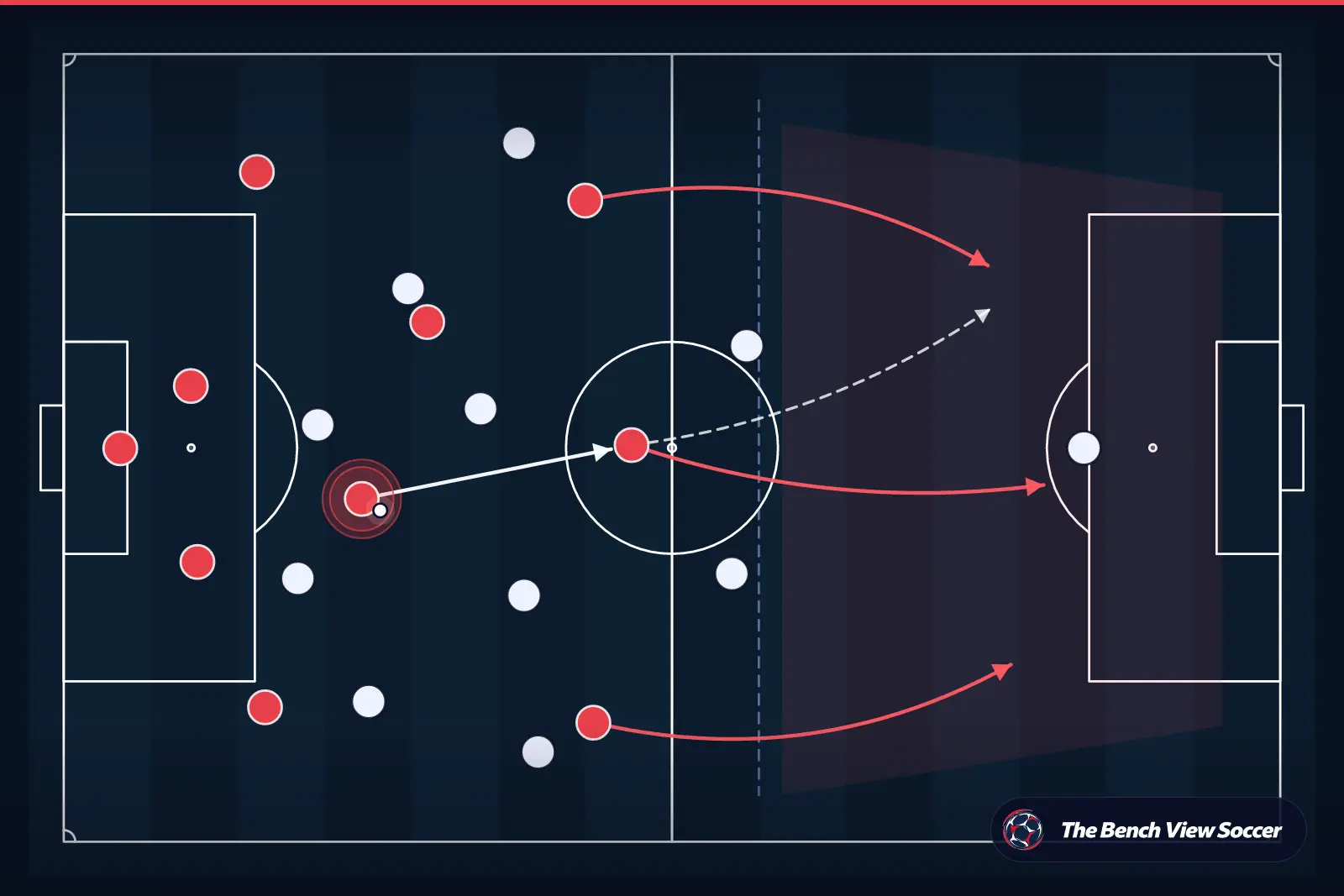
Real Madrid’s transition attack begins with the first action after the regain: secure, scan, and accelerate. The ball-winner (often Aurélien Tchouaméni, Eduardo Camavinga, Federico Valverde, or a centre-back stepping out) rarely forces a risky vertical pass instantly unless a clear lane exists. Instead, Madrid create a “first outlet” within one or two touches—usually a short pass into a central midfielder, or a controlled carry into space. This is crucial: the first pass stabilises the turnover so the counter starts cleanly, not as a 50–50. Next comes the “second wave” decision: if the opponent is disorganised, Madrid attack the space behind the last line immediately; if the opponent still has numbers, Madrid slow slightly, connect, and attack through a set shape. The most common counter pattern is a three-lane sprint. One runner attacks the central lane (a striker like Vinícius Júnior as an inside forward, Mbappé when he plays, or Bellingham arriving), one runner attacks the ball-far lane to stretch the defence, and one player supports underneath for a cut-back. The ball-carrier typically travels in the half-space (the channel between centre and wing) because it keeps two options open: slip a through ball inside, or release wide for a 1v1. Vinícius is especially dangerous because he receives early and drives diagonally, forcing defenders to turn their hips toward their own goal. Meanwhile, Valverde and Bellingham often provide the “third-man run”: they do not ask for the first pass, but they arrive late into the box when defenders are already occupied. Importantly, Madrid’s transition is also about prevention. While two or three players sprint forward, at least two players hold balance behind the ball. Full-backs like Dani Carvajal or Ferland Mendy choose their moments; if one goes, the other often stays. This rest-defence (the players positioned to deal with a lost counter) allows Madrid to attack at speed without becoming open to an immediate counter-counter. Ancelotti’s Madrid therefore look spontaneous, but their spacing is disciplined: vertical threat in front, protective angles behind, and quick recognition of when to go direct versus when to reset.
Match Examples
A clear example appears in the 2023–24 UEFA Champions League semi-final second leg: Real Madrid vs Manchester City at the Santiago Bernabéu. City dominate possession under Pep Guardiola, so Madrid’s attacking moments largely come after regains. When Madrid win the ball, they look for Vinícius early, often into the left channel, because City’s advanced positioning leaves space behind their full-backs. The transition is not only about a long ball; it is about getting the ball to a carrier who can turn pressure into distance. You repeatedly see a Madrid midfielder take the first safe touch, then release into the channel where Vinícius can face the backpedalling defence. Bellingham’s role is also key: he runs beyond to occupy centre-backs, even when he does not receive, creating room for the dribbler or the cut-back. Another match to study is the 2023–24 Champions League quarter-final tie vs Manchester City (especially the first leg at the Bernabéu, 3–3). Madrid’s equaliser and several big chances come from quick breaks where City’s midfield line is split. Valverde’s engine matters here: he either carries through the middle after a loose ball, or he makes the supporting run that keeps the counter alive when the first pass is blocked. This is a good lesson for viewers: the “assist” in a counter is often the run that forces a defender to choose. For a domestic reference, look at El Clásico in LaLiga 2023–24 at the Bernabéu (Real Madrid 3–2 Barcelona). Xavi’s Barcelona push numbers forward and try to control central spaces, but Madrid punish moments when Barça lose the ball while their rest-defence is not set. Madrid’s counters show the classic three-lane principle: a wide threat to stretch, a central runner to pin defenders, and an underlapping/late runner arriving for the finish. These match contexts—against Guardiola’s high-possession City and Xavi’s aggressive Barça—show why Madrid’s transition game remains elite: they do not need many attacks; they need a few clean regains and the right spacing to turn them into high-quality chances.
Related Concepts & Skills
Training Implications
To train a Real Madrid-style transition, build sessions around speed of recognition, not just sprinting. Start with a 6v6 + 2 neutral players in a 40x30 metre grid. Condition: when a team wins the ball, it has 6 seconds to create a shot on mini-goals or a marked end zone. This forces immediate forward thinking. Coaching points: (1) the first pass after regain must be secure—tell players to find the nearest forward-facing option, not the hardest pass; (2) the ball-carrier should drive into the half-space, not straight down the wing every time; (3) demand three lanes: one player wide, one central runner beyond, one support underneath for a wall pass or cut-back. Add a “rest-defence rule” to prevent chaotic counters: at least two players must stay behind the ball during the 6-second window. If they both cross ahead, the shot does not count. This teaches balance, similar to how Madrid protect themselves. Next, run a pattern drill: coach serves a loose ball into midfield, a player wins it, plays to an outlet, and the team attacks 3v2 toward goal. Rotate roles so midfielders practise scanning and forwards practise timing runs. Emphasise timing: the central runner goes as the outlet receives, not earlier, to stay onside and to arrive with speed. Finally, create match realism with an 8v8 on half pitch where one team plays high possession (two-touch limit) and the other plays free-touch but scores double if they score within 10 seconds of a regain. This mimics Champions League scenarios against teams like Manchester City: you defend for longer, then you must be lethal when the chance comes. Track two metrics each week: time from regain to first forward pass, and number of counters that end with a shot. Improvement here translates directly to better transition football.
The Bench View app
Don’t just read football — train it
Everything you read here, turned into training you can follow step by step.
Physical training at home
AI daily sessions adapted to your level and position. No equipment needed.
Tactical training courses
Step-by-step courses on positioning, pressing, build-up and decision making.
- 7 days free
- No commitment
- Cancel anytime
Free account: 2 physical sessions + the first tactical course. PRO: 7-day free trial — cancel before day 8 and you pay nothing.