Introduction
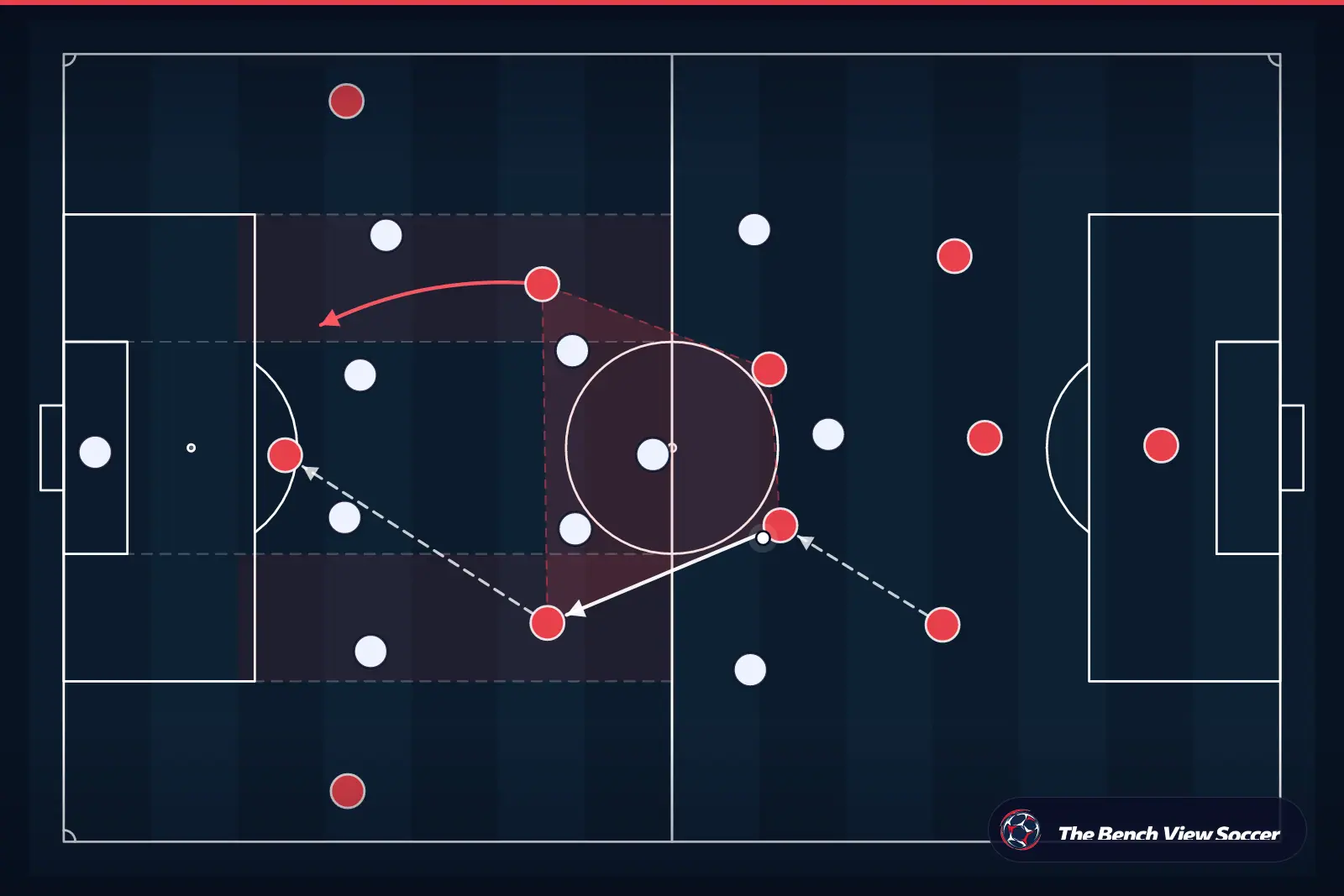
For many fans, “midfield control” can feel like a vague phrase—something commentators say when a team looks calm. Manchester City under Pep Guardiola makes it concrete through one repeatable idea: the midfield triangle. A triangle is simply three players arranged so the ball-carrier has at least two passing options at different angles. That sounds basic, but it changes everything: it lets City play through pressure, drag opponents out of shape, and create free players between the lines. The key is that the triangle is not static. City constantly reshapes it using a pivot (often Rodri), an “8” (like Kevin De Bruyne or İlkay Gündoğan), and a third point that can be a full-back stepping inside (John Stones in 2022–23), a winger coming in (Bernardo Silva), or even a centre-back carrying forward. This article breaks down how those triangles create space, why they are so hard to defend, and how you can spot them—and practice them—in real matches.
How It Works
A midfield triangle creates space in two linked ways: it offers safe circulation (keeping the ball) and it manipulates opponents (moving them). City builds triangles to ensure the player on the ball always has a “short” option for security and a “third-man” option for progression. The third-man idea means Player A passes to Player B not to progress directly, but to attract a defender; Player B then lays off to Player C who now receives facing forward. This is how City turns pressure into advantage. In Guardiola’s teams, the triangle often forms in the half-spaces—the channels between the wing and the centre—because defending there is uncomfortable: full-backs do not want to leave the wing, and centre-backs do not want to step out. When City places an interior midfielder in that zone and supports him with a pivot behind and a wide player outside, the defender must choose. If he steps, City plays around him; if he holds, City plays through him. Importantly, City keeps distances compact (close enough for quick passing) but not too close (so one defender cannot cover two options). The triangle also creates “rest defence”: when City attacks, the pivot and one other point stay positioned to stop counterattacks, allowing the attacking points to rotate freely without losing control.
Match Examples
1) Manchester City vs Real Madrid, UEFA Champions League semi-final second leg, 2022–23 (Etihad). City’s midfield triangles dominate the centre. Rodri sits as the base, while Stones steps into midfield next to him, creating a double base that forms constant triangles with De Bruyne and Bernardo Silva. When Madrid presses with Luka Modrić and Toni Kroos jumping, City plays the third-man: a pass into De Bruyne draws pressure, then a quick bounce finds Stones or Rodri facing forward. This forces Madrid’s forwards to track back, which reduces their counterattacking threat. 2) Manchester City vs Inter, UEFA Champions League final, 2022–23 (Istanbul). Inter defends in a compact 5-3-2, blocking central lanes. City responds by forming triangles in the right half-space: Bernardo comes inside, De Bruyne starts high then drops, and Rodri stays available behind. Even when chances are limited, the triangles keep City stable, prevent Inter from stepping out cleanly, and eventually create the moment where Rodri arrives in the box to score. 3) Manchester City vs Arsenal, Premier League, 2022–23 at the Etihad. Arsenal presses aggressively early, but City’s triangles pull them apart. Stones inverts into midfield, forming a triangle with Rodri and De Bruyne/Gündoğan depending on the phase. When Arsenal’s midfield jumps to press, City uses quick inside passes to free the far-side player, then attacks the space behind Arsenal’s midfield line. The key lesson from this match is that triangles are not only for keeping possession; they are a tool to lure pressure and then exploit the gap it creates.
Related Concepts & Skills
Training Implications
To build triangle habits in training, focus on spacing, scanning, and quick decision-making. Start with a simple 3v1 rondo (three attackers keep the ball from one defender) in a tight square: the rule is the ball-carrier must have two clear angles, not just one. Coach the receiving player to scan before the pass arrives—head up twice: once when the ball leaves the previous player, and once just before first touch. Progress to 4v2 where one attacker acts as a “pivot” who must stay central (Rodri role) and always be available behind the ball; this teaches support positioning. Then add a third-man constraint: every third pass must be a bounce pass (A to B, B one-touch to C) to create the habit of playing through pressure. To connect it to match reality, run a positional game with three vertical channels: wide, half-space, centre. Give points for receiving in the half-space and then finding the far-side teammate within two passes, mirroring how City shifts defenders and attacks the open side. Finally, include a transition rule: if defenders win the ball, they have five seconds to counter into a mini-goal. This forces the attacking triangle to think about rest defence—one player must stay connected behind the ball instead of everyone chasing the next pass.
The Bench View app
Don’t just read football — train it
Everything you read here, turned into training you can follow step by step.
Physical training at home
AI daily sessions adapted to your level and position. No equipment needed.
Tactical training courses
Step-by-step courses on positioning, pressing, build-up and decision making.
- 7 days free
- No commitment
- Cancel anytime
Free account: 2 physical sessions + the first tactical course. PRO: 7-day free trial — cancel before day 8 and you pay nothing.