Introduction
Formation switches mid-game are not random “coach vibes”; they are planned solutions to specific problems: losing control in midfield, failing to progress the ball, or being exposed in transition. For fans watching European football, this is one of the clearest windows into elite coaching. Bayern München and Liverpool are ideal teachers because their modern identities are strong—Bayern often wants dominance through structure and spacing, while Liverpool under Jürgen Klopp builds momentum through intensity, pressing, and fast attacks. When these styles collide in the UEFA Champions League, you frequently see managers adjust shapes without making substitutions, simply by changing player roles and starting positions. This article breaks down how and why those switches happen, what cues you should watch for (especially in midfield and full-back positions), and how a mid-game tweak changes both attacking patterns and defensive security. The goal is to help you watch with a coach’s eye: not “who runs more,” but “who stands where, and why.”
How It Works
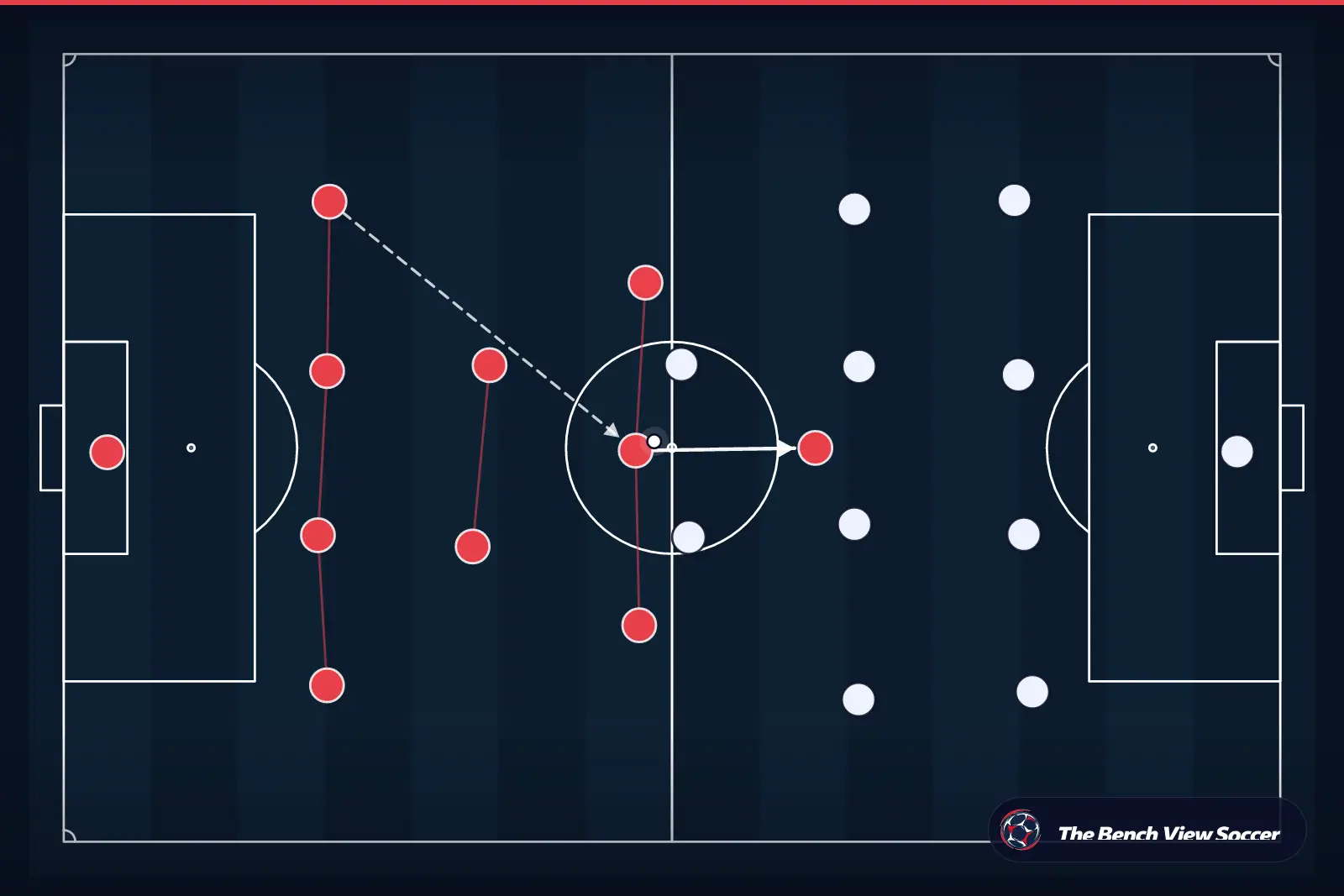
Switching formations mid-game usually means changing the team’s “rest defence” (how it stays safe while attacking), the number of players between the lines, and the passing angles available. A common Bayern move is shifting from a 4-2-3-1 to a 3-2-5 in possession: one full-back steps into midfield, the other stays wide, and a centre-back or holding midfielder forms a back three. This creates a stable base of three at the back plus two midfielders (3-2), allowing five attackers to pin the opponent’s back line. Liverpool often responds by adjusting its press: in a 4-3-3 it can press man-to-man high, but if Bayern overload midfield, Liverpool may drop into a 4-4-2 block, with a winger stepping up alongside the striker to close central passing lanes. The big lesson: the “shape” is not fixed; it changes based on the ball’s location. Watch the full-backs and the nearest midfielder—if a full-back tucks inside, the team is usually chasing control; if both full-backs stay high and wide, the team is chasing width and fast switches. Also watch the opponent’s striker positions: if they split to press both centre-backs, the team may build with three at the back; if they stay narrow, the team may push the full-backs higher to stretch the block.
Match Examples
Two real Champions League references help make this practical. First, UEFA Champions League 2018–19 Round of 16: Liverpool vs Bayern München (0–0 at Anfield, 3–1 Liverpool at the Allianz Arena). Niko Kovač’s Bayern often tries to protect the centre by keeping a double pivot and asking full-backs to time their runs, but Liverpool’s pressing and fast wide attacks force Bayern to make constant small switches: wingers drop deeper to form a more defensive 4-5-1 at times, then jump back into a 4-2-3-1 when Bayern tries to regain territory. In the second leg, Liverpool’s attacking shape frequently resembles a 2-3-5 when it settles in possession: full-backs Andrew Robertson and Trent Alexander-Arnold push high to stretch Bayern, while the midfield three stagger positions to secure the centre. Bayern’s responses show why in-game switching matters: when Liverpool’s full-backs stay high, Bayern’s wide defenders hesitate—step out and risk space behind, or stay back and allow crosses and cut-backs. Another useful comparator is Bayern under Hansi Flick in the 2019–20 UEFA Champions League, especially the 8–2 vs Barcelona quarter-final: Bayern switches between a high-pressing 4-2-3-1 and a more controlled 4-3-3 look as it manages space around the ball. The recurring theme across these examples is not the exact numbers, but the intention: change the shape to win a zone—either the centre (control) or the wings (progression and chance creation).
Related Concepts & Skills
Training Implications
To learn formation switching, train it as a set of role changes, not as “everyone move to new spots.” Start with an 8v8 or 9v9 on a half-pitch. Rule 1: when the ball reaches the full-back, one of two pre-agreed switches must happen—either (A) the near-side full-back inverts into midfield (creating a 3-2 base), or (B) the far-side full-back stays deep while the near-side winger comes inside (creating an extra central player). Coach players to communicate the trigger loudly (“invert” or “hold”). Rule 2: add a transition constraint—if possession is lost, the team has five seconds to win it back (counter-press); if it fails, they must drop into a compact 4-4-2 block. This teaches the link between attacking shape and defensive safety. For actionable details: (1) Pause-play coaching points: check the distances—centre-backs 10–15 metres apart, pivot options on different vertical lines, and at least one wide player “pinning” the touchline. (2) Give midfielders simple scanning targets: before receiving, look over both shoulders; after receiving, identify the far-side winger for a switch. (3) Use a scoring bonus: goals after a switch of play (one side to the other in three passes or fewer) count double, so players feel the value of changing the opponent’s defensive angles. Finally, rotate roles in training so players understand the logic of the switch—especially full-backs and central midfielders, the two positions that usually decide whether a team controls a game or gets countered.
The Bench View app
Don’t just read football — train it
Everything you read here, turned into training you can follow step by step.
Physical training at home
AI daily sessions adapted to your level and position. No equipment needed.
Tactical training courses
Step-by-step courses on positioning, pressing, build-up and decision making.
- 7 days free
- No commitment
- Cancel anytime
Free account: 2 physical sessions + the first tactical course. PRO: 7-day free trial — cancel before day 8 and you pay nothing.