Introduction
Transitions are the moments when a team changes from defending to attacking (or the other way around). They are usually chaotic, because players are not in their “perfect” shapes yet. Elite teams treat that chaos like an opportunity. Liverpool under Jürgen Klopp and Real Madrid under Carlo Ancelotti both score huge goals from counters, but they do it in different ways. Liverpool often creates the counter by forcing a mistake with aggressive pressing, then attacking quickly with vertical passes and fast runners. Real Madrid often invites pressure, wins the ball, and then uses world-class decision-making to attack the space behind the opponent. For fans watching the UEFA Champions League or the Premier League, these goals can look like “just pace” or “just brilliance.” In reality, they come from repeatable habits: where players stand before the ball is won, who runs first, which pass is chosen, and how the team protects itself if the counter fails. This article breaks down how both clubs turn transitions into goals, and what you can learn from them.
How It Works
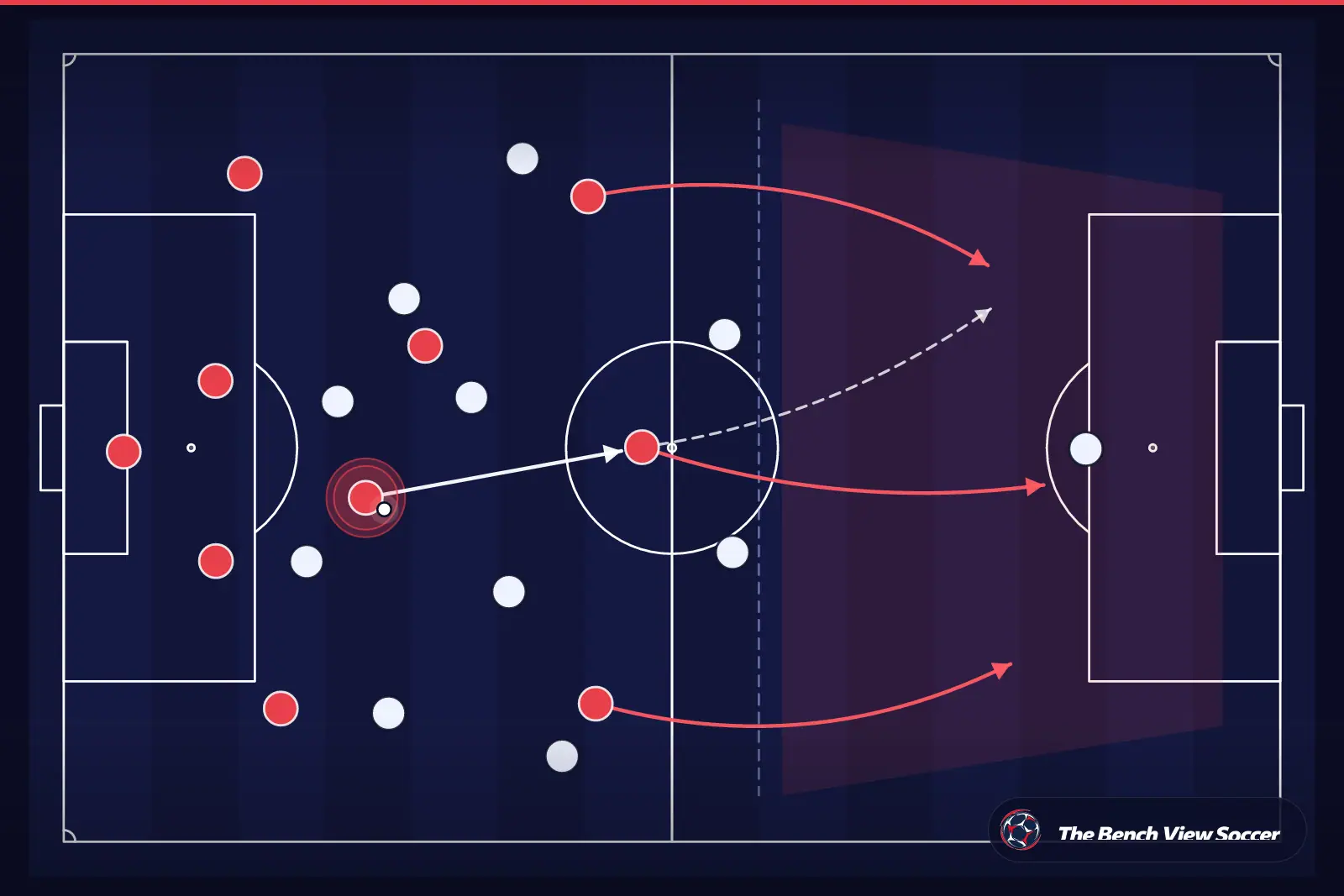
A counter-attack becomes dangerous when three things happen fast: the ball is won cleanly, the team plays forward early, and runners attack open space before defenders recover. Liverpool’s transition attack starts with how they win the ball. In Klopp’s best versions (for example the 2019–20 and 2021–22 periods), Liverpool press high and “trap” the opponent near the touchline. When the ball is recovered, the first pass is usually vertical into the feet of a forward or into space behind the defensive line. Mohamed Salah and Sadio Mané (earlier) or later Luis Díaz/Diogo Jota provide immediate depth runs, while a midfielder like Jordan Henderson or Thiago plays the accelerating pass. Full-backs such as Trent Alexander-Arnold and Andrew Robertson are also high, so the next pass can go wide quickly to stretch the defence. Real Madrid’s counter is different: Ancelotti’s Madrid often defends in a compact mid-block (not always pressing high), then explodes forward the moment the ball is recovered. The key is the first two touches: Luka Modrić, Toni Kroos, or Federico Valverde secure the ball under pressure and find Vinícius Júnior early. Vinícius attacks the open channel with a dribble or a through ball, while Karim Benzema (in the 2021–22 era) or Jude Bellingham (later) arrives as the “second wave” to finish. Madrid’s counters also include control: if the immediate route is blocked, they pause for one or two passes, pulling defenders out, then re-accelerate. Both teams share one rule: the counter is not random sprinting; it is coordinated sprinting with clear passing lanes and roles.
Match Examples
Liverpool’s 2019–20 Premier League season shows their classic counter structure. Against Manchester City at Anfield (Premier League, 10 November 2019), Liverpool score after a quick regain and a fast, direct sequence where runners attack the space before City’s midfield can reset; the final action comes from a decisive forward pass and a finish with the defence still backpedalling. In the UEFA Champions League 2021–22 group stage away to Atlético Madrid (19 October 2021), Liverpool repeatedly punish Atlético’s aggressive stepping out: once the ball is won, they play forward early and use wide-to-inside runs to disrupt Atlético’s central defenders. Real Madrid’s 2021–22 Champions League run contains textbook Ancelotti transitions. In the quarter-final second leg vs Chelsea at the Santiago Bernabéu (12 April 2022), Madrid suffer under sustained pressure, but when they finally break out, the counter is built on one calm pass out of pressure, then immediate exploitation of the open space and a decisive cross/finish as Chelsea’s back line is disorganised. In the semi-final second leg vs Manchester City (4 May 2022), the famous late swing includes transition moments where Madrid win the ball and attack quickly down the left with Vinícius, forcing City to defend facing their own goal. These games show the same lesson: transitions often decide the biggest European nights because one correct forward action can beat a team that is otherwise dominating possession.
Related Concepts & Skills
Training Implications
To train transition football like Liverpool and Real Madrid, design sessions that reward speed of thought, not just speed of running. 1) “5-second forward rule” game: play 6v6 or 7v7 on half a pitch. When a team wins the ball, they have 5 seconds to attempt a forward pass or a forward dribble into a target zone. If they do, they earn a point even if they don’t score. This teaches the first action of the counter. 2) Two-wave counter drill: set up 4 attackers vs 3 defenders plus a recovering midfielder who starts behind the attackers. Coach the attackers to send one runner in behind immediately (depth), one runner to the far side (width), and one to the top of the box (second wave). Rotate roles so everyone learns timing. 3) Decision training for the “first pass”: in a 3v2 transition drill, the ball-winner must choose between (a) a direct through ball, (b) a pass to feet to set a wall pass, or (c) a switch wide. Freeze the play for 10 seconds after each repetition and ask: where is the space, and who is facing forward? 4) Rest-defence habit: in small-sided games, require that at least two players stay connected behind the ball when attacking. If not, the coach awards the other team a free counter. This builds the safety net that both Liverpool and Madrid rely on when their first counter does not end in a shot.
The Bench View app
Don’t just read football — train it
Everything you read here, turned into training you can follow step by step.
Physical training at home
AI daily sessions adapted to your level and position. No equipment needed.
Tactical training courses
Step-by-step courses on positioning, pressing, build-up and decision making.
- 7 days free
- No commitment
- Cancel anytime
Free account: 2 physical sessions + the first tactical course. PRO: 7-day free trial — cancel before day 8 and you pay nothing.