Introduction
Big transfers are not only about adding quality; they often rewrite a team’s tactical “rules”. When a club spends huge money or wages on one player, the coach usually feels pressure to build the system around that player’s strengths. That can force a formation change: not because formations are magic, but because player profiles decide where space is created, who gets protection, and how the team presses. For fans learning European tactics, the key idea is simple: the shape you see on TV is the result of trade-offs. If you sign a striker who needs a partner, you may move from a 4-3-3 to a 3-5-2. If you sign an elite attacking midfielder, you may reintroduce a No.10 and shift to a 4-2-3-1. Managers like Pep Guardiola, Thomas Tuchel, Antonio Conte, and Carlo Ancelotti constantly adjust structures to maximise a star signing while keeping balance in the Premier League, Champions League, and other top competitions.
How It Works
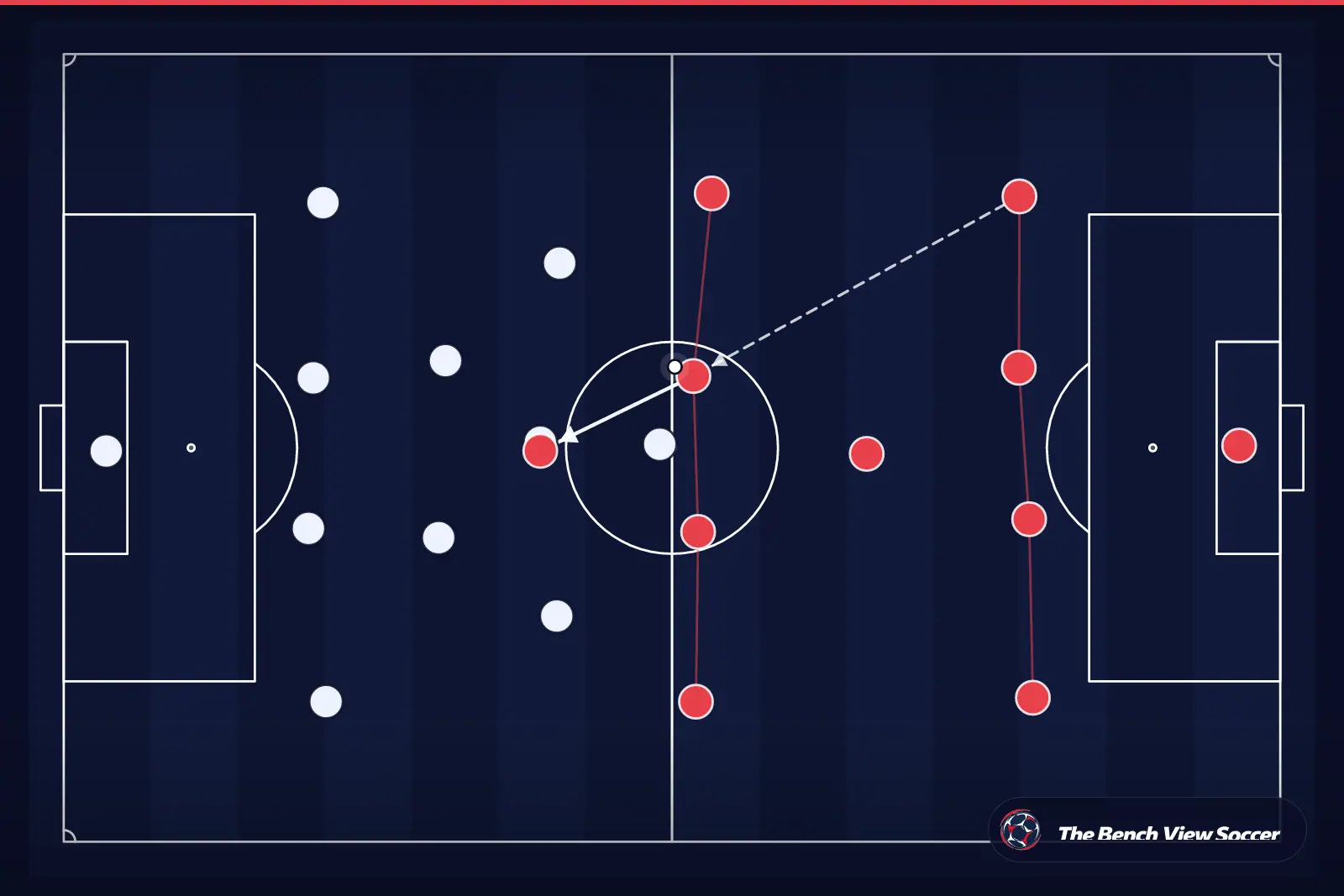
A single signing forces a formation change when it alters three things at once: the team’s build-up (how it progresses from defence to attack), its chance-creation zones (where the final pass comes from), and its defensive rest shape (how it stays safe against counterattacks). Take a specialist No.9 like Erling Haaland at Manchester City under Pep Guardiola. Haaland stays high, pins centre-backs, and attacks the penalty box early. That changes City’s spacing: wide players hold width longer, midfielders look for earlier vertical passes, and one midfielder often arrives as a “second wave” runner rather than constantly rotating into the false-nine role. The visible formation may still look like 4-3-3 on paper, but the functional shape changes: City often builds in a 3-2 structure, attacks in a 2-3-5, and defends with a back line protected by a double pivot. Similarly, when a club signs an elite wing-back (for example Achraf Hakimi at Inter under Antonio Conte), the manager may prefer a back three to free that wing-back high up the pitch. The change is not cosmetic; it creates stable passing triangles, provides cover behind the wing-back, and improves pressing angles. The transfer essentially “buys” a new tactical problem and then forces a new solution.
Match Examples
1) Manchester City + Erling Haaland (2022-23 Premier League and UEFA Champions League): City’s attack becomes more direct in key moments. In the Premier League match Manchester City 4-0 Southampton (8 October 2022), City uses early crosses and quick combinations to find Haaland in the box, with runners like Phil Foden attacking the far post while Kevin De Bruyne looks for fast, vertical deliveries. Later in the season, in the UEFA Champions League semi-final second leg Manchester City 4-0 Real Madrid (17 May 2023), City’s possession dominance stays, but Haaland’s presence pins Madrid’s central defenders and opens space for Bernardo Silva to arrive between lines and finish. The “formation” is flexible, but Haaland shifts City away from extended false-nine rotations toward clearer box occupation and more frequent third-man runs. 2) Chelsea + Romelu Lukaku (2021-22 Premier League under Thomas Tuchel): Tuchel’s Chelsea typically relies on a 3-4-2-1 with two inside forwards supporting a striker. Lukaku encourages more direct access into the striker’s feet and more crossing. In Arsenal 0-2 Chelsea (22 August 2021), Chelsea attacks with Lukaku as a reference point, dragging defenders and enabling Mason Mount and Havertz to receive second balls. Over time, the team’s spacing changes: wing-backs deliver earlier, and the two “tens” look more like runners around a fixed No.9 than constant false-nine interchangers. 3) Inter + Achraf Hakimi (2020-21 Serie A under Antonio Conte): Conte’s 3-5-2 structure becomes even more threatening because Hakimi gives extreme width and repeated sprinting behind the defence. In Inter 4-2 Torino (22 November 2020), Inter often builds with three defenders, then releases Hakimi high and wide to stretch Torino’s back line, creating lanes for Lautaro Martínez and Romelu Lukaku. Here, the signing does not just add pace; it validates the entire back-three choice because the wing-back becomes a primary attacking outlet. These examples show different “forcing mechanisms”: a dominant penalty-box striker, a target-man reference, or a game-changing wing-back. Each changes where teammates stand, how quickly the ball goes forward, and how the team protects itself after losing possession.
Related Concepts & Skills
Training Implications
If you coach a local team, academy side, or even organise a weekend group, you can copy the “transfer forces formation change” logic by designing training around one standout player profile. Step 1: identify the star’s best action (for example: a striker who attacks crosses, a No.10 who plays through balls, or a wing-back who can sprint repeatedly). Step 2: choose a base shape that protects weaknesses. If your wing-back pushes high, train a back three build-up (3 defenders + 2 midfielders) so you always have cover. Step 3: run a 20-minute positional game with constraints: if the star is a striker, goals only count after a cross or cut-back; if the star is a No.10, goals only count after a pass received between two lines of cones representing midfield and defence. Step 4: add a “rest defence rule” in small-sided games (7v7 or 8v8): when your team attacks, at least two players must stay behind the ball and within the central channel. This builds automatic protection against counters. Step 5: rehearse pressing roles in a 10-minute drill: start with a goalkeeper pass, and coach the first press angle (curving the run to block the inside pass). Rotate players so everyone learns how the star’s presence changes their own job. Finally, film one 15-minute scrimmage and review three clips: one build-up sequence, one chance creation, and one transition after losing the ball. The goal is to see whether the formation change actually creates clearer passing options and safer defensive cover.
The Bench View app
Don’t just read football — train it
Everything you read here, turned into training you can follow step by step.
Physical training at home
AI daily sessions adapted to your level and position. No equipment needed.
Tactical training courses
Step-by-step courses on positioning, pressing, build-up and decision making.
- 7 days free
- No commitment
- Cancel anytime
Free account: 2 physical sessions + the first tactical course. PRO: 7-day free trial — cancel before day 8 and you pay nothing.