Introduction
The 4-3-3 is one of the most popular shapes in European football because it gives managers a clean balance: width from wingers, central control from three midfielders, and clear pressing angles when the team loses the ball. For fans starting to learn tactics, it helps to remember one key idea: a formation is not a fixed “starting lineup picture.” It is a way to organise spaces and roles in different moments—when building from the back, when defending, and when attacking. Managers choose 4-3-3 because it can look simple on paper but become very flexible on the pitch. Pep Guardiola’s Manchester City in the Premier League and UEFA Champions League uses it to dominate possession and “lock” opponents in their half. Mikel Arteta’s Arsenal uses it to combine control with fast, aggressive pressing. Both teams show how the same base shape can produce different styles, depending on player profiles and coaching priorities.
How It Works
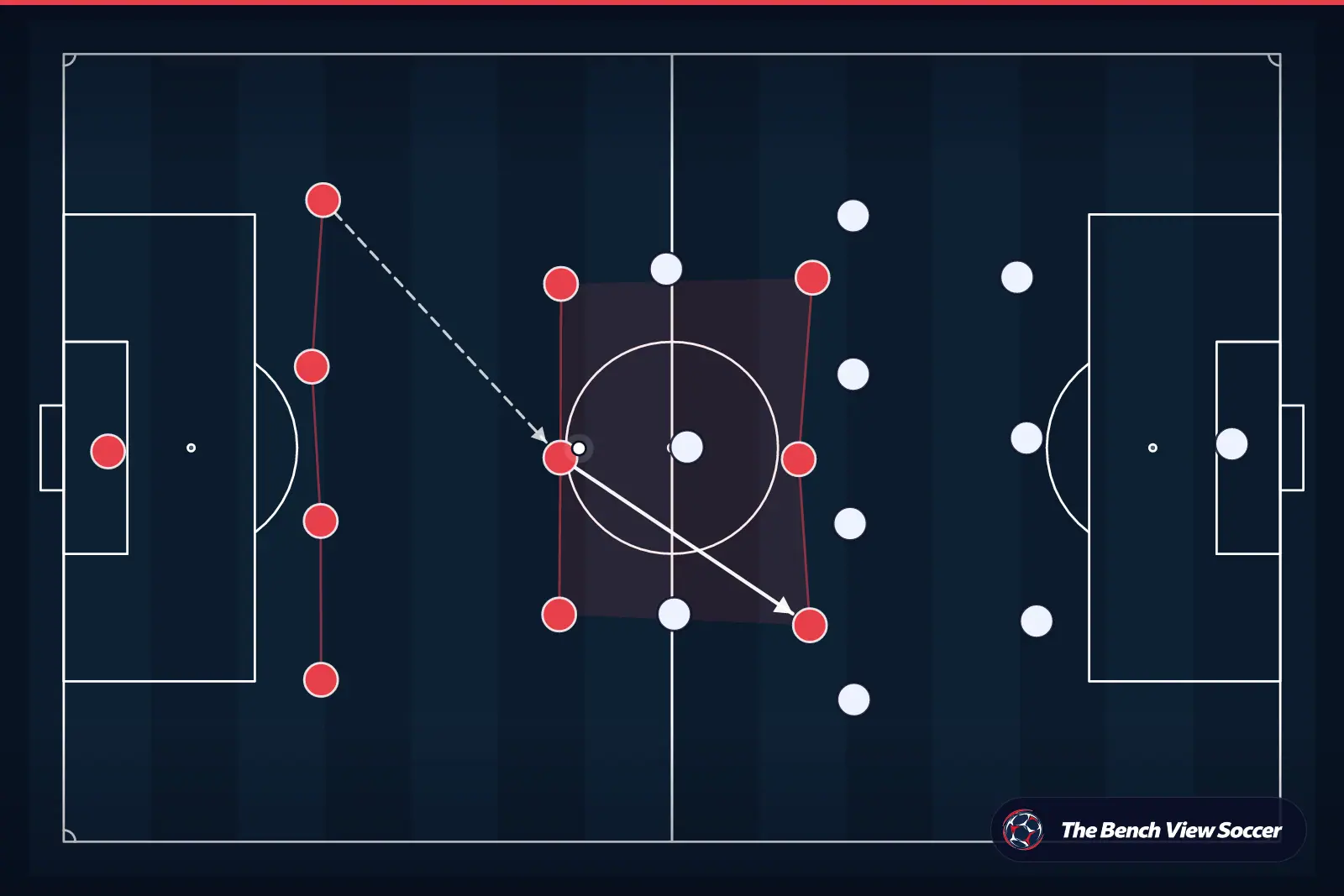
Managers choose 4-3-3 because it offers three strong advantages: stable build-up, flexible attacking lanes, and coordinated pressing. In build-up, the back four plus a single pivot (the “6,” like Rodri for Manchester City or sometimes Thomas Partey/Jorginho for Arsenal) forms a reliable passing platform. The pivot drops near the centre-backs or stays central to connect play, while the two “8s” (central midfielders) position higher to receive between lines. In attack, the front three creates width and depth: the wingers hold the touchline or move inside, and the striker pins centre-backs. A key detail is how full-backs behave. Guardiola often uses an “inverted full-back,” meaning a full-back steps into midfield instead of overlapping outside; this creates extra central numbers and protects against counter-attacks. Arteta also uses inversion, but often mixes it with one full-back staying deeper while the other joins midfield, helping Arsenal keep rest defence (the players left behind to stop counters). Out of possession, the 4-3-3 presses naturally: the striker screens passes into midfield, wingers press centre-backs or full-backs, and the midfield three can jump onto opponents’ midfielders without leaving the centre open. The shape makes it easier to close passing lanes and force opponents wide, where defending is simpler because the touchline acts like an extra defender.
Match Examples
Manchester City’s use of 4-3-3 is clear in the 2022-23 UEFA Champions League semi-final second leg vs Real Madrid at the Etihad (City win 4-0). City’s midfield spacing allows constant pressure: Rodri anchors, while Kevin De Bruyne and İlkay Gündoğan position to receive behind Madrid’s midfield. The wingers stay high enough to pin Madrid’s full-backs, and City’s counter-press (immediate pressure after losing the ball) keeps Madrid from escaping. Another example is Arsenal in the 2023-24 Premier League vs Liverpool at the Emirates (Arsenal win 3-1). Arsenal’s 4-3-3 pressing forces mistakes by jumping onto Liverpool’s build-up: the wide forwards press outward to trap the ball near the sideline, and the midfield three steps up together so Liverpool’s central options disappear. A third reference is Manchester City vs Inter Milan in the 2022-23 Champions League final (City win 1-0). Even when Inter blocks the centre, City’s 4-3-3 still provides stable rest defence: the pivot and centre-backs stay ready to stop transitions, while the full-backs’ positions prevent direct counters into wide spaces. Across these matches, the lesson is consistent: 4-3-3 is not just “three forwards,” it is a structure that supports control, pressing, and quick recovery of the ball at the highest level.
Related Concepts & Skills
Training Implications
If you coach a local team or even organise a college game, you can train 4-3-3 principles with simple, actionable drills. (1) Build-up triangles: set up a 6v3 rondo (six keep possession, three press) with a marked central zone for the pivot. Coach the pivot to check shoulders before receiving and play one- or two-touch passes. Rotate the pivot role so players learn the responsibility of staying available. (2) Wide-to-inside patterns: run an unopposed pattern where the winger starts wide, receives, and either drives inside or plays to an underlapping full-back (full-back runs inside) while the “8” supports for a third-man combination. Add passive defenders, then active defenders, so players learn when to go outside vs inside. (3) Pressing and counter-pressing: do a 7v7 on a reduced pitch with a rule: if you lose the ball, you have five seconds to win it back; if you succeed, it counts as an extra point. This builds the immediate reaction that City and Arsenal show. Coach specific triggers: press on a backward pass, press on a bouncing ball, and press when the receiver faces their own goal. (4) Rest defence habits: in small-sided games, freeze the play when your team attacks and check the back structure: at least two centre-backs plus the pivot stay connected, with distances close enough to challenge counters. Teach full-backs that if one goes high, the other stays in a safer position. These steps make 4-3-3 work as a living system, not just a formation on paper.
The Bench View app
Don’t just read football — train it
Everything you read here, turned into training you can follow step by step.
Physical training at home
AI daily sessions adapted to your level and position. No equipment needed.
Tactical training courses
Step-by-step courses on positioning, pressing, build-up and decision making.
- 7 days free
- No commitment
- Cancel anytime
Free account: 2 physical sessions + the first tactical course. PRO: 7-day free trial — cancel before day 8 and you pay nothing.