Introduction
Manchester City under Pep Guardiola often looks like it is “breaking the positions” you learn in basic football: the full-backs, instead of staying wide like traditional defenders, step inside and play like midfielders. This is called inverting, and it is one of the biggest reasons City dominate games in the Premier League and the UEFA Champions League. For fans watching City on TV, it can feel confusing because the player wearing the right-back jersey appears next to Rodri, while the winger stays wide. The key idea is simple: City want more control in the middle of the pitch, because that is where you can protect the ball, decide the tempo, and stop counter-attacks before they start. Inverting is not a “trick”; it is a repeatable structure that helps City keep possession, press immediately after losing the ball, and create better angles for passes into the forwards like Erling Haaland or Julián Álvarez.
How It Works
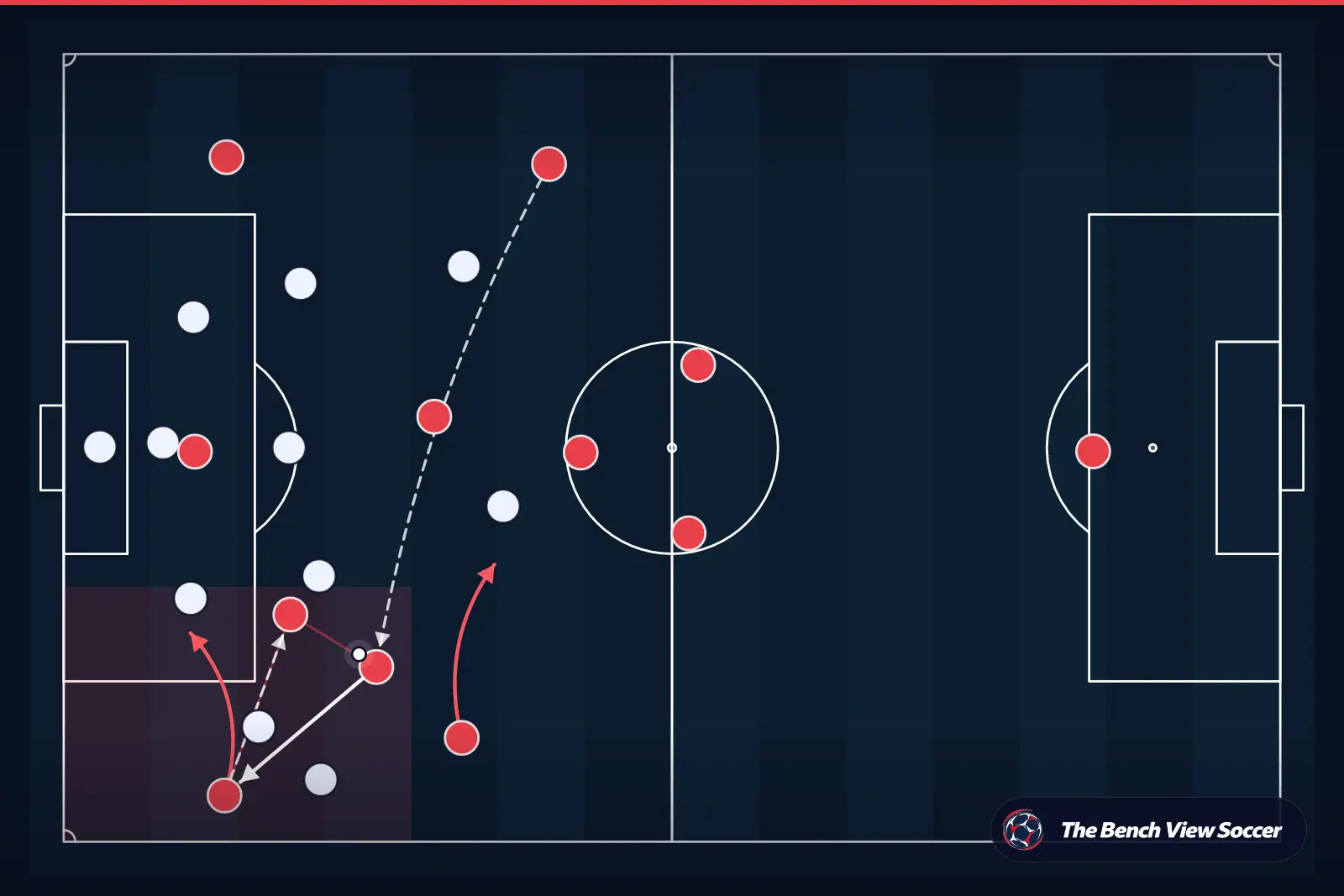
City invert their full-backs to solve three connected problems: build-up, chance creation, and defensive protection. In build-up, most teams press with two or three attackers. If City keep both full-backs wide and deep, the centre becomes crowded and the passing lanes into midfield become risky. When a full-back (like John Stones in 2022–23, or Rico Lewis more recently) steps inside next to Rodri, City create a “double pivot” feeling: two players in central midfield zones who can receive under pressure and switch play quickly. This also gives the centre-backs (Rúben Dias, Manuel Akanji, Nathan Aké) clearer short options, so City avoid hopeful long balls. In chance creation, the inverted full-back acts like an extra midfielder who can find Kevin De Bruyne or Bernardo Silva between lines, or play a sharp pass into the striker’s feet. Meanwhile, the winger (Phil Foden, Jack Grealish) stays wide to stretch the opponent’s back line. Defensively, inverting reduces counters. If City lose the ball, the inverted full-back is already near the centre, so City can surround the ball immediately. This is crucial because transitions (the moment the ball changes teams) are the most dangerous phase. Guardiola’s structure often becomes a 3-2 shape behind the ball in possession: three defenders plus two midfielders. That “rest defence” (the players positioned to stop counters) is one of the hidden benefits of inverting.
Match Examples
A clear example appears in the 2022–23 season, especially in the Premier League run-in and the UEFA Champions League knockouts, when Guardiola frequently uses John Stones as an inverted right-back stepping into midfield next to Rodri. In the Champions League semi-final second leg vs Real Madrid at the Etihad (2022–23), City’s midfield control is overwhelming: Stones moves inside, City form a strong central box with Rodri, De Bruyne, and İlkay Gündoğan, and Madrid struggle to jump onto passes without leaving space behind. The result is sustained pressure and City’s famous wave of attacks. Another example is the 2023–24 Premier League meetings where Rico Lewis often inverts from full-back into midfield zones, helping City play through opponents who press high. Watch how Lewis positions himself just ahead of the centre-backs during build-up, then steps higher to support combinations around the edge of the box. Even when City face physically intense sides like Liverpool under Jürgen Klopp or Arsenal under Mikel Arteta, the inverted full-back helps City keep calm passing options in the middle, reducing “50-50” duels. In these matches, you can also see the trade-off: if the opponent wins the ball and switches quickly to the wings, City’s wide defenders and wingers must sprint and cover, because the full-back is not in the traditional wide spot.
Related Concepts & Skills
Training Implications
To train the ideas behind inverted full-backs, focus on positioning, scanning, and decision-making under pressure. Start with a 6v4 build-up rondo in a rectangle: six attackers include two “full-backs” who begin on the outside but have a rule that one must step into the central lane when the ball is on their side. Coach points: the inverted player checks their shoulder (scan) before receiving, opens their body to play forward, and stays close enough to offer a bounce pass to the centre-back. Next, run a phase-of-play drill: set up a back four, a holding midfielder (Rodri role), two interiors (De Bruyne/Gündoğan roles), and wingers. Freeze the play to show the 3-2 rest-defence shape: if the right-back inverts, the opposite full-back may stay deeper, and one centre-back may shift wider. Add a transition rule: when possession is lost, the nearest three players must counter-press for five seconds while the far-side winger tucks in to protect the centre. Finally, use a small-sided game (8v8) with bonus points for “central progression”: a goal counts double if the move includes a pass from an inverted full-back into a midfielder between lines. This rewards the habit City build—using the inverted full-back as a calm midfielder, not a panicked wide defender.
La app de The Bench View
No solo leas fútbol: entrénalo
Todo lo que lees aquí, convertido en entrenamiento que puedes seguir paso a paso.
Entrenamiento físico en casa
Sesiones diarias con IA adaptadas a tu nivel y posición. Sin material.
Entrenamiento táctico
Cursos paso a paso de posicionamiento, presión, salida de balón y toma de decisiones.
- 7 días gratis
- Sin compromiso
- Cancela cuando quieras
Cuenta gratis: 2 sesiones físicas + el primer curso táctico. PRO: 7 días de prueba gratis; cancela antes del día 8 y no pagas nada.