Introduction
If you grew up watching classic wingers, you may expect them to “hug the touchline,” beat the full-back, and cross early. In modern European football, especially in the Premier League and UEFA Champions League, many of the best wide players do the opposite: they start wide but cut inside onto their stronger foot. Arsenal under Mikel Arteta and Manchester City under Pep Guardiola make this pattern look almost automatic, and it is not just a style choice—it is a tactical shortcut to better shots, cleaner passing lanes, and stronger defensive control after losing the ball. For fans learning tactics, it helps to see cutting inside not as a dribble trick, but as a team structure. The winger’s movement is connected to where the full-back stands, where the striker pins the centre-backs, and how the midfield creates angles. Once you see those connections, you start predicting why certain passes and runs happen before the ball even arrives wide.
How It Works
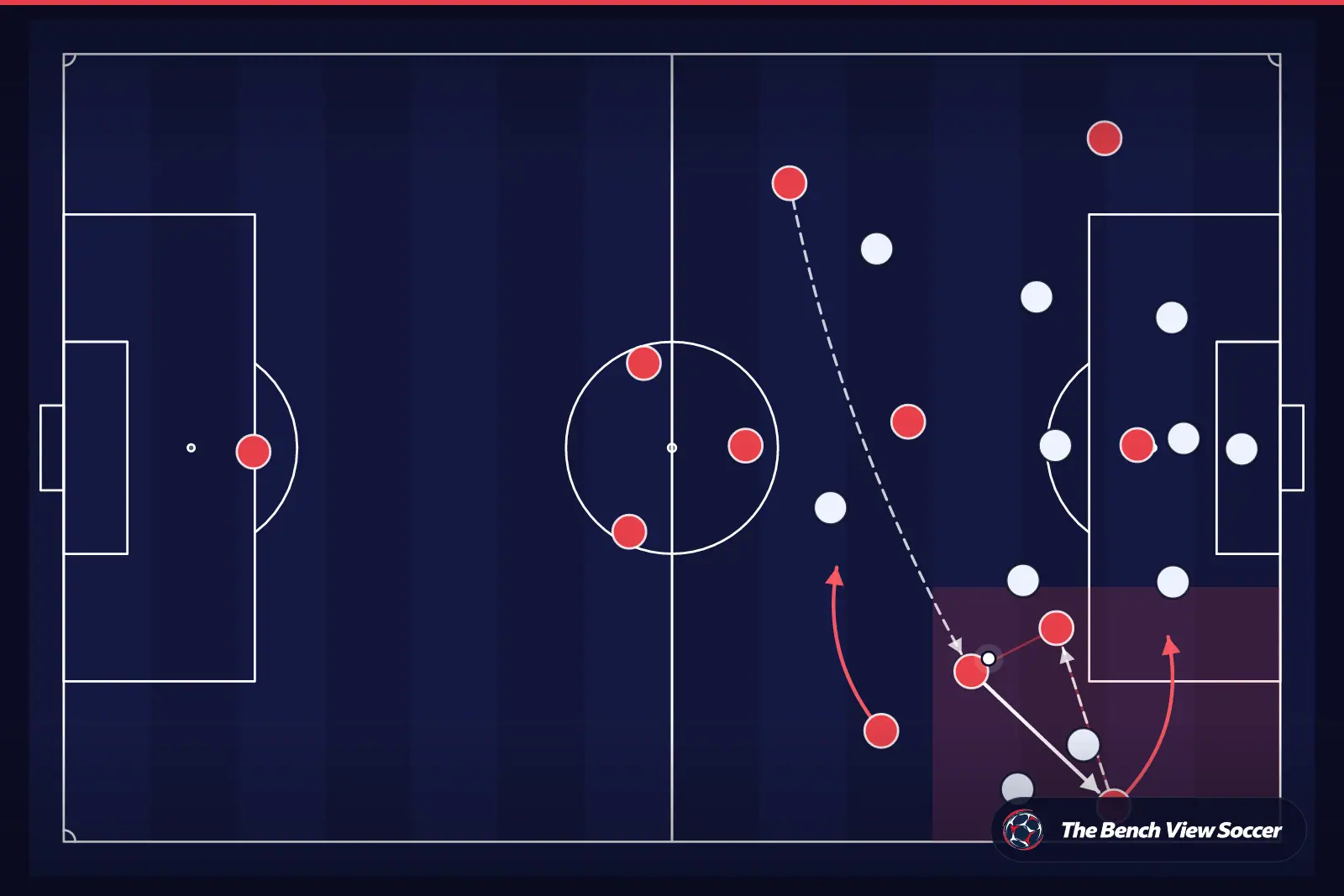
Modern wingers cut inside because the pitch offers higher-value options nearer the centre. From wide areas, the cross is often a low-percentage action unless the box is loaded with targets. When a winger drives diagonally into the inside channel (often called the “half-space,” the corridor between full-back and centre-back), they threaten three things at once: a shot with a better angle, a through pass to the striker, or a slipped pass to an overlapping runner. Arsenal’s right winger Bukayo Saka frequently receives wide, then carries inside to combine with Martin Ødegaard and the right-sided full-back. City’s wide attackers often receive with the touchline as a reference, then step inside to connect to Kevin De Bruyne or Bernardo Silva in central pockets. This also improves “rest defence,” meaning how a team is set up to defend if possession is lost. When the winger comes inside, the team often keeps more players near the ball, so counter-pressing (pressing immediately after losing possession) becomes easier. The full-back or a midfielder can hold width instead, keeping the pitch stretched while the winger attacks the centre. The key detail: cutting inside is not random. It is usually timed with an overlap (full-back runs outside) or an underlap (full-back runs inside) to confuse the defender’s decision: follow the winger inside and leave the flank open, or stay wide and allow central access. In top sides, that hesitation is the “tactical payoff.”
Match Examples
A clear Arsenal example appears in the 2022–23 Premier League. In Arsenal vs Manchester United at the Emirates (3–2, January 2023), Arsenal’s right side repeatedly aims to bring Saka inside into shooting and combination zones. As Ødegaard stays close to the right half-space and Ben White supports outside, United’s left-back faces a constant dilemma: step tight to Saka and open the outside lane, or protect the overlap and allow Saka to turn inward. Arsenal’s best moments come when Saka’s inward carry forces a midfielder to help, which then frees a teammate for a third-man run (a runner receiving after two quick passes). For Manchester City, look at the 2022–23 UEFA Champions League semi-final second leg: Manchester City vs Real Madrid at the Etihad (4–0, May 2023). City’s wide players and attacking midfielders repeatedly occupy inside lanes so Madrid’s midfield cannot easily step out. Jack Grealish often starts wide on the left but drives inside to connect and pin defenders, while City’s structure keeps options both outside and between the lines. The tactical benefit is visible: City’s attacks end with cut-backs and central shots rather than hopeful crosses, and their counter-pressing after turnovers immediately traps Madrid near the ball. Across both teams, the repeated pattern is the same: the winger’s inside movement increases shot quality, creates passing triangles, and supports quick ball recovery.
Related Concepts & Skills
Training Implications
If you are a coach, player, or even a fan trying to “see” tactics on the pitch, train the inside-cutting pattern as a repeatable sequence, not just a dribble. Start with a 3v2 channel drill on one flank: winger (right-footed on the right or left-footed on the left), a supporting midfielder in the half-space, and a full-back outside against a full-back and a covering centre-back. The winger’s goal is to receive wide, take one touch inside, and then choose: (1) slip a pass to the full-back on the overlap, (2) combine with the midfielder for a return pass (one-two), or (3) carry inside for a shot from the edge of the box. Coach the winger’s body shape: open hips to see inside before the first touch, and keep the ball on the far foot to protect it from the defender. Add a rule to build game realism: if the winger cuts inside, the far-side winger must hold width to stretch the back line. Then add a transition: if defenders win the ball, attackers have five seconds to win it back (counter-press). This teaches why cutting inside helps ball recovery. For finishing, create a “cut-in to cut-back” routine: winger drives inside, draws a defender, then plays to an overlapping full-back who returns a low cut-back to the penalty spot—this mirrors how Arsenal and City create high-quality shots. Finally, use video: pause clips from Premier League or Champions League games and ask players to identify the trigger for the cut inside (overlap starting, midfielder checking to feet, or striker pinning the centre-back). Concrete repetition + clear triggers is what turns a highlight dribble into a tactical weapon.
The Bench View app
Don’t just read football — train it
Everything you read here, turned into training you can follow step by step.
Physical training at home
AI daily sessions adapted to your level and position. No equipment needed.
Tactical training courses
Step-by-step courses on positioning, pressing, build-up and decision making.
- 7 days free
- No commitment
- Cancel anytime
Free account: 2 physical sessions + the first tactical course. PRO: 7-day free trial — cancel before day 8 and you pay nothing.