Introduction
Full-backs used to be easy to understand: defend your wing, overlap, cross. Real Madrid in the Carlo Ancelotti era makes them far more slippery. Their full-backs rotate—sometimes stepping into midfield, sometimes underlapping into the inside channel, sometimes staying deep to bait pressure—and these choices change the shape of the attack without a substitution. For fans learning tactics, this is a great entry point into modern positional thinking: the same four defenders can create different attacking structures, depending on who moves and when. When Dani Carvajal goes inside, Federico Valverde can widen. When Ferland Mendy stays low, Vinícius Júnior receives earlier and isolates a defender. When Eduardo Camavinga plays left-back, he behaves like a midfielder and drags markers away from the touchline. These rotations don’t just create “more options”; they force opponents to make constant decisions—follow the movement and risk leaving someone free, or hold your position and let Real Madrid build a new angle to goal. That indecision is what unbalances defences.
How It Works
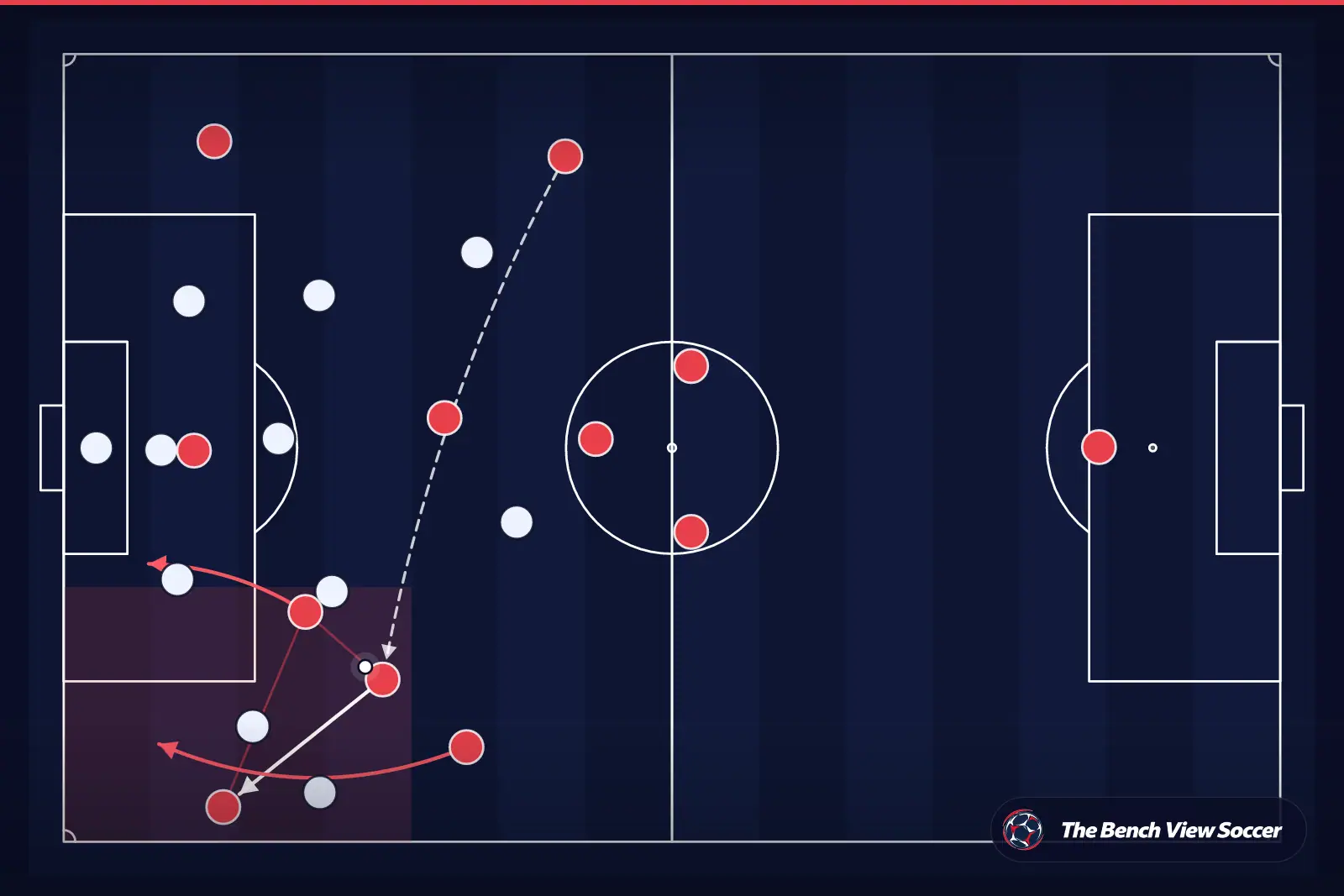
Real Madrid’s full-back rotation works because it attacks the opponent’s defensive references—who marks whom, and which zones belong to which player. A common pattern is the “inverted” full-back: Carvajal or Camavinga steps into central midfield during build-up, forming a double pivot with Toni Kroos or Aurélien Tchouaméni. This creates a spare player against a 4-4-2 press: the opponent’s two strikers can’t cover three central options, so Madrid play through the middle and then switch quickly to the wing. Another pattern is the underlap. Instead of running outside the winger, the full-back runs inside him, into the channel between the opponent’s centre-back and full-back. When Vinícius holds the width on the left, an underlap behind him pulls the right-back’s attention inward, opening space for Vinícius to dribble or for Jude Bellingham to arrive in the box. Rotation also includes the “rest defence” idea—how the team stays protected while attacking. If one full-back goes high, the other often stays deeper, giving Madrid a back three in possession (for example, Antonio Rüdiger–Nacho–Mendy in 2023–24). That stability lets midfielders and forwards take riskier positions. The key educational point: Madrid’s full-backs don’t only provide width; they change the angles of passing and the locations of numerical advantages, which makes defending them feel like chasing shadows.
Match Examples
In the 2023–24 UEFA Champions League quarter-final at the Etihad (Manchester City vs Real Madrid, second leg), Madrid’s right side shows why rotation matters. Carvajal frequently tucks inside during deeper phases, helping Madrid resist City’s counter-press and find exits through short passes rather than hopeful clearances. When he does go wide, the timing is late—he appears after the winger and midfielder have already pinned City’s left side, which makes the cross or cutback harder to predict. In the same Champions League season, the semi-final first leg at the Allianz Arena (Bayern Munich vs Real Madrid, 2023–24) highlights the left-back role: Mendy often stays conservative while Vinícius stays high and wide, which creates a clear 1v1 outlet. That structure invites Bayern’s pressure forward, then Madrid play to Vinícius early and attack the space behind. A domestic example comes from La Liga 2023–24 when Madrid frequently uses Camavinga at left-back in big away games: he steps into midfield to overload central zones, allowing Bellingham to push higher and Valverde to cover wide spaces on transitions. Across these matches, the consistent theme is not “full-backs attack”; it is that the full-backs change roles within the same match, so the opponent’s marking plan becomes outdated every 10 minutes.
Related Concepts & Skills
Training Implications
For coaches and players trying to learn this, build habits with simple constraints. 1) Inverted full-back drill: Play 7v7 on a reduced pitch. Set a rule that one full-back must step into midfield when the goalkeeper has the ball, creating a 2+1 build-up (two centre-backs plus an inverted full-back). Coach the body shape: open to the far side, receive on the back foot, and scan before the pass. 2) Underlap timing drill: Use a wing channel with a winger, full-back, and a central midfielder against two defenders. The winger stays wide; the full-back starts behind. The cue for the underlap is when the winger receives facing forward and the opponent’s full-back turns hips to the touchline. Train the full-back to run inside the defender’s blind side and look for a cutback, not only a cross. 3) Rest defence habit: In an 8v6 attacking wave, require that at least three players (two centre-backs + the far-side full-back) remain behind the ball when the attack enters the final third. Freeze play when the ball is lost and check spacing: are the three defenders close enough to stop the counter, and is one midfielder positioned to delay? 4) Communication rules: assign clear calls—“IN” for inversion, “OVER” for overlap, “UNDER” for underlap—so rotations are coordinated rather than random. The practical goal is to make role changes automatic, because Madrid’s advantage comes from timing and clarity, not just freedom.
The Bench View app
Don’t just read football — train it
Everything you read here, turned into training you can follow step by step.
Physical training at home
AI daily sessions adapted to your level and position. No equipment needed.
Tactical training courses
Step-by-step courses on positioning, pressing, build-up and decision making.
- 7 days free
- No commitment
- Cancel anytime
Free account: 2 physical sessions + the first tactical course. PRO: 7-day free trial — cancel before day 8 and you pay nothing.