Introduction
In modern European football, the goalkeeper is no longer “just” the shot-stopper. Teams like Manchester City under Pep Guardiola, Arsenal under Mikel Arteta, and Barcelona under Xavi ask their goalkeeper to help build attacks with short passes. Because of that, opponents increasingly press the goalkeeper on purpose. For fans learning tactics, this can look strange: why run at a player who can pick the ball up? The key is that the press usually starts when the goalkeeper has the ball at their feet, especially from a goal kick or a back pass. Pressing the goalkeeper can win the ball close to goal, force rushed clearances, and lock the opponent into one side of the pitch. But it also carries risks: one broken press can open a huge space for the opponent to attack. Understanding these trade-offs helps you read matches in the UEFA Champions League, Premier League, and Serie A with a more tactical eye.
How It Works
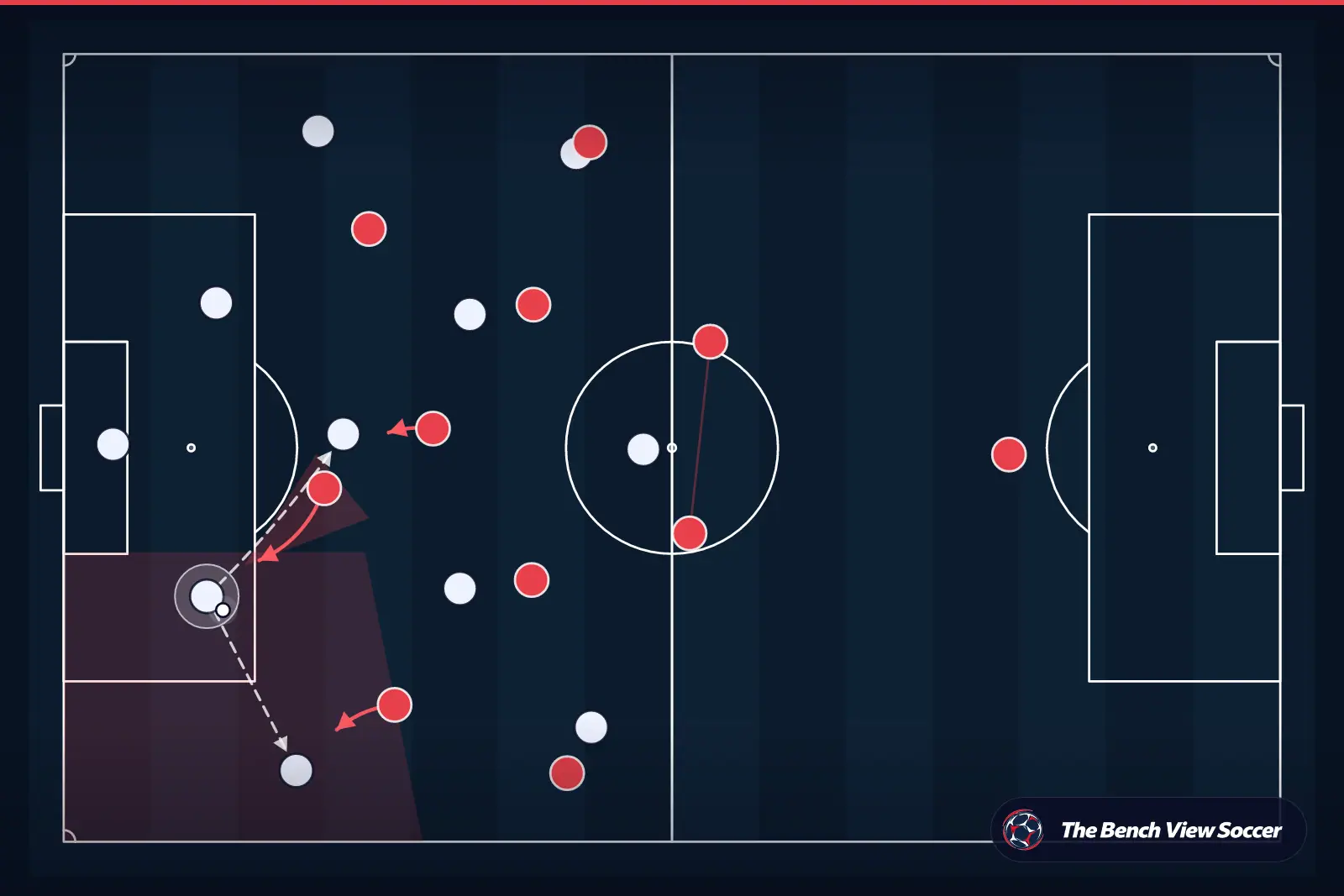
Teams press the goalkeeper because it changes the maths of the first line of build-up. When the keeper receives, the defending side can treat them like an extra outfield player and use the press to block the nearest passing lanes. A common goal is to “force long”: the press curves runs so the goalkeeper cannot pass into the central midfielder and instead kicks long, where the pressing team prepares to win the second ball (the loose ball after a long pass). Coaches like Jürgen Klopp (Liverpool) and Roberto De Zerbi (Brighton) also use goalkeeper pressing to create a pressing trap: they show the keeper one “safe-looking” pass to a full-back, then jump aggressively to trap the receiver near the touchline. Another reason is psychological and physical pressure—keepers are trained to distribute, but under sprinting pressure their passing accuracy drops. The big risk is obvious: if the goalkeeper and defenders play through the press with one clean third-man combination (pass to a teammate who lays it off to a third player), the pressing team’s forward line is bypassed and the opponent attacks open space with speed. That is why elite presses need coordination: the striker closes the keeper, wingers lock onto full-backs, and a midfielder steps up to mark the pivot (the deep central midfielder). If one role is late, the press collapses.
Match Examples
In the 2019–20 UEFA Champions League quarter-final, Bayern Munich under Hansi Flick press Barcelona’s build-up relentlessly in the famous 8–2 win. Bayern’s front players jump to Marc-André ter Stegen and the nearby centre-backs, forcing hurried decisions and creating short-field turnovers that lead to quick attacks. Another clear example appears in the 2021–22 Premier League season when Liverpool under Klopp press Manchester City’s early build-up in high-stakes matches; Liverpool’s forwards often curve their runs to block Ederson’s central options, attempting to force play wide and then attack City’s first touch near the sideline. In the 2022–23 Premier League, Brighton under De Zerbi invite pressure and then play through it; opponents who press Jason Steele or Robert Sánchez risk getting broken by Brighton’s calm passing, with Moisés Caicedo (that season) or Alexis Mac Allister dropping to receive and create an escape route. In the 2023–24 UEFA Champions League, Arsenal’s high pressing phases under Arteta often target opposition goal kicks: the striker screens the pivot while the wingers jump to full-backs, trying to make the goalkeeper kick long. These examples show both sides of the idea: pressing the goalkeeper can create immediate chances, but against well-drilled build-up teams it can turn into a dangerous gamble.
Related Concepts & Skills
Training Implications
To train pressing the goalkeeper, start with clarity: every player must know who they mark and what pass they are trying to remove. Run a 7v7+GK drill in a 60x40 metre area with two goals. The build-up team must play out from a goal kick; the pressing team sets a rule that the first pass must go through the goalkeeper. Coaching points: (1) striker angles their run to block the central pass into the pivot, not just sprint straight; (2) wingers start narrow and then jump wide on the pass, so they can intercept; (3) one midfielder steps up to mark the pivot tightly, while the other covers the space behind (so you don’t get played through). Add a scoring condition: if the pressing team wins the ball in the final third within 8 seconds, it counts as 2 goals—this reinforces speed and coordination. To manage the risk, add a transition rule: if the build-up team breaks the press and crosses the halfway line in control, they get a free shot within 10 seconds. This teaches your press to be aggressive but also compact, with defenders ready to hold a higher line and protect space behind. Finally, rotate the goalkeeper role in drills and record outcomes: count forced long kicks, turnovers won, and times the press is broken. These simple metrics show whether your press is effective or just “running a lot.”
The Bench View app
Don’t just read football — train it
Everything you read here, turned into training you can follow step by step.
Physical training at home
AI daily sessions adapted to your level and position. No equipment needed.
Tactical training courses
Step-by-step courses on positioning, pressing, build-up and decision making.
- 7 days free
- No commitment
- Cancel anytime
Free account: 2 physical sessions + the first tactical course. PRO: 7-day free trial — cancel before day 8 and you pay nothing.