

Introduction
Set-pieces are not “free kicks and corners” in the casual sense anymore; they are rehearsed attacking phases where teams try to create a high-value shot without needing long spells of possession. For Indian fans learning European tactics, they are also a great entry point because patterns are easier to spot: where players start, how they run, who blocks whom, and what the taker is looking for. Real Madrid and Arsenal offer a brilliant contrast. Under Carlo Ancelotti, Madrid tend to keep set-pieces flexible and opponent-focused, leaning on elite headers and second-ball instincts rather than one rigid script. Under Mikel Arteta, Arsenal treat set-pieces like a repeatable system, with consistent starting shapes, blocking routes, and pre-planned deliveries—especially in the Premier League, where tight games often swing on dead-ball moments. This article breaks down what each team tries to create, why it works, and what you should watch for the next time you see them line up for a corner.
How It Works
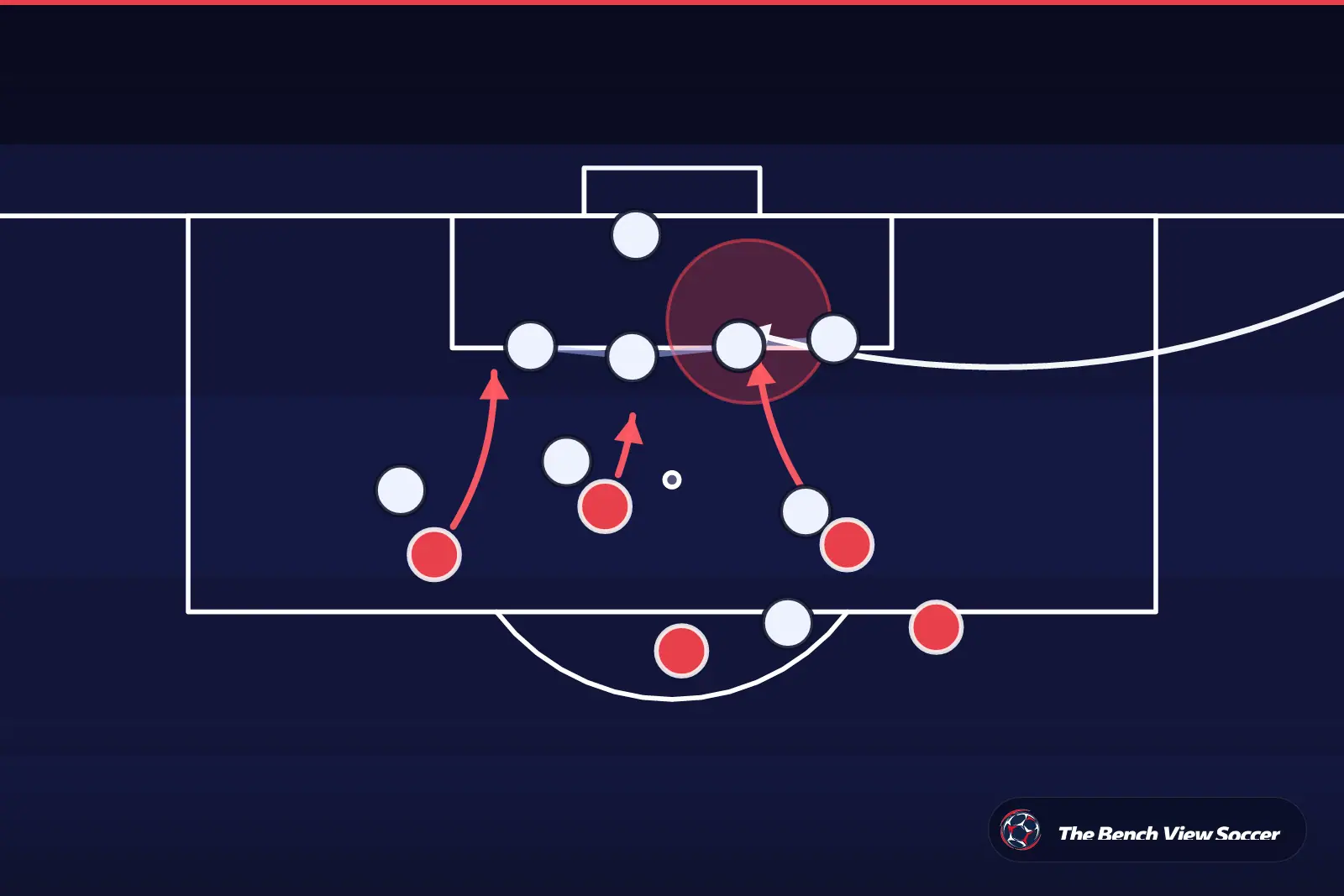
Real Madrid’s set-piece approach under Carlo Ancelotti is often about maximizing individual matchup advantages and being ready for chaos after the first contact. Madrid typically load the box with multiple strong aerial players (for example Antonio Rüdiger, Aurélien Tchouaméni, Jude Bellingham when fit, and sometimes Joselu in 2023–24), but they do not always commit to heavy, obvious “blocking” structures. Instead, they vary: sometimes they attack the six-yard box with a near-post run to force the goalkeeper to stay, sometimes they aim for a deeper zone to win a header back across goal, and sometimes they deliberately look for the second ball at the edge of the area for a follow-up shot. Madrid also value delivery quality and disguise—Luka Modrić and Toni Kroos often shape as if they are whipping an in-swinger, then change the height and pace to target a different runner. Arsenal under Mikel Arteta, supported by specialist coaching staff, lean more toward repeatable patterns. Their corners often start with a clustered group (a “stack”) that then breaks into designed lanes: one runner attacks the near post, one screens (legally) the main marker, and another arrives late to the far-post or central zone. Bukayo Saka and Martin Ødegaard frequently provide consistent, pre-identified delivery types: whipped in-swingers to the corridor between goalkeeper and defenders, or flatter balls to the penalty spot for a powerful header. Arsenal’s key difference is how much they build set-pieces as a system: roles stay stable across matches, and the team tries to generate the same chance repeatedly until opponents change their marking plan.
Match Examples
In the 2023–24 UEFA Champions League, Real Madrid’s set-pieces show the “adapt to the opponent” mindset. Across knockout matches—where opponents are well-prepared—Madrid still create danger by changing targets and focusing on second phases. Watch how Madrid keep players stationed for rebounds and how they immediately counter-press after a cleared corner: they treat the restart as an attacking wave rather than a single cross. In La Liga 2023–24, the late-season run-in also highlights Madrid’s pragmatism: when protecting a lead, they often take safer deliveries that allow them to reset shape quickly, and when chasing a goal, they commit more bodies and attack the six-yard area with higher-risk balls. Arsenal’s 2023–24 Premier League season offers clearer “pattern recognition” examples. In big home games, Arsenal repeatedly use their crowding and separation runs to free up a primary header while also placing a strong screener to slow the opponent’s best aerial defender. Their deliveries frequently target the zone just outside the six-yard box—hard for a goalkeeper to claim if there is traffic. Look at how often Arsenal set up the same starting picture: two or three players tight together near the penalty spot, then one darts near post, one holds central, and one arrives late. In the 2022–23 and 2023–24 Premier League periods, Arsenal’s improved corner output correlates with consistency of roles and delivery: the takers hit the same height and pace repeatedly, and the best headers attack the same zones. The big learning: Madrid’s examples teach adaptability and second-ball readiness; Arsenal’s examples teach repeatable choreography that forces opponents to constantly adjust their marking.
Related Concepts & Skills
Training Implications
If you coach or play at a local level in India—school, college, or Sunday league—you can borrow ideas from both clubs with simple, repeatable drills. First, define roles like Arsenal: pick (a) one main aerial target, (b) one screener who stands between the target and his marker without pushing, (c) one near-post runner to distract, (d) one edge-of-box shooter for second balls, and (e) two players for rest defence near halfway to stop counters. Train this with a “12-corner block”: take 12 corners in a row with the same roles and demand the same delivery height (head-height to 8–10 metres from goal). Second, add Madrid-style adaptability: run a “call system” with three options—Call A (near-post flick), Call B (penalty-spot power header), Call C (deep far-post knock-back). The taker uses a hand signal, and runners execute different lanes. Third, practice second phases: after every corner, the coach immediately throws a ball to the edge of the box and you play 6 seconds of live action. This teaches players to anticipate rebounds and counter-press like elite teams. Finally, track results: record how many corners create a shot on target or a controlled second ball. Improvement comes from repeatable delivery, clear roles, and ruthless review—exactly what makes Arsenal systematic and Madrid dangerous in chaos.
Apply This in Your Game
Reading about tactics is one thing. Our training units teach you to execute these concepts in real match situations.