goalkeeper training guide Nigeria
Nigeria breeds explosive, technically gifted footballers and goalkeepers are no exception. From local pitches in Enugu to the polished surfaces of Aba and Port Harcourt, this goalkeeper training guide Nigeria adapts world-class coaching to Nigerian rhythms—heavy fan pressure, high-intensity counters and aerial duels common in NPFL and continental games.
Whether you coach at an NPFL club like Enyimba FC or Rangers FC or train a teenager dreaming of the Super Eagles, the drills below prioritize game-like reactions, strong hands, quick distribution and decision-making under pressure.
Top Drills (1–8)
- Reaction Block Drill
Equipment: 6 balls, small goal, cones, partner.
Step-by-step:- Keeper on goal-line, partner 5–8m away with pile of balls.
- Partner throws/shoots randomly; keeper must block/divert—no catching required initially.
- Repeat 12–20 reps, alternating directions and heights.
Progression: Increase speed, add low shots, require secure catch to second touch. - One-on-One Angles
Equipment: Cone markers, ball, small goal, attacker.
Step-by-step:- Start attacker 12–18m out, keeper sets angle from cone.
- Attacker dribbles and shoots; keeper must narrow angle, force to outside and save.
- Rotate attackers every rep, 8–12 reps each side.
Progression: Add a second attacker for pass-and-go scenarios. - Crosses & High Ball Domination
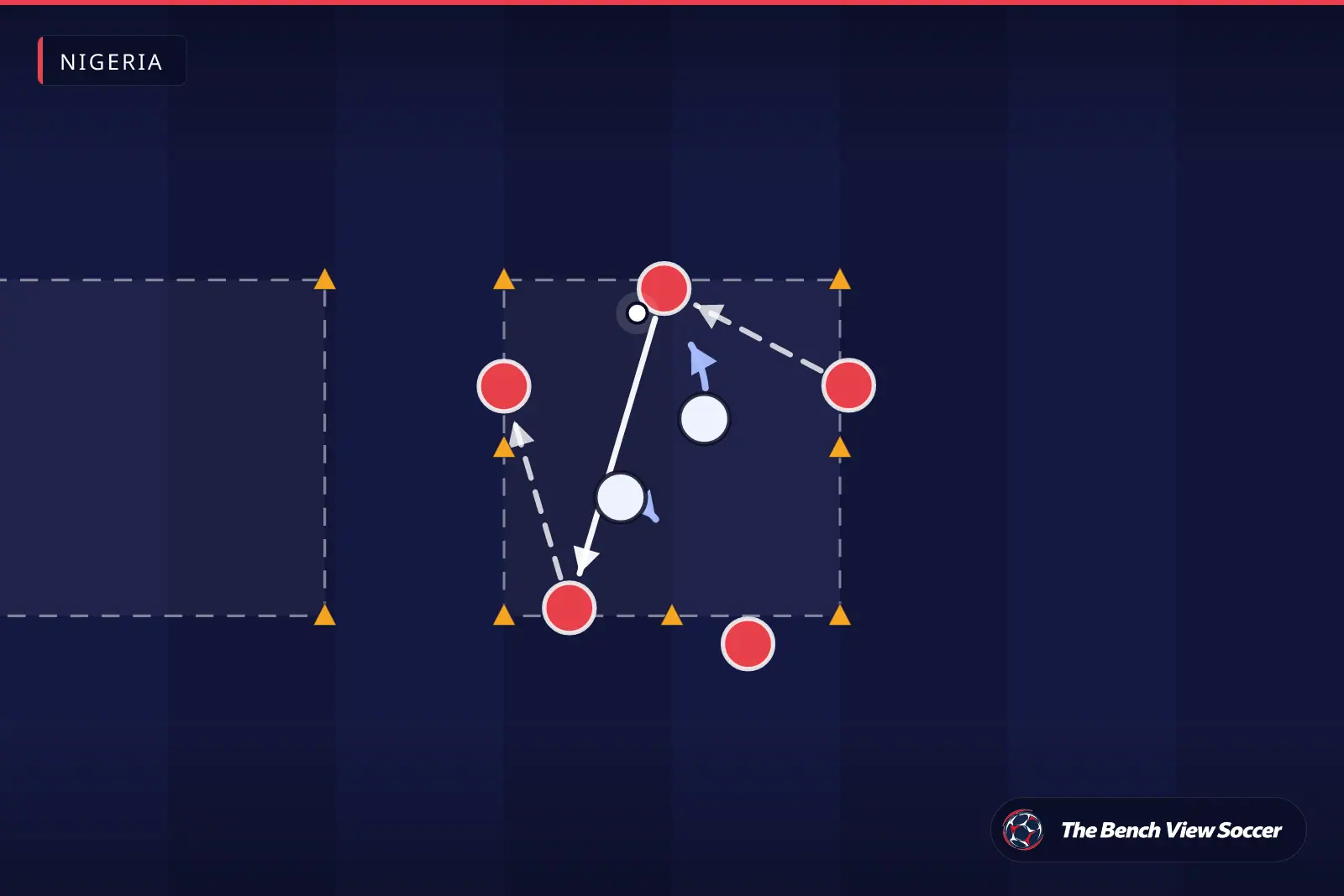
Equipment: 10–15 balls, cones, crossers (players), full goal.
Step-by-step:- Crossers deliver varied-height crosses from both wings.
- Keeper practices timing, jumping, catching/punching under pressure.
- Introduce a dummy defender to simulate contact.
Progression: Add live attackers to challenge aerial decisions. - Distribution Target Practice
Equipment: Cones, target zones, 12 balls.
Step-by-step:- Set 4 target zones at varying distances.
- Keeper must hit specific zone by throw or kick; 10 successful hits per zone = level up.
- Score by accuracy and speed in 60-second rounds.
Progression: Add pressure (coach closing in) or time limits. - Footwork Ladder & Short Passing
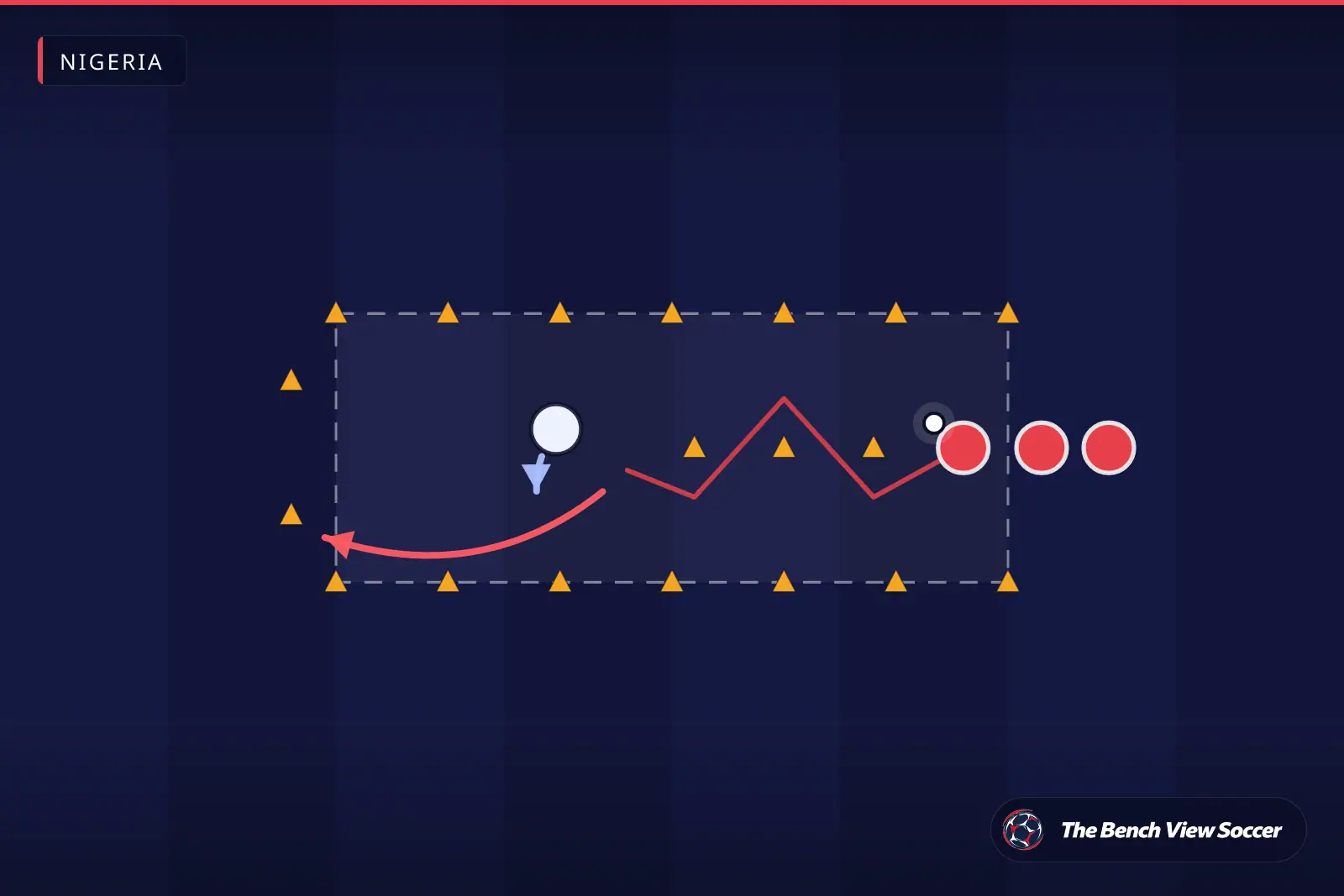
Equipment: Agility ladder, 3 cones, balls, partner.
Step-by-step:- Quick ladder footwork -> receive short pass -> immediate outlet pass to cone target.
- Repeat in 30s bursts with 30s recovery, 6–8 sets.
Progression: Increase ladder complexity, reduce reaction time for pass. - Low Shot Recovery
Equipment: Balls, cones, rebounder or wall.
Step-by-step:- Shots aimed low and wide; keeper dives, recovers to feet, plays to target.
- 10–15 reps each side; alternate diving directions.
Progression: Add second-phase shot from rebound or quick follow-up pass. - Strength & Core Stability Ball Throws
Equipment: Medicine ball, mat.
Step-by-step:- Partner throws medicine ball at chest-level for keeper to absorb and hold (simulate collision).
- Core rotations, overhead throws to build shoulder stability.
Progression: Increase medicine ball weight, add single-leg stance. - Match Simulation Circuit
Equipment: Full pitch, cones, 10 players, whistle.
Step-by-step:- Mini 20-minute sequence: 5 mins crosses, 5 mins counter one-on-ones, 5 mins distribution under press, 5 mins set pieces.
- Keep rotation between drills with match intensity.
Progression: Increase intensity, play full 11v11 with scenario constraints (down 1 goal, last 5 mins).
What is goalkeeper training guide Nigeria?
This goalkeeper training guide Nigeria is a practical framework blending technical drills, physical conditioning, and game-relevant scenarios for Nigerian contexts. It focuses on handling, reaction, distribution, aerial dominance and decision-making—designed to prepare keepers for NPFL pressures, continental fixtures and national team demands.
Related Resources
How to use this goalkeeper training guide Nigeria?
Follow these five steps to implement the guide effectively:
- Assess baseline: Test handling, dives, distribution and fitness across 3 sessions.
- Plan weekly cycles: 3–4 keeper-specific sessions + 1 match-simulation session.
- Prioritize technique: Start drills unloaded (no pressure) then add opposition and speed.
- Progress load: Increase reps, reduce reaction time and add fatigue to simulate match end scenarios.
- Review & adapt: Video sessions weekly; adjust drills for NPFL style and individual gaps.
What are real examples from NPFL?
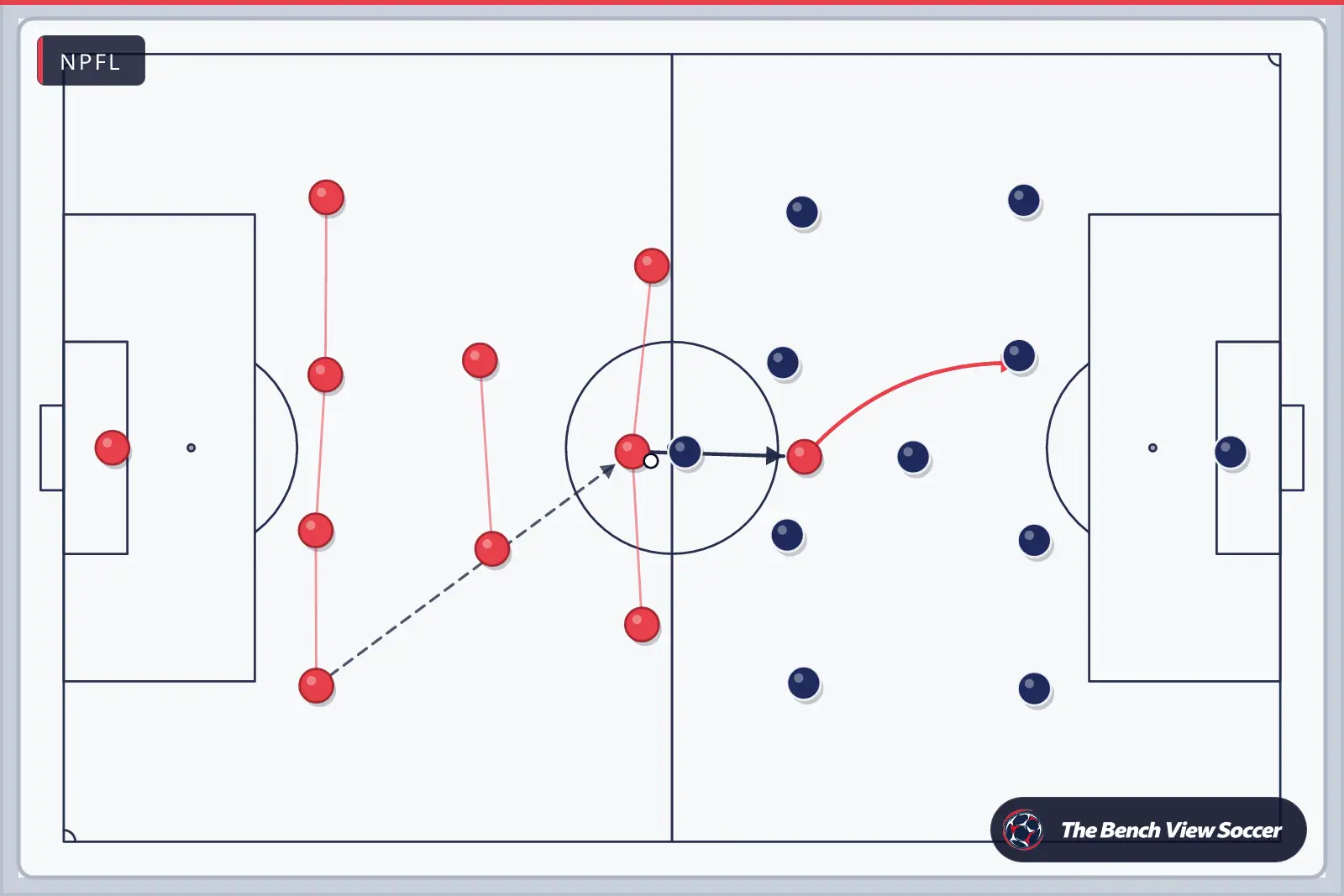
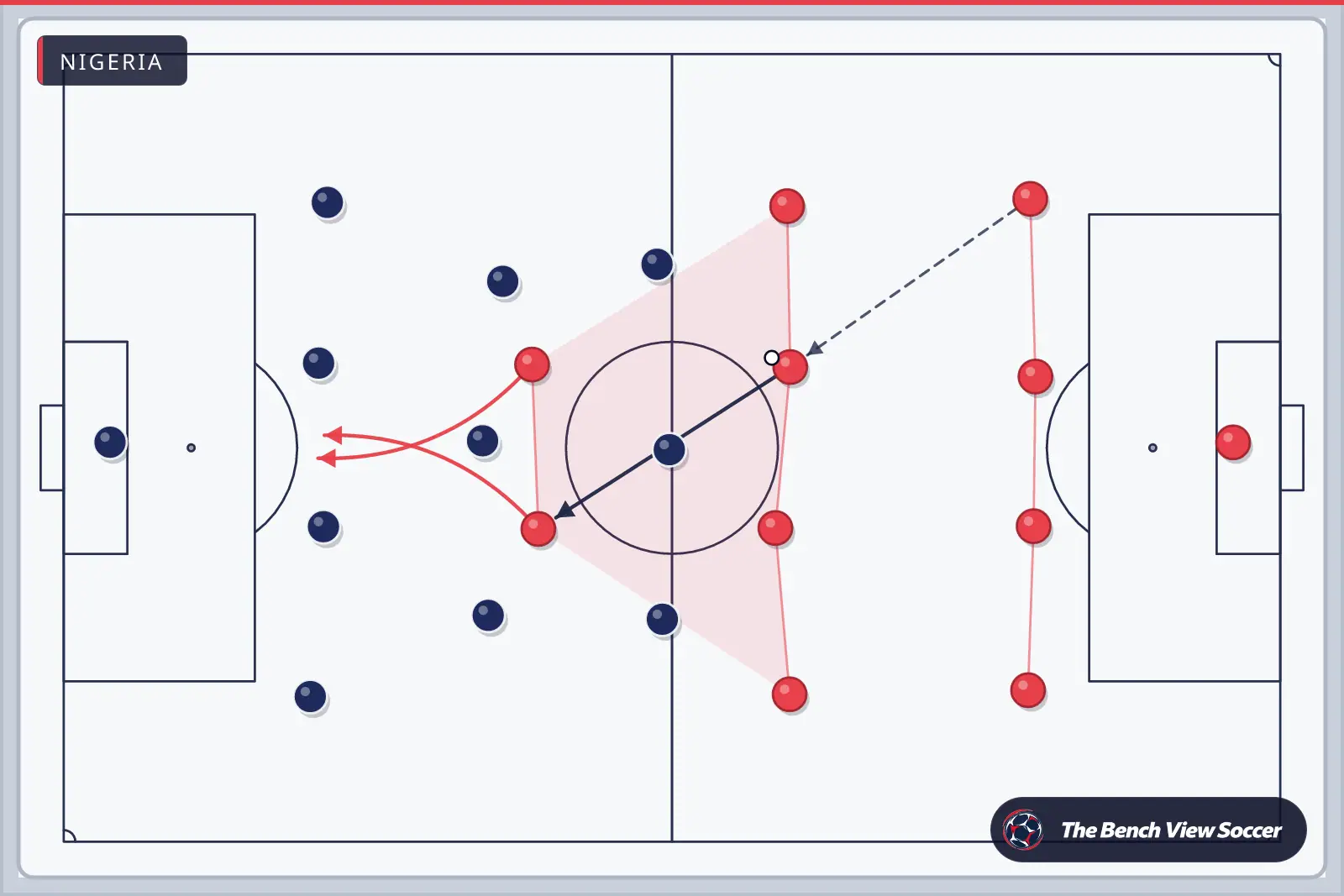
In the NPFL, clubs like Enyimba FC and Rangers FC emphasize aerial control and distribution to play out from the back. Youth keepers in academy setups often mirror Super Eagles methods—short-footed passing, quick kick-outs and command of box during set pieces—preparing many for CAF Champions League pace and AFCON standards.
Best tips to improve as a goalkeeper?
- Train under pressure: replicate fan noise and rushes from large Nigerian crowds.
- Work with outfield players: build chemistry for quick restarts common in NPFL counters.
- Video review: study your positioning during NPFL and Super Eagles matches.
- Prioritize recovery: heat and travel in Nigeria demand smart hydration and sleep.
- Build leadership: vocal keepers control chaos in noisy stadiums like Enugu and Aba.
Mistakes to avoid?
- Neglecting footwork: a keeper who can’t control the ball with feet will struggle in modern NPFL build-up play.
- Overtraining catching only: balance distribution, decision-making and physical conditioning.
- Ignoring match context: practicing without realistic pressure or time constraints reduces transfer to games.
- Skipping progression: never jump to complex scenarios before nailing basics.
Frequently Asked Questions?
How often should Nigerian keepers train using this guide?
Aim for 3 goalkeeper-specific sessions per week plus a weekly match-simulation. Add light technical sessions on non-pitch days. Adjust volume during NPFL season to maintain freshness for league and continental fixtures.
Can youth academies in Nigeria use these drills?
Yes. Scale intensity and complexity for age groups: focus on technique and fun for U13–U15, add strength and decision-making for U16–U18. Many NPFL academies already apply similar progressions for Super Eagles prospects.
What equipment is essential and affordable?
Essentials: quality balls, cones, agility ladder, medicine ball, and basic goalposts. Most drills require simple gear that suits pitch conditions across Nigerian clubs and community pitches.
How do I prepare for AFCON-level competition?
Emphasize stamina, distribution under pressure, cross management, and scenario training for high-intensity, continental play. Combine club-level NPFL matches, targeted conditioning, and friendly games against strong opposition to simulate AFCON demands.
Start our free courses on The Bench View Soccer.
Train Your Goalkeeping
Goalkeeper-specific drills and positioning
Start free on The Bench View Soccer →