goalkeeper training drills UK
Football started in the United Kingdom and so did serious goalkeeper coaching. From grassroots pitches to the training grounds of Arsenal, Liverpool, Manchester City and Chelsea, goalkeeping sessions balance technical work with match-like scenarios. These goalkeeper training drills UK are designed for coaches preparing keepers for local leagues, FA Cup ties and European nights.
This article leads with six practical, coach-friendly drills: equipment, step-by-step execution, a clear coaching cue and a progression for each. After the drills you’ll find definitions, a five-step training routine, Premier League examples, top tips, common mistakes and a short FAQ to support your sessions and coaching badge goals.
1. Reactive Catch and Drop
- Equipment: Two cones, 4 footballs, gloves.
- Steps:
- Keeper stands on goal line between cones.
- Coach throws ball high to left; keeper catches and drops quickly.
- Immediately coach throws a low hard ball to right; keeper digs out and recovers to feet.
- Repeat 8–12 throws alternating heights and angles.
- Coaching cue: "Eyes on the ball, soft hands, get back on your feet fast."
- Progression: Add a second attacker to shoot instead of coach throw; increase pace.
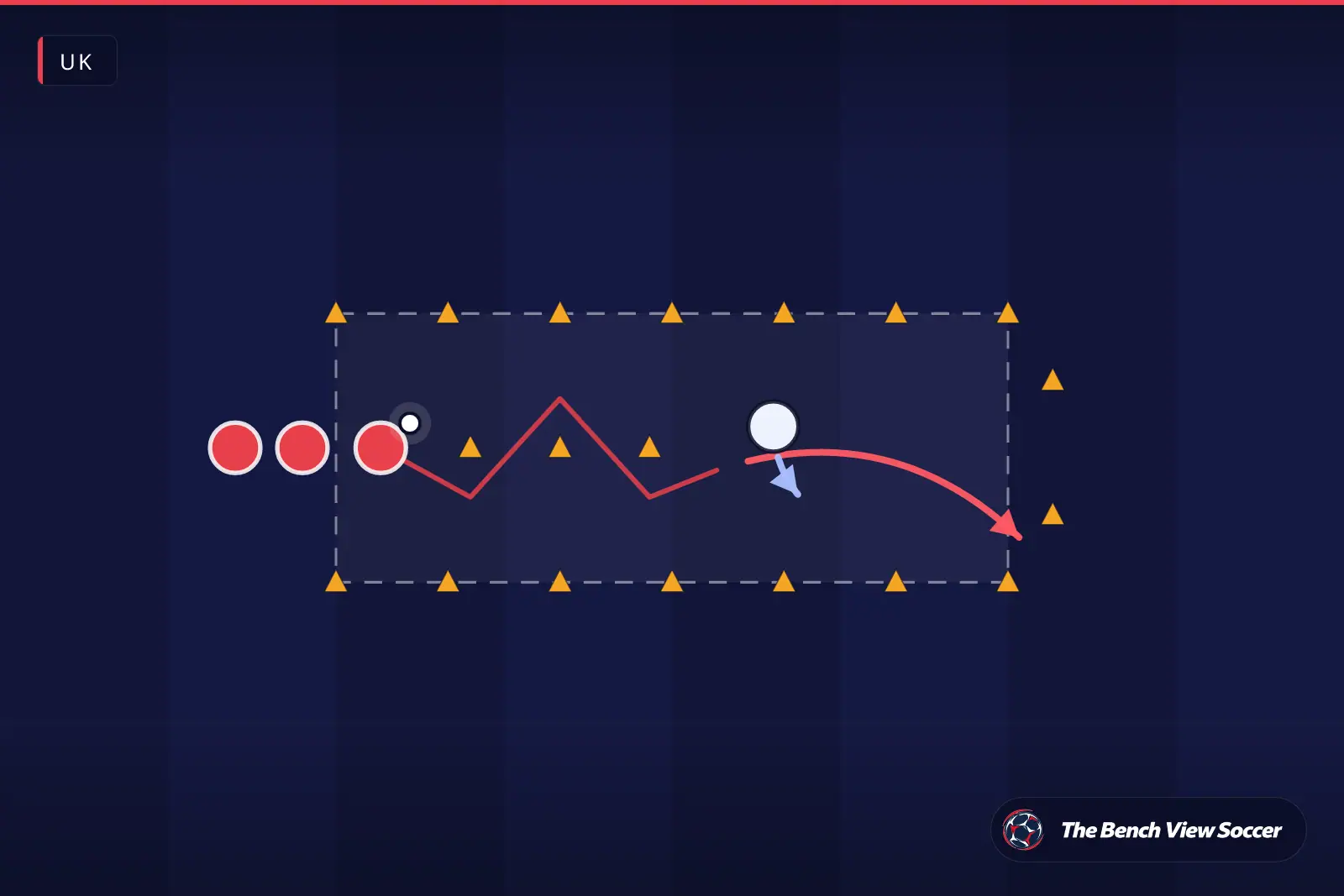
2. Footwork Ladder Distribution
- Equipment: Agility ladder, balls, small goals or target zones.
- Steps:
- Keeper runs quick ladder sequence across, touches cone, receives pass.
- Controls and plays long pass into target zone or to coach in 2 touches.
- Repeat alternating left and right footed passes, 10 reps each side.
- Coaching cue: "Quick feet, look up, accurate first distribution."
- Progression: Add pressure: a shadow runner closes down after the pass.
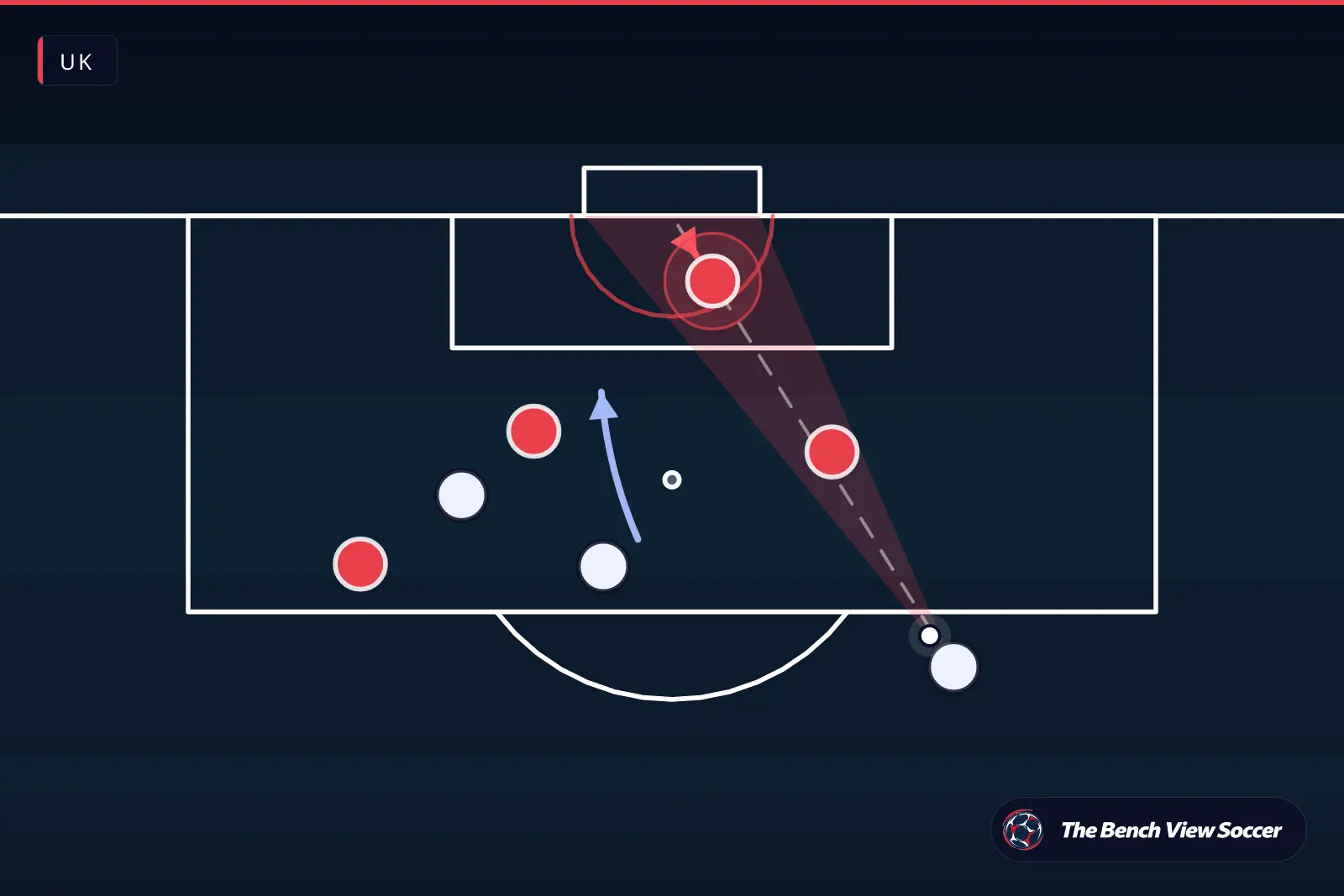
3. Narrow Angle Save Drill
- Equipment: Two mannequins or poles, 6 balls, rebounder optional.
- Steps:
- Set poles to create a narrow angle for attacker runs.
- Coach plays through ball; attacker shoots from edge of box.
- Keeper moves off line, narrows angle, makes save low and recovers for rebound.
- Rotate every 6–8 shots.
- Coaching cue: "Close the angle early, big base, strong hands on contact."
- Progression: Use a striker who can shoot with power; add a second attacker for follow-ups.
4. Cross Command and Claim
- Equipment: Full-size goal, 8–10 crosses, defensive players or mannequins.
- Steps:
- Set defensive line and have wingers deliver crosses of varying heights.
- Keeper must call for the ball, take charge, and either catch or punch decisively.
- Repeat with delivery to near and far post; 12–16 crosses per session.
- Coaching cue: "Loud and early — be first to the ball."
- Progression: Add crowd noise or multiple attackers to simulate match pressure.
5. Shot Storm (Reaction Saves)
- Equipment: Multiple balls, 4 shooters, cones marking 6-yard & 12-yard lines.
- Steps:
- Shooters stand on cones; coach signals which shooter to fire, creating unpredictability.
- Keeper reacts to rapid-fire shots, focusing on recovery between saves.
- Complete 6–10 cycles with rest between sets.
- Coaching cue: "Ready, low centre, explosive recovery."
- Progression: Reduce reaction time, increase shot power and add deflections.
6. One-on-One Recovery
- Equipment: Ball, cones to mark channel, attacker with pace.
- Steps:
- Attacker starts 20m out and attempts to dribble through channel towards goal.
- Keeper delays to deny angle then commits to block; if beaten, pursues to slow attacker.
- Emphasise recovery speed and decision-making after initial save attempt.
- Coaching cue: "Delay and decide — then commit with confidence."
- Progression: Start attacker closer and add a second line attacker for support play.
What is goalkeeper training drills UK?
Goalkeeper training drills UK are structured exercises used by coaches across Britain to develop a keeper’s core skills: catching, diving, footwork, distribution and game-readiness. They reflect the British game’s physicality, weather variability and tactical demands from grassroots pitches to Premier League and European competitions.
Related Resources
How to practise these goalkeeper training drills UK?
- Plan: Choose 4–6 drills that cover handling, footwork, distribution and scenario work; sessions should last 60–90 minutes.
- Warm-up: Dynamic movements, ball work and light handling to prepare muscles and focus eyes.
- Quality over quantity: Focus on 6–12 quality repetitions per drill with clear feedback.
- Simulate pressure: Use shooters, crosses and small-sided games to replicate match stress.
- Review: Finish with cool-down, technical reflection and target-focused homework (video, individual drills).
Real examples from Premier League?
At Arsenal and Manchester City, keepers often split session time between distribution circuits and high-intensity shot rounds. Liverpool historically emphasises communication and crosses, reflecting their pressing, aerial style. Chelsea sessions balance command of area drills with goalkeeper-led distribution to build play from the back—useful examples when designing goalkeeper training drills UK at every level.
Best tips to improve your goalkeeping?
- Train specificity: mimic match intensity and common scenarios from your league and FA Cup ties.
- Record sessions: video analysis helps spot footwork and positioning errors.
- Earn coaching badges: FA Goalkeeping modules improve session design and coaching language.
- Work with outfield players: distribution and small-sided play improve decision-making.
- Prioritise recovery: cold-weather sessions in the UK require appropriate warm-ups and injury prevention.
Mistakes to avoid?
- Neglecting footwork drills — modern keepers are playmakers; feet must be trained daily.
- Overloading reps without quality — poor technique becomes a habit under high volume.
- Ignoring communication — command of the box reduces crosses and second-chance shots.
- Skipping game-scenario training — match-specific pressure is different to isolated drills.
Frequently Asked Questions
How often should youth keepers do these drills?
Two to three focused sessions per week plus one game is ideal for youth keepers. Balance drill intensity with recovery and skill repetition for long-term development.
Do keepers need special coaching badges in the UK?
Yes. FA Goalkeeping modules are recommended for coaches; they provide curriculum, safeguarding and session-planning guidance that raises the standard of goalkeeper training drills UK.
Can grassroots clubs replicate Premier League drills?
Absolutely. Scale drills to numbers and space available. Focus on technique, tempo and progressions rather than elite equipment to mirror Premier League standards.
What age should keepers start specialised drills?
Introduce basic handling and footwork from ages 7–9, gradually increasing complexity and decision-making into adolescence as part of an FA-aligned development pathway.
Start our free courses on The Bench View Soccer.
Train Your Goalkeeping
Goalkeeper-specific drills and positioning
Start free on The Bench View Soccer →