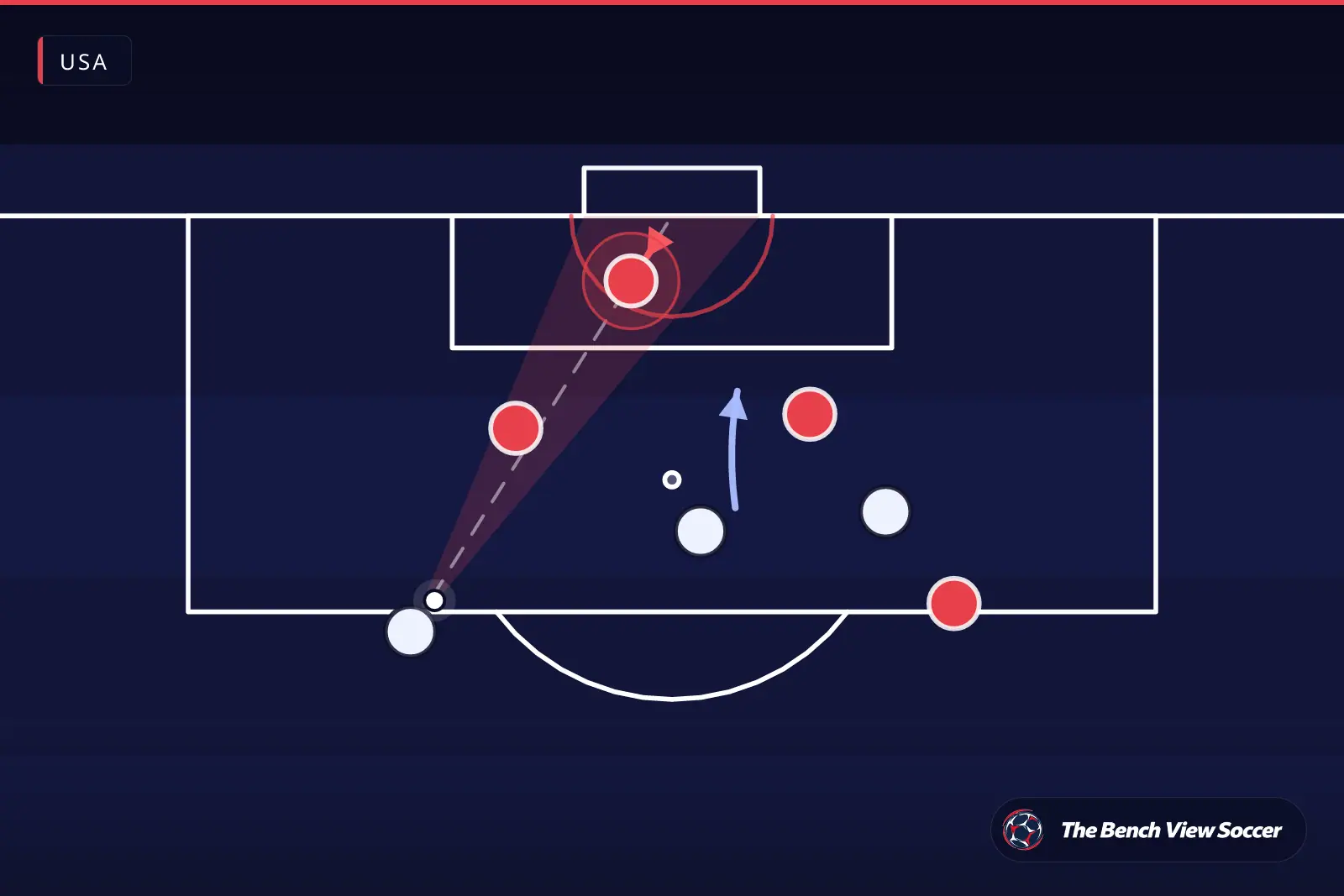
soccer goalkeeper training drills USA
As soccer grows across MLS, USL and youth clubs after World Cup 2026, American goalkeepers need focused, modern training. These soccer goalkeeper training drills USA are built for US teams — from LA Galaxy to Inter Miami and NYCFC academies — and for coaches developing USMNT and USWNT hopefuls.
Below are eight coach-ready drills with equipment lists, step-by-step instructions, sharp coaching cues and progressions. Use them in daily sessions to improve shot-stopping, distribution, crossing, footwork and decision-making.
-
Reaction Line Saves
Equipment: 6 balls, cones, two rebounders or a wall.
Step-by-step:
- Goalkeeper stands on the goal line, coach/partner 8–10 yards away with a line of six balls.
- Coach fires quick, varied shots; goalkeeper reacts and saves each one, returning ball to coach quickly.
- Repeat rounds of 6 with 30 seconds rest between reps.
Coaching cue: "Short, explosive steps — hands ready, eyes on the ball."
Progression: Add a second shooter for crossed trajectories or use low-trajectory rebounds off a wall.
-
Crossing and Claiming Circuit
Equipment: Crossers, 4 cones, bibs, 6 balls.
Step-by-step:
- Set two crossing points wide; GK starts at near post and rotates through catching, punching and 50/50 aerials.
- Crossers deliver varying height/momentum balls; GK must call, attack the ball, and distribute to a target cone.
- Rotate every 6 crosses; include opposition runner to simulate traffic.
Coaching cue: "Own your space — loud call, strong frame, decisive action."
Progression: Introduce a second attacker to create contested catches and use wet/different balls for realism.
-
1v1 Recovery Drill
Equipment: One striker, cones, small goal or full goal.
Step-by-step:
- Start GK 10–12 yards from goal; attacker begins with the ball at 18 yards.
- Attacker drives forward; GK times step-out to reduce angle then recovers if beaten to block shot.
- Work both low dive and narrow-block techniques, focusing on recovery speed.
Coaching cue: "Delay and narrow — stay big then explode back on recovery."
Progression: Add a second attacker or force a quick layoff to test reaction and recovery endurance.
-
Distribution Target Practice
Equipment: Marked target zones, 8 balls, cones.
Step-by-step:
- Place targets at 20–50 yards (wide and deep). GK practices throws, punts and driven kicks aiming for targets.
- Give a points system for accuracy; alternate foot and hand distribution for variety.
- Include a pressuring defender for decision-making speed.
Coaching cue: "Look first, then pick the right delivery — accuracy beats distance."
Progression: Time the drill: complete X accurate distributions in Y minutes to simulate match tempo.
-
Footwork Ladder & Pivot
Equipment: Agility ladder, cones, small balls.
Step-by-step:
- Perform ladder drills focusing on sideways quickness, then transition to a rapid pivot and shot from coach.
- Combine with low-saves and rapid recovery to upright position for crosses.
- Repeat in short, high-intensity bursts (10–15 seconds).
Coaching cue: "Quiet feet, explosive pivot — keep weight forward."
Progression: Add a second movement (jump or backpedal) to simulate chaotic penalty-area scenarios.
-
Rebound Control Wall
Equipment: Rebounder/solid wall, multiple balls.
Step-by-step:
- GK throws or volleys a ball at the rebounder, then must react to the unpredictable return and control/save it.
- Change angles and force; incorporate low and high rebounds.
- Track recovery touches: secure first touch, then distribute accurately.
Coaching cue: "Anticipate the angle — be ready to move and secure the first touch."
Progression: Have a second player close down the GK after the rebound to force quick distribution.
-
Small-Goal Shot Pressure
Equipment: Small goals, multiple attackers, bibs.
Step-by-step:
- Set two small goals in the box; attackers attempt quick finishes from placed crosses and cutbacks.
- GK must cover angles, direct defenders, and make low saves.
- Rotate GK every 6–8 shots for intensity management.
Coaching cue: "Anticipate the pass — block the near post and force wide shots."
Progression: Increase shooter numbers or add time pressure to simulate late-game stress.
-
Dominant-Hand Throw and Play-Out
Equipment: Cones, attackers, marked passing lanes.
Related Resources
Step-by-step:
- GK practices quick hand throws to moving wingers or central midfielders under pressure.
- Emphasize fast decision-making: throw short, throw long, or hold — based on coach signal.
- Include a play-out sequence where GK starts with ball and progresses through defenders to a target.
Coaching cue: "Speed=possession — choose the highest-probability outlet."
Progression: Simulate a press: add two closing players to force quicker, accurate distribution choices.
What is soccer goalkeeper training drills?
Soccer goalkeeper training drills are targeted exercises that build the technical, physical and mental skills goalkeepers need: shot-stopping, aerial control, distribution, footwork and decision-making. In the USA context they combine MLS-level intensity, youth development principles, and game-like progressions for USMNT/USWNT pathways.
How to train as a soccer goalkeeper?
- Plan sessions that mix technical work (saves, catches) with game realism (crosses, pressure) and recovery.
- Warm up dynamically with footwork ladders, short passing and mobility to prepare joints and reflexes.
- Run 3–4 focused drills (e.g., reaction saves, crossing, distribution) in high-intensity blocks of 6–10 minutes.
- Include decision-making reps: when to claim, when to punch, when to play short or switch the field.
- Finish with conditioning and a short video review or feedback loop targeting one measurable outcome.
Real examples from MLS?
MLS clubs like LA Galaxy, Inter Miami and NYCFC emphasize personalized goalkeeper programs. LA Galaxy focus on agile footwork and distribution to beat high presses, Inter Miami runs 1v1 recovery and crossing circuits for aerial dominance, and NYCFC integrates data-driven distribution targets. USMNT/USWNT camps add national-level intensity and video analysis used with young stars such as Christian Pulisic and Giovanni Reyna to model pro habits.
Best tips to improve as a soccer goalkeeper?
- Prioritize repetition with intent: short, focused reps beat long, unfocused sessions.
- Train distribution under pressure to become a live-play initiator for your team.
- Use progressive overload: increase speed, unpredictability, and decision pressure gradually.
- Record sessions and review clips from MLS goalkeepers to learn positioning and timing.
- Work on communication — commanding the box reduces shots on target for a reasoned keeper.
Mistakes to avoid?
- Neglecting footwork: slow feet kill positioning and recovery.
- Overemphasizing pure shot-stopping while ignoring distribution and game management.
- Using drills without progression — repeat with increased intensity or variability.
- Ignoring mental training — decision-making under pressure is practiced, not hoped for.
Frequently Asked Questions?
How often should youth goalkeepers practice these drills?
Three focused goalkeeper sessions per week plus one team session is ideal for youth keepers. Balance between technical repetition, strength work and rest. Consistency with progressive difficulty yields faster development than random high-volume practice.
What equipment is essential for American club keepers?
Essential gear: quality gloves for wet/dry conditions, cones, agility ladder, multiple balls, a rebounder and marked target zones. Clubs like MLS academies add video capture and GPS tracking for detailed feedback.
How do I measure improvement in goalkeeper drills?
Track measurable outcomes: save percentage in drill rounds, accuracy of distributions to targets, successful claims in crossing circuits, and reaction time. Use consistent drills to compare week-to-week progress.
Can field players train in goalkeeper drills to improve their skills?
Yes—distribution, aerial control awareness and footwork drills help field players. But goalkeeper-specific drills like 1v1 recovery and reaction saves are best led by a goalkeeper coach for safety and technique.
Start our free courses on The Bench View Soccer.
Train Your Goalkeeping
Goalkeeper-specific drills and positioning
Start free on The Bench View Soccer →