soccer speed and agility training USA
Soccer in the USA is on a rapid rise post-World Cup 2026, with MLS clubs like LA Galaxy, Inter Miami and NYCFC investing heavily in athletic development. Coaches at all levels—from youth academies to USL Championship and national team pathways—need elite-level frameworks to deliver measurable speed and agility gains.
This advanced article gives coach-level analysis and practical implementation for soccer speed and agility training USA: periodization, testing, five-step training blocks, professional drills, and mistakes to avoid so you can produce reliable on-field results for players like Pulisic, Reyna, and USWNT prospects.
What is soccer speed and agility training?
Soccer speed and agility training is a sport-specific system that develops linear sprinting, multi-directional change-of-direction (COD), acceleration/deceleration control, and reactive agility under technical and cognitive load. It blends biomechanics, strength-power sequencing, plyometrics, and contextual practice to change match actions—not just stopwatch times.
How to implement soccer speed and agility training USA?
- Assess & baseline: Run 10m, 30m, 505 COD, reactive agility test and countermovement jump (CMJ). Create player profiles (accelerator, top-speed, COD specialist).
- Plan periodization: Macrocycle across season with preparatory (strength & hypertrophy), pre-competition (power & speed), and competitive (maintenance & sharpening) phases. Integrate with team load.
- Design session blocks: Combine sprint mechanics (A-skips, acceleration drills), strength-power (deadlift, trap bar, split squat), and plyometrics (single-leg bounds, drop jumps). Always include quality technical touches under speed demands.
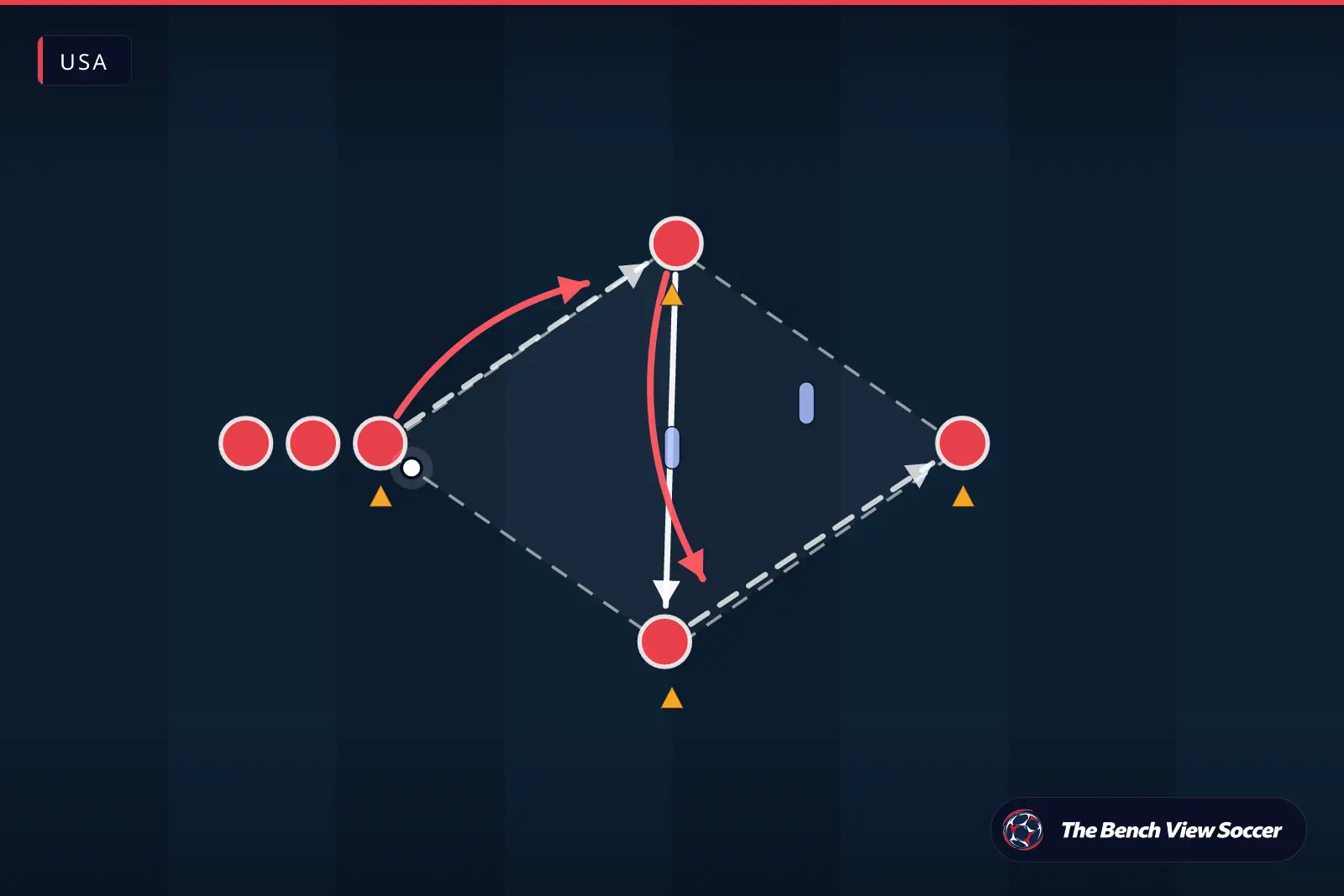
- Implement transfer drills: Use sport-specific COD drills (4-cone T, L-drill, 505 with ball control), small-sided games with sprint triggers, and reactive partner drills to force decision-making at speed.
- Monitor & adapt: Track velocity, split times, RPE, and GPS metrics. Use micro-dosing during congested fixtures and escalate volume/intensity in off-season to avoid neuromuscular fatigue.
What are real examples from MLS?
MLS clubs and development programs provide practical models. LA Galaxy sessions often emphasize acceleration windows and single-leg plyometrics for wingers, while Inter Miami integrates GPS-driven load management with reactive passing-sprint circuits for transitional play. NYCFC commonly uses contrast training—heavy lifts followed by sprints—to enhance rate of force development. Across MLS and USL, staff mirror elite models: test, train, and verify transfer into match outputs such as first-step wins and successful defensive recoveries in the US Open Cup and MLS play.
What are the best tips to improve soccer speed and agility?
- Prioritize acceleration: Train 0–10m mechanics with ball-present drills; most soccer actions are short sprints.
- Single-leg work: RDLs, Bulgarian split squats and single-leg hops improve asymmetry and cutting power.
- Contextualize drills: Add cognitive load—visual cues, coach calls, or passive defenders—to replicate match demands.
- Sequence strength to power: Heavy lifts earlier in microcycle, then plyometrics and short sprints on high-quality days.
- Use objective metrics: 10m/30m splits, peak velocity, and COD deficit quantify improvements and inform progression.
- Recovery & tissue prep: Prioritize soft-tissue work, eccentric strength and sleep—neuromuscular freshness equals faster reps.
What mistakes should you avoid?
- Chasing top-speed over acceleration: Soccer is acceleration-dominant; overemphasis on 100m-style training misallocates resources.
- Ignoring strength: Poor maximal strength limits rate of force development—skip the gym and speed gains will plateau.
- Overloading with volume: High-volume sprinting without adequate recovery increases injury risk and degrades quality.
- Neglecting transfer drills: Isolated sprint work without ball or decision-making rarely transfers to match actions.
What are the Frequently Asked Questions?
How often should players do soccer speed and agility training?
Elite players typically perform focused speed work 2–3 times per week in the preparatory phase, dropping to 1–2 high-quality sessions during competition. Integrate maintenance work into warm-ups and micro-sessions; prioritize neuromuscular freshness and quality over quantity.
Related Resources
What tests best measure progress?
Use 10m and 30m sprint splits for acceleration and top-speed profiling, 505 or pro-agility for COD, and CMJ or reactive strength index for power. Combine with GPS peak velocity and sprint counts to track match transfer.
Can youth players do advanced speed work?
Yes, but scale intensity and emphasize movement quality first. Build foundational strength and coordination before heavy plyometrics or resisted/sled work. Age-appropriate progressions reduce injury risk and improve long-term athlete development.
How do you program speed during a congested MLS schedule?
Micro-dose speed: prioritize short, high-quality acceleration reps, reduce total volume, and replace maximal strength sessions with maintenance loads. Use GPS to ensure adequate recovery and adapt before knockout matches like US Open Cup ties.
Conclusion
Implementing structured soccer speed and agility training USA requires testing, deliberate periodization, strength-power sequencing, and highly contextualized drills to ensure match transfer. Learn from MLS best practices and monitor metrics to drive consistent improvements for players across academy, USL Championship and national teams. Start our free courses on The Bench View Soccer.