

Introduction
Ball retention and recycling are the midfield details that separate good sides from great ones. For a central midfielder or playmaker, keeping the ball under pressure and intelligently recycling possession are essential not just to avoid turnovers, but to control tempo, disorganise opponents and create high-quality chances. This isn’t merely about safe passing; it’s about reading pressing triggers, offering clear angles, and converting small positional shifts into sustained attacking momentum.
In elite teams managed by the likes of Pep Guardiola, Xavi or Carlo Ancelotti, ball recycling is a choreographed process: pivot drops, half-spaces open, and wingers press wide so the midfield can recycle play into a more dangerous zone. For the intermediate-level midfielder aiming to influence games, understanding the mechanics — when to hold, when to reset, and how to change the point of attack — is transformative. This article breaks down those mechanics and shows how coaches can train them into their teams.
Tactical Breakdown
How recycling works — positional detail
Recycling is the sequence that follows when forward progress is blocked. Instead of forcing risky vertical passes, the midfielder accepts lateral or backward movement to reset the team shape and change the point of attack. There are three consistent positional behaviours to recognise:
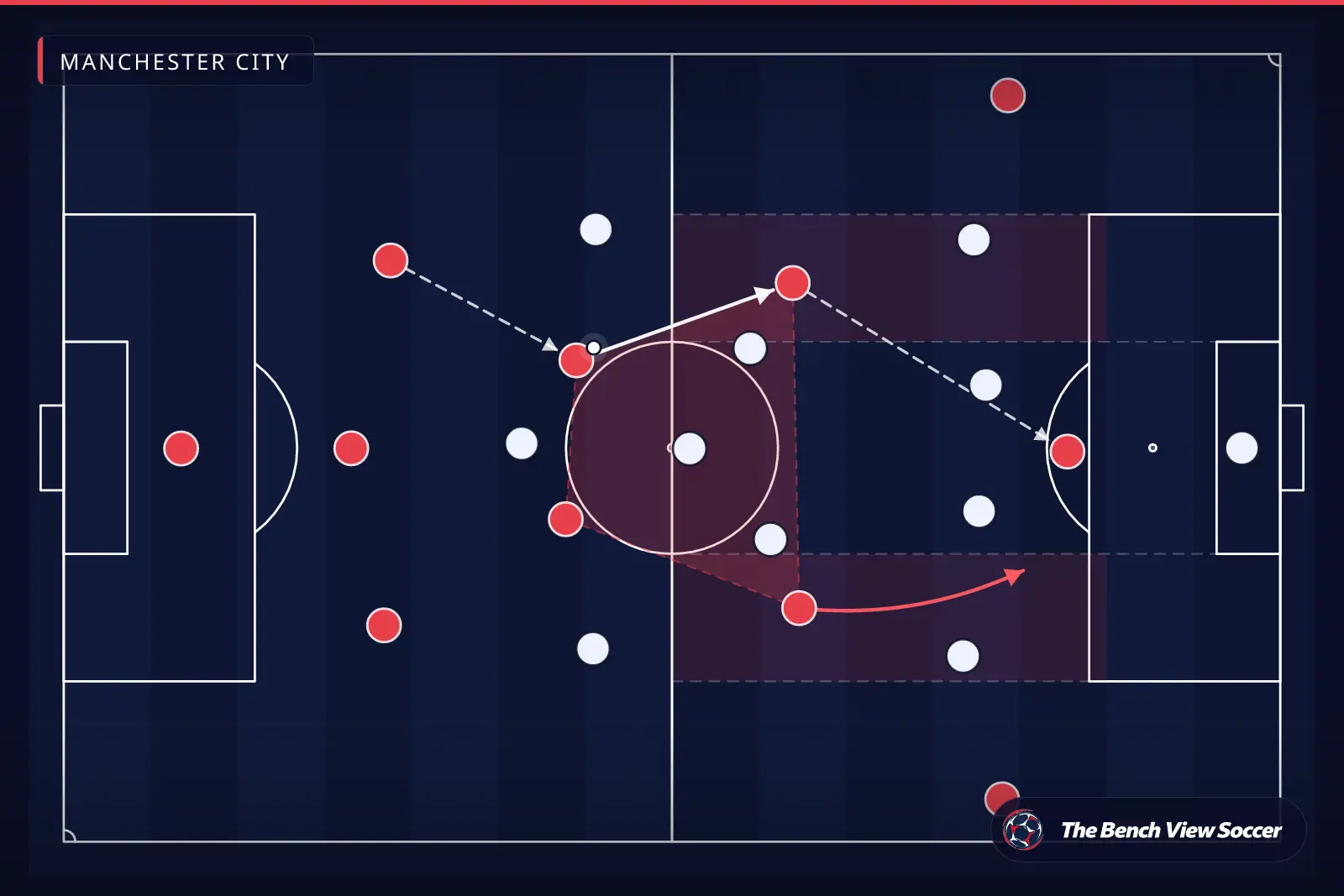
- Drop and receive: The deeper midfielder (e.g. Rodri, Sergio Busquets) drops between or behind the centre-backs to create a numerical advantage and absorb the first press. That drop turns a tight frontline into a wider pivot point for redistribution.
- Rotation and movement off the ball: Advanced playmakers like Kevin De Bruyne, Toni Kroos or Luka Modrić must rotate into half-spaces or pull wide to exploit the vacuum created by the drop. Clean rotation prevents defenders from staging a block and opens lanes for diagonal passes.
- Change of point: Effective recycling uses lateral switches — short or medium passes that shift play to the other flank or into a vertical corridor once the pressing shape is stretched. This re-establishes forward momentum without gambling on high-risk passes.
Key technical elements are first touch orientation, scanning for pressure triggers, and passing range. The midfielder’s first touch should both protect the ball and orient the body toward an exit route. Scanning allows anticipation — knowing when the opponent’s press is committed versus when it's a probing nudge. Finally, a varied passing range (short layoffs, split passes, and diagonal switches) keeps opponents guessing and maximises the value of every possession.
Real Match Examples
Elite-team illustrations
Manchester City — Pep Guardiola: City exemplify recycling in build-up. When the forward line is isolated by a compact press, Rodri often drops to create a three-man build against two defenders. Kevin De Bruyne or Bernardo Silva then rotate into half-spaces, allowing City to recycle laterally before switching the play to a wide overload. You can see how the team sacrifices immediate progression to regain control and then quickly exploits the stretched opponent.
Barcelona — Guardiola/Xavi era: Sergio Busquets and Xavi used simple, patient recycling to dismantle organised opponents. Busquets’ drop created the pivot; Xavi’s short, rhythmic passes invited opponents to step out, then the duo punished vacated zones with incisive penetrative passes. That discipline kept possession high and efficient.
Real Madrid — Modrić & Kroos: In transition phases, Toni Kroos and Luka Modrić recycle possession by linking with the line-breaking runners. Rather than forcing long passes into traffic, they reset the tempo with measured recycling, drawing pressing players out of position and creating space for late runs from the midfield and full-backs.
Key Principles
Principles coaches must enforce
- Accept the reset: Teach midfielders to recognise dead ends and choose safe recycling rather than risky forward attempts. Patience often leads to better opportunities.
- Create numerical superiority: Use drops and wide outlet support to force 2v1 or 3v2 situations in favour of the possession team.
- Orient first touch: First touch is tactical — orientate toward the space or teammate you intend to use, not simply to protect the ball.
- Change the point of attack: Develop the habit of switching play after 3–5 passes to exploit the stretched defense and prevent the opponent from re-equipping their press.
Training Implications
How to train recycling in practice
Design drills that emphasise pressure, reset and switch. A useful exercise is a 6v4 rondo with a conditioned target: after two failed forward passes, the attacking team must complete a lateral switch of at least 15 metres before they can attempt penetration. This rewards recycling and punishes forced play. Use progressive overload — start with static pressure and increase defender aggression, then add transitional attackers who punish mistakes.
Work on technical elements in small-sided drills: first-touch orientation by adding directional gates, passing range with weighted target players, and scanning via coach cues that require the midfielder to call the next move. Finally, apply these skills in game-realistic scenarios (11v11 or phased 8v8) where the team practices building out from the back, dropping the pivot, rotating, and switching under time limits. Repetition, film feedback and clear performance criteria (e.g. successful switches per possession) make the training translate into match performance.
Apply This in Your Game
Reading about tactics is one thing. Our training units teach you to execute these concepts in real match situations.