Introduction
Barcelona’s best football often looks calm: short passes, players spaced like a grid, and the ball moving faster than the opponent. But the big test of positional play is not only how you attack—it is how you survive the counter-attack the moment you lose possession. In European football, especially in La Liga and the UEFA Champions League, teams prepare specifically to hurt Barcelona in those few “transition” seconds after a turnover. Think of clubs like Real Madrid under Carlo Ancelotti, Inter under Simone Inzaghi, or even mid-table La Liga sides who sit deep and sprint forward. For fans learning tactics, this is the key lesson: positional play is not just about keeping the ball, it is also a defensive structure. Barcelona under managers like Pep Guardiola, Xavi Hernández, and later Hansi Flick builds attacking positions that also act like safety nets. The goal is to create passing options while placing players to block counters before they start.
How It Works
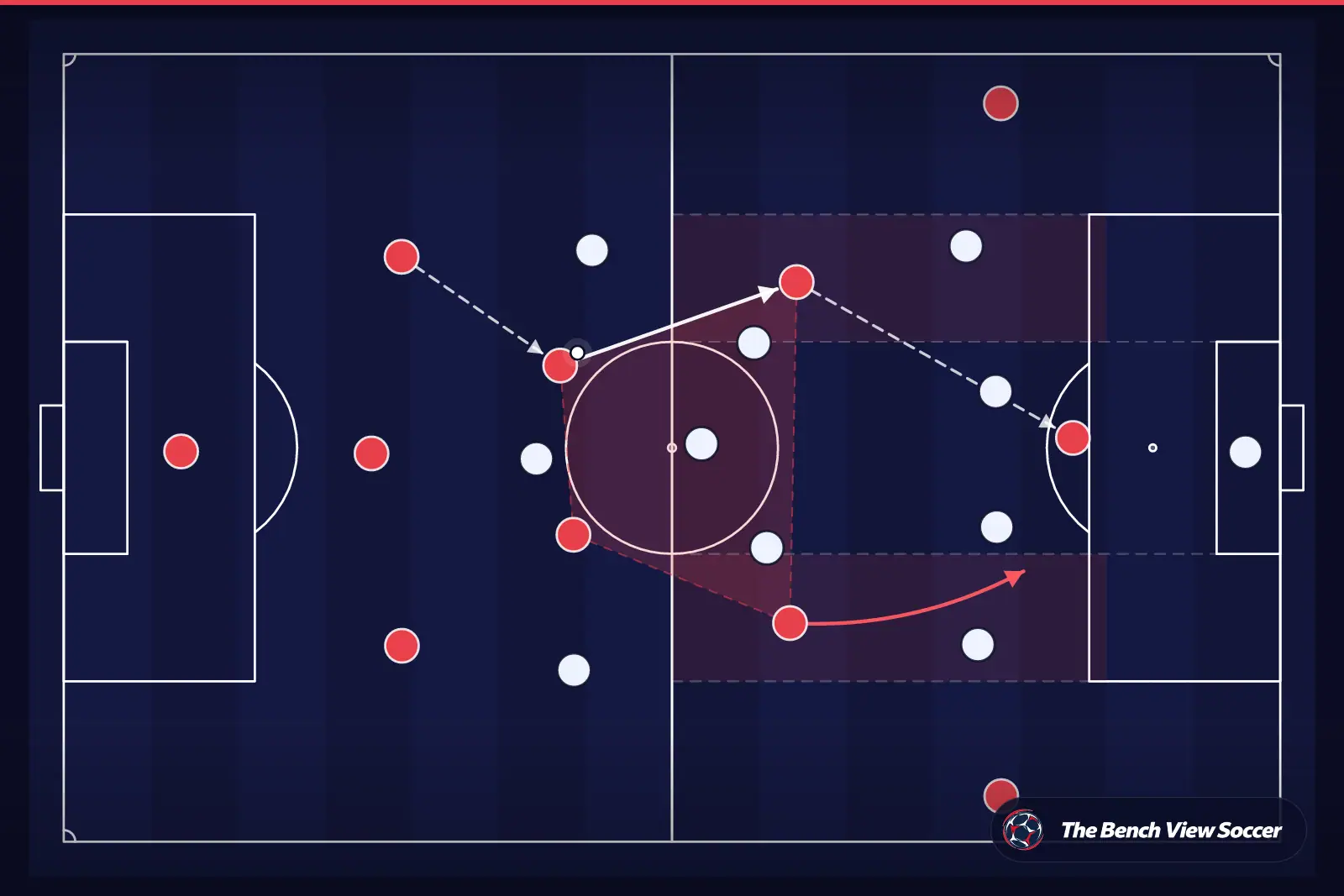
Positional play means Barcelona occupies specific zones to create triangles and diamonds around the ball. The most important detail against the counter is “rest defense” (defensive structure while attacking). Barcelona usually keeps at least two defenders plus a controlling midfielder behind the ball, even when they dominate possession. In many sequences, the full-backs do not both fly high at the same time; one may invert into midfield (move inside) to protect central space. The central defenders split wide to circulate the ball, but their spacing also prepares them to defend the first long pass after a turnover. In midfield, the single pivot (often the No. 6) positions to screen the opponent’s striker and cut direct lanes into the middle. When the ball is lost, Barcelona’s first reaction is immediate pressure from the closest players—this is not “pressing for fun,” it is to delay the counter by 2–3 seconds. That delay allows the rest-defense line to lock onto runners. Barcelona also funnels counters wide by blocking central passing lanes, because central counters are the fastest way to reach goal. The wingers and interiors (No. 8s/10s) are not only attackers; they are the first defenders in transition, tracking the opponent’s full-back or midfielder who tries to break out.
Match Examples
A clear example is Barcelona vs Inter in the 2009–10 UEFA Champions League semi-final (Pep Guardiola vs José Mourinho). Inter defends deep and waits for turnovers, then attacks Barcelona’s high line quickly. Barcelona’s positional play creates long spells of possession, but when the ball is lost, Inter targets the space behind the full-backs and the channels outside the centre-backs. You see why rest defense matters: if Barcelona’s “back base” is too stretched, one direct pass invites a 3v3 sprint. Another useful reference is Barcelona vs Bayern Munich in the 2019–20 Champions League quarter-final (Lisbon, 8–2). Bayern under Hansi Flick presses aggressively and then counter-attacks immediately after recoveries; Barcelona’s spacing becomes chaotic, and the protection in midfield is too light. The lesson is that positional play must include secure distances between lines—if the No. 6 cannot cover, the centre-backs are exposed. A more positive, modern reference is Barcelona vs Napoli in the 2023–24 UEFA Champions League Round of 16 under Xavi Hernández. Barcelona uses controlled possession, but is more careful with the balance: when one full-back goes high, the other stays or inverts, and midfielders are ready to counter-press. Napoli still finds breaks, but Barcelona’s first wave of pressure often forces sideways counters instead of straight runs through the middle.
Related Concepts & Skills
Training Implications
For coaches and players, train positional play and counter-protection together, not as separate topics. Start with a 6v6+2 neutral possession game in a 40x30m grid: the rule is that when possession changes, the new team has 6 seconds to score on a mini-goal. This forces the team in possession to keep a rest-defense shape (at least 2+1 behind the ball). Coach the distances: centre-backs stay 8–12 meters apart, and the pivot stays connected so there is no “hole” in front of them. Add a constraint: only one full-back (or wide player) may be in the final third at a time, teaching the idea of asymmetric full-back positioning. Next, use a “transition wave” drill: 7 attackers build against 5 defenders; if defenders win it, they counter to two wide gates. Attackers must counter-press for 3 seconds before they are allowed to recover into a block. This trains the first reaction. Finally, use video feedback: pause at the moment before a turnover and ask three questions—Who is behind the ball? Who blocks the central lane? Who is close enough to press immediately? If players can answer these consistently, Barcelona-style positional play becomes safer against the counter.
La app de The Bench View
No solo leas fútbol: entrénalo
Todo lo que lees aquí, convertido en entrenamiento que puedes seguir paso a paso.
Entrenamiento físico en casa
Sesiones diarias con IA adaptadas a tu nivel y posición. Sin material.
Entrenamiento táctico
Cursos paso a paso de posicionamiento, presión, salida de balón y toma de decisiones.
- 7 días gratis
- Sin compromiso
- Cancela cuando quieras
Cuenta gratis: 2 sesiones físicas + el primer curso táctico. PRO: 7 días de prueba gratis; cancela antes del día 8 y no pagas nada.