Introduction
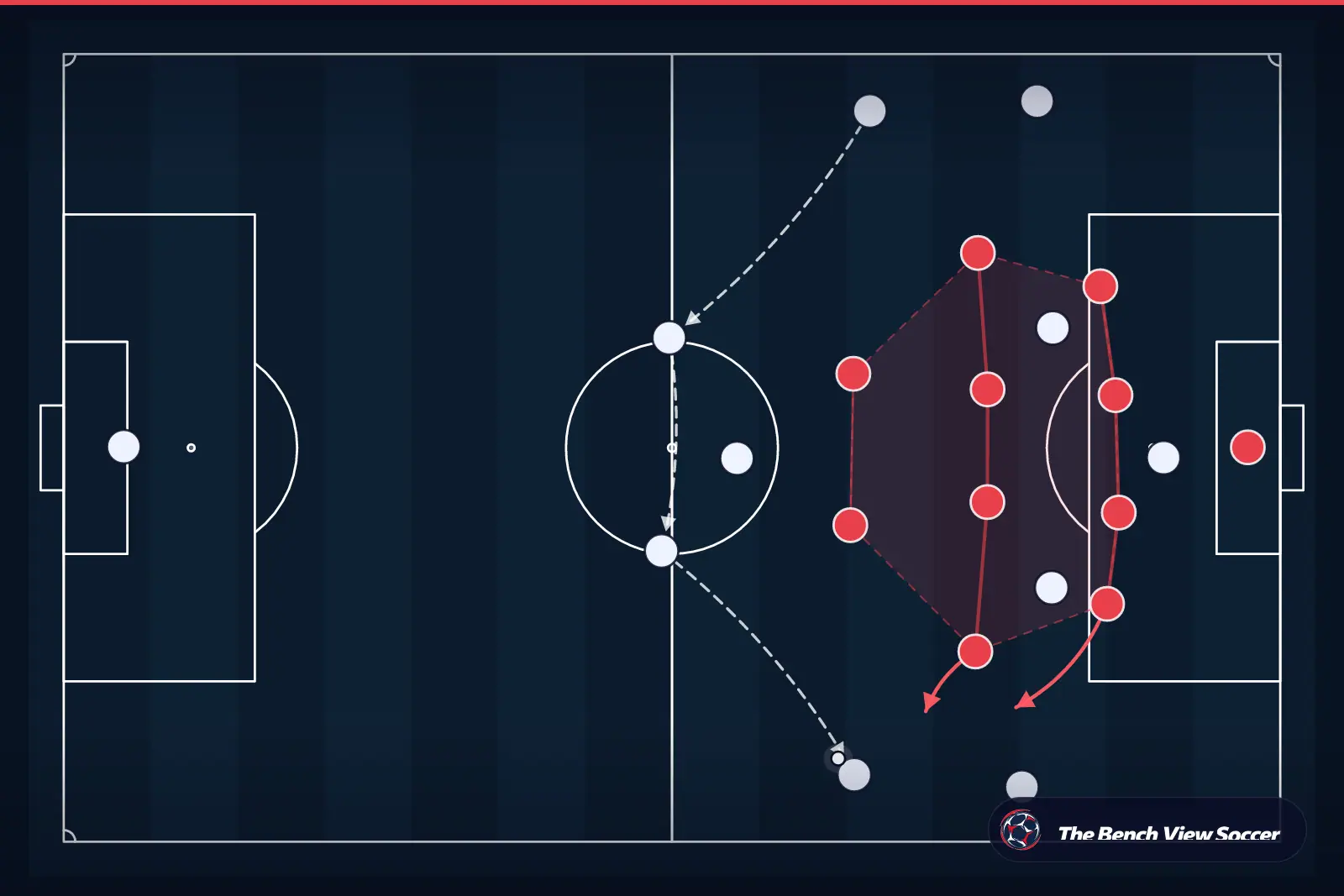
Inter Milan’s 3-5-2 under Simone Inzaghi becomes one of Europe’s clearest “systems you can recognise in five minutes.” For fans learning tactics, the real lesson is not just that Inter uses three centre-backs and two strikers, but how that shape protects the most dangerous areas: the inside channels. Inside channels are the spaces between the central defenders and the wide defenders/wing-backs—basically the corridors just outside the penalty box that attackers love for cut-backs, through balls, and low crosses. In Serie A and the UEFA Champions League, teams like AC Milan, Napoli, Manchester City, and Bayern Munich repeatedly target these lanes because they create shots without needing long-range brilliance. Inter’s structure is designed to deny easy access there, then punish opponents when they force play wide. This article breaks down how Inter defends those inside channels, what each line does, and how you can recognise the key cues while watching matches.
How It Works
In Inter’s 3-5-2, the back three (often Alessandro Bastoni on the left, Francesco Acerbi or Stefan de Vrij central, and Benjamin Pavard or Matteo Darmian on the right) forms the base. The wing-backs (Federico Dimarco left, Denzel Dumfries right) start high enough to press wide, but they drop quickly to create a back five when danger grows. The key idea is that Inter protects the inside channels with “layered coverage”: one player engages the ball, another blocks the passing lane into the half-space/inside channel, and a third provides depth to sweep through balls. When the opponent attacks down one flank, Inter’s near-side wing-back steps out to pressure, but he rarely goes alone. The near-side outside centre-back (Bastoni or Pavard) shifts across to cover the space behind the wing-back, while the middle centre-back stays goal-side to protect the penalty spot. Meanwhile, the three midfielders (for example Nicolò Barella, Hakan Çalhanoğlu, and Henrikh Mkhitaryan or Davide Frattesi) slide as a unit. The near-side midfielder blocks the inside pass into the channel, the central midfielder screens passes into the striker’s feet, and the far-side midfielder tucks in to prevent switches becoming immediate inside-channel entries. Up front, the two strikers (Lautaro Martínez and Marcus Thuram in 2023-24) contribute by shaping where the opponent can play. Instead of sprinting at centre-backs randomly, they angle their runs to steer build-up wide and discourage vertical passes into midfield. That matters because inside-channel attacks often start with a clean pass into an attacking midfielder who can turn. Inter’s forwards help prevent that “turn,” so the ball travels to the wing earlier, where Inter’s back five and midfield slide are already prepared. The overall picture: Inter invites wide possession, compresses the inside channel with shifting triangles, and waits for a predictable pass to intercept or a heavy touch to press.
Match Examples
UEFA Champions League 2022-23 semi-final, Inter vs AC Milan: Inzaghi’s Inter repeatedly denies Milan access to the inside-left channel that Rafael Leão and Theo Hernández love. When Milan tries to build attacks down Inter’s right side, Dumfries presses the wide receiver, while Pavard/Darmian (depending on the phase) narrows to cover the lane between wing-back and centre-back. Milan is forced into wider crosses rather than cut-backs. Inter’s midfield line also shifts hard: Barella blocks the “inside bounce pass” from winger to midfielder, which is a common pattern to enter the channel. You can see Inter’s defenders staying patient—rather than diving in, they protect the corridor and wait for the ball to go backward or become loose. UEFA Champions League 2022-23 final, Manchester City vs Inter: City constantly tries to access the inside channels through Kevin De Bruyne and Bernardo Silva, aiming for low cut-backs. Inter responds by keeping their back line compact and their midfield screening. When City plays to the wing, Inter’s near-side wing-back engages, but the near-side centre-back stays close enough to block the diagonal ball into the channel. The result is City circulating the ball around the box with fewer clean penetrations than usual. Inter still concedes chances (City’s quality is elite), but the structure reduces the “easy” entries that lead to tap-ins. Serie A 2023-24, Inter vs Napoli (title-running season context): Napoli under Rudi Garcia and later Walter Mazzarri looks to find Victor Osimhen early and then run beyond into the channels. Inter’s centre-backs stay goal-side and protect depth, while Çalhanoğlu screens passes into Osimhen’s feet so he cannot set and spin defenders. When Napoli tries to go wide and then slip the ball inside, Inter’s near-side midfielder drops into the channel space to crowd it, forcing Napoli to recycle possession. This is the practical takeaway: Inter’s inside-channel defending is not one player “winning a duel,” but a coordinated slide that keeps the corridor crowded and predictable.
Related Concepts & Skills
Training Implications
If you coach or play, you can borrow Inter’s inside-channel defending without needing professional-level athleticism. Start with a simple rule: protect the corridor first, then press wide. Drill 1 (8v6 channel-protection): set up a pitch with two marked inside channels (cones from edge of box to halfway). The attacking team scores by receiving a pass inside the channel and turning. The defending team uses a 3-5-2 shape (3 defenders, 3 midfielders, 2 wing-backs, 2 strikers as passive screeners or active depending on level). Coaching points: the near-side wing-back presses wide, the near-side centre-back shifts across to cover behind, and the nearest midfielder drops to block the inside pass. Freeze play to check distances: wing-back and outside centre-back should be close enough to prevent a split pass, not 10 metres apart. Drill 2 (curved pressing for strikers): in a 20x20 grid, two centre-backs circulate the ball while two forwards press. Score for defenders if they play a straight pass into a target midfielder; score for forwards if they force a pass wide to a cone gate. Teach the forwards to curve their run so they “show” the ball to the wing and keep the inside passing lane in their cover shadow. This is exactly how Inter’s front two shapes build-up. Drill 3 (back-five slide with cut-back defence): play 6v6 on half a pitch with wide zones. The attacking team can only cross low or cut back (no high crosses). The defending team must keep three players in the box line and two protecting the top of the box, rotating as the ball moves. Emphasise scanning: every defender checks shoulder twice—once when the ball travels wide, once before the cut-back. Actionable match habit: when you watch Inter, pause mentally when the ball reaches the wing and look for the triangle (wing-back + outside centre-back + near midfielder). If that triangle is connected, the inside channel is usually safe.
The Bench View app
Don’t just read football — train it
Everything you read here, turned into training you can follow step by step.
Physical training at home
AI daily sessions adapted to your level and position. No equipment needed.
Tactical training courses
Step-by-step courses on positioning, pressing, build-up and decision making.
- 7 days free
- No commitment
- Cancel anytime
Free account: 2 physical sessions + the first tactical course. PRO: 7-day free trial — cancel before day 8 and you pay nothing.