Introduction
Liverpool’s “front three” becomes one of the defining tactical stories of modern European football under Jürgen Klopp, especially across UEFA Champions League and Premier League campaigns from 2017 to 2020. For fans who mostly watch the ball, the key learning is this: Liverpool’s attackers are not just finishing moves, they are shaping the entire match without touching the ball. Their movement decides where space appears, their pressing decides where the ball is won, and their positioning decides how Liverpool progresses attacks. Even when the names change—Sadio Mané, Roberto Firmino, Mohamed Salah at their peak; later Diogo Jota or Luis Díaz—the principles stay similar. The front three constantly trade roles: one drops, one runs behind, one arrives at the far post. They attack the same defensive line from different angles to stretch it until gaps open. This article breaks down how they create space, how their press works, and why their patterns influence the whole team from Alisson to Trent Alexander-Arnold.
How It Works
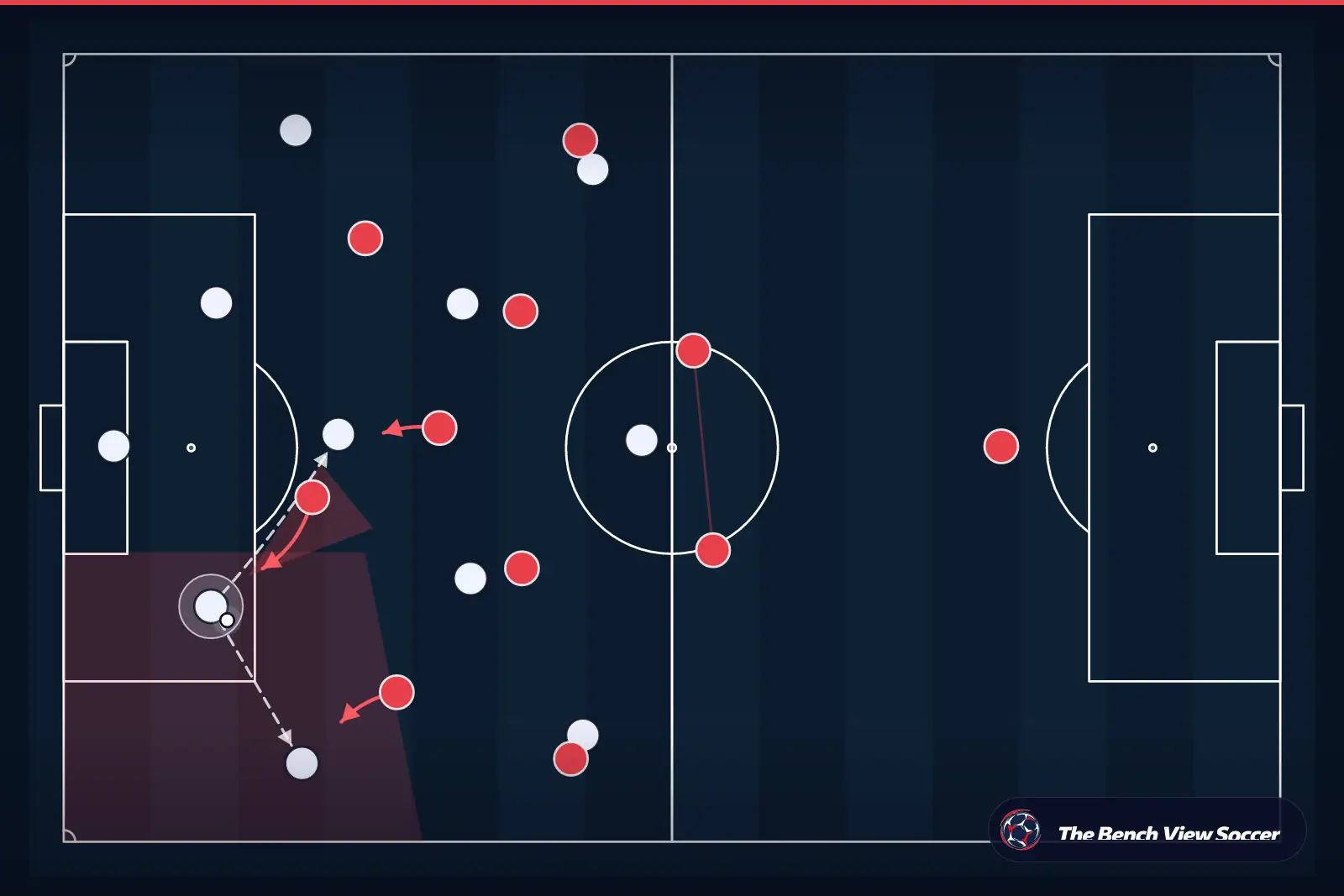
Liverpool’s front three operates like a coordinated system rather than three isolated dribblers. In possession, the wide forwards (often Salah on the right and Mané on the left) start high and narrow, closer to the central defenders than traditional wingers. This pins the opponent’s back line and creates room for full-backs like Alexander-Arnold and Andrew Robertson to overlap on the outside. The central forward—classically Firmino—often drops into midfield to connect play. When he drops, he drags a centre-back with him or forces a defensive midfielder to step out. Either choice opens a channel: if a centre-back follows, space appears behind him for Salah or Mané to run into; if nobody follows, Firmino turns and plays forward. Out of possession, the front three press in a curved way: instead of sprinting straight at the ball, they angle runs to block passing lanes into midfield. This is crucial for Klopp’s “win it back quickly” approach. The nearest forward pressures the ball-carrier, the other two squeeze inside to take away central options, and Liverpool’s midfield steps up to support. The result is not just tackles—it is rushed clearances and predictable passes into areas where Liverpool is ready to trap.
Match Examples
A clear example arrives in the 2018-19 UEFA Champions League semi-final second leg: Liverpool 4–0 Barcelona at Anfield. Even without Salah and Firmino starting, the front-line principles remain. Divock Origi stays high to pin Barcelona’s centre-backs, while Mané attacks the inside-left channel and presses aggressively when Barcelona tries to build. Liverpool’s forward pressure forces Barcelona into uncomfortable clearances, and the constant rotation around the box creates confusion—especially on set-piece moments where alert movement punishes ball-watching. Another strong reference is Liverpool 2–0 Manchester City in the Premier League (November 2019) at Anfield. Liverpool’s front three presses City’s first pass and blocks access to Rodri, pushing City wider and into riskier passes. When Liverpool attacks, Salah’s narrow starting position pins a defender, allowing Alexander-Arnold’s wide delivery to become a major weapon. For a different opponent profile, look at the 2017-18 Champions League quarter-final first leg: Liverpool 3–0 Manchester City. Liverpool’s front three attacks City’s build-up with coordinated angles, and once a turnover occurs they explode into the space behind City’s advanced full-backs. The lesson across these matches is consistent: Liverpool’s front three influences both where the opponent passes and where Liverpool’s next attack begins.
Related Concepts & Skills
Training Implications
To coach these ideas at any level—school teams, local academies, or amateur sides—build habits in three areas: movement, pressing angles, and spacing. First, run a “front three rotation” drill in a 30x25m area with three attackers versus two defenders and a goalkeeper. Set a rule: the central forward must drop at least once every attack, and one wide forward must run in behind when that happens. Coach the timing—run as the pass goes into the dropping forward, not after. Second, train pressing with curved runs: set up a 6v4 build-out (six building players including goalkeeper, four pressers). Award points not just for winning the ball, but for forcing a pass wide or backwards. Teach the nearest presser to approach from an angle that blocks the central pass, while the other two forwards narrow in to cut off midfield. Third, rehearse spacing with “lane rules”: mark three vertical lanes and demand that two attackers never stand in the same lane on the same line—someone must be high, someone between lines, someone wide. Finally, add video feedback: record 5-minute segments and review whether the front three creates a triangle, whether the press is connected to midfield support, and whether runs happen early enough to stretch the defensive line.
The Bench View app
Don’t just read football — train it
Everything you read here, turned into training you can follow step by step.
Physical training at home
AI daily sessions adapted to your level and position. No equipment needed.
Tactical training courses
Step-by-step courses on positioning, pressing, build-up and decision making.
- 7 days free
- No commitment
- Cancel anytime
Free account: 2 physical sessions + the first tactical course. PRO: 7-day free trial — cancel before day 8 and you pay nothing.