

Introduction
Controlling the tempo is one of the most understated skills at elite level. For central midfielders and playmakers, the ability to accelerate or decelerate play at the right moment turns possession into a tactical weapon: it destabilises opponents, protects your back line, and creates high-quality scoring chances. This article breaks down why tempo control matters, how top teams and managers use it, and what midfielders must do physically and mentally to own a game’s pace.
We’ll focus on the central midfielder’s responsibilities — scanning, body orientation, first touch, and timing — and show how moments of deliberate slowdown can open passing lanes while well-timed accelerations punish poor defensive structuring. Examples from Manchester City, Barcelona, and Liverpool will illustrate contrasting uses of tempo: City’s patient construction, Barcelona’s metronomic circulation with Busquets-era control, and Liverpool’s explosive transitions under Klopp.
Tactical Breakdown
What is tempo control? Tempo control is the deliberate management of match speed: deciding when to extend possession time and when to move the ball quickly. As a central midfielder or playmaker you are the metronome. That means two core actions — protecting possession (slowing down) and punishing space (speeding up).
Slowing down is not passive. It requires positional discipline: the deep playmaker (e.g., Rodri or Sergio Busquets) positions between lines to receive under pressure, uses a flat first touch to open angles, and rotates teammates to create overloads on an isolated opponent. By drawing the press in and shifting the point of attack, you create gaps between opponent lines. Crucial details: check your shoulders continuously, use diagonal passes to change the side, and use short, sharp combinations to break the first line of pressure.
Speeding up is a reaction to triggers — an opponent’s poor body shape, a full-back caught high, or a successful 1-2 that draws defenders out. The attacking midfielder (e.g., Kevin De Bruyne) accelerates by playing line-breaking passes, driving into half-spaces, or releasing quick through-balls to a third man. Key cues for acceleration: immediate forward thinking, increased tempo of touches, and supporting runs timed to the pass. Tempo control is therefore context-dependent: slow down to regain structure; speed up to exploit disorganisation.
Real Match Examples
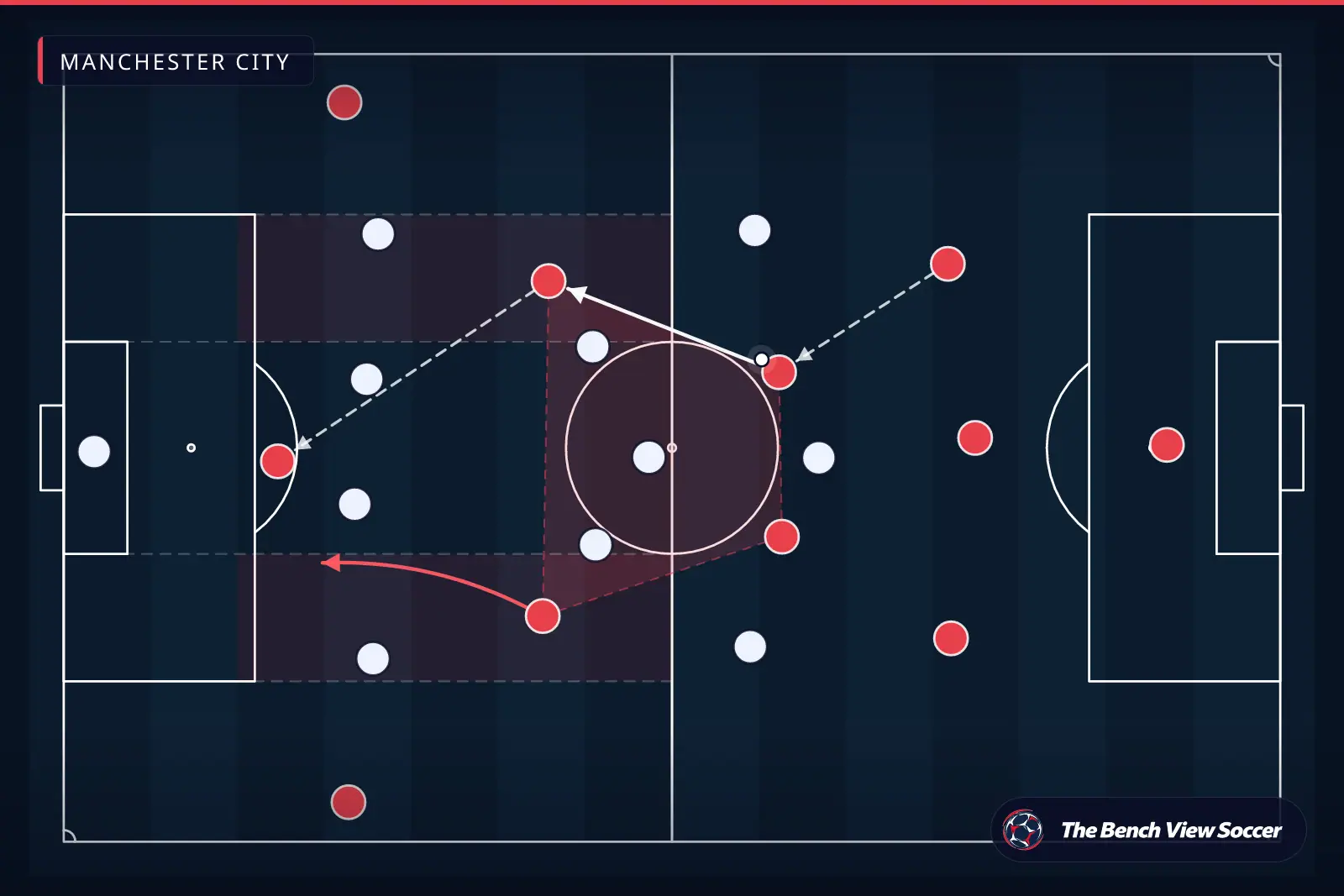
Manchester City (Pep Guardiola): City’s most effective matches are built on controlled circulation through Rodri and then explosive vertical moments from De Bruyne and Foden. Guardiola’s teams often slow play to draw Liverpool-like press, then switch quickly to the far flank or play a driven pass into the half-space. In the 2021-22 Premier League, City used measured possession to create overloads before sudden accelerations that split Liverpool’s 4-3-3.
Barcelona (Xavi / Busquets era): Busquets embodied tempo regulation — he would slow the game with back-turned receives and subtle lateral passes, then release quick diagonal balls that disrupted compact low blocks. Barcelona’s rhythm often forced opponents to stretch, creating the vertical lanes Messi exploited during peak seasons.
Liverpool (Jürgen Klopp): Klopp flips tempo control into a weapon that punishes slow transitions. Liverpool’s structure is designed to speed up after a turnover: fast direct passes to Salah or Diaz exploit half-backs who are out of position. The contrast between Liverpool’s speed bursts and City’s patient build underscores how different tactical profiles use tempo to achieve the same objective — create superior attacking opportunities.
Key Principles
Key Principles for Midfield Tempo Control
- Scan and read: Look before receiving. Shoulder checks and head-up touches let you choose between calming play or launching an attack.
- First touch dictates tempo: A forward-oriented first touch speeds play; a side/backward touch buys time to reorganise.
- Trigger-based acceleration: Only speed up when a defensive imbalance appears — full-back high, poor marking, or numerically superior phase.
- Support and spacing: Maintain angles and distances so teammates can combine quickly. Overcrowding removes options and kills tempo control.
Training Implications
How to train tempo control
Design drills that force midfielders to choose pace deliberately. Start with rondos where the coach signals a tempo change: a whistle for ‘slow’ (players must complete 5 passes before switching) and a clap for ‘fast’ (immediate vertical pass to a target). Progress to 6v6+4 possession with neutral wide players; reward teams that complete a sequence of patient build-up with an extra attacker for a tempo-driven counter.
Practice game-like triggers: set scenarios where full-backs are held high; midfielders must recognise the trigger and accelerate with line-breaking passes. Use time constraints on final third entries to train timing. Finally, film sessions so playmakers review their scanning and first touch decisions — the mental habit of looking up and weighing tempo options is as trainable as passing technique.
Apply This in Your Game
Reading about tactics is one thing. Our training units teach you to execute these concepts in real match situations.