

Introduction
Central midfield is the game's engine room — where problems arrive before the rest of the team feel them. For intermediate-level CMs and playmakers, speed of thought is as important as technique. This article unpacks a simple, repeatable decision-flow that helps midfielders read the situation, prioritise the next problem, and execute the right action within seconds.
We translate the video lesson into tactical language used by elite teams: how Rodri and Kevin De Bruyne behave at Manchester City, how Xavi’s Barcelona prioritises passing lanes, and how Luka Modrić scans to choose between carrying, turning, or releasing the ball. This is not theory alone — the flow maps to positional rules and on-pitch triggers you can practise. By the end you'll have actionable principles to sharpen situational awareness and the drills to train them.
Tactical Breakdown
What the decision-flow is and why it matters
The decision-flow is a short cognitive checklist a central midfielder runs through in possession or on the ball’s arrival. It reduces hesitation by converting complexity into prioritized options. The flow is: Scan → Threat Assessment → Primary Solution → Secondary Option → Execute + Communicate.
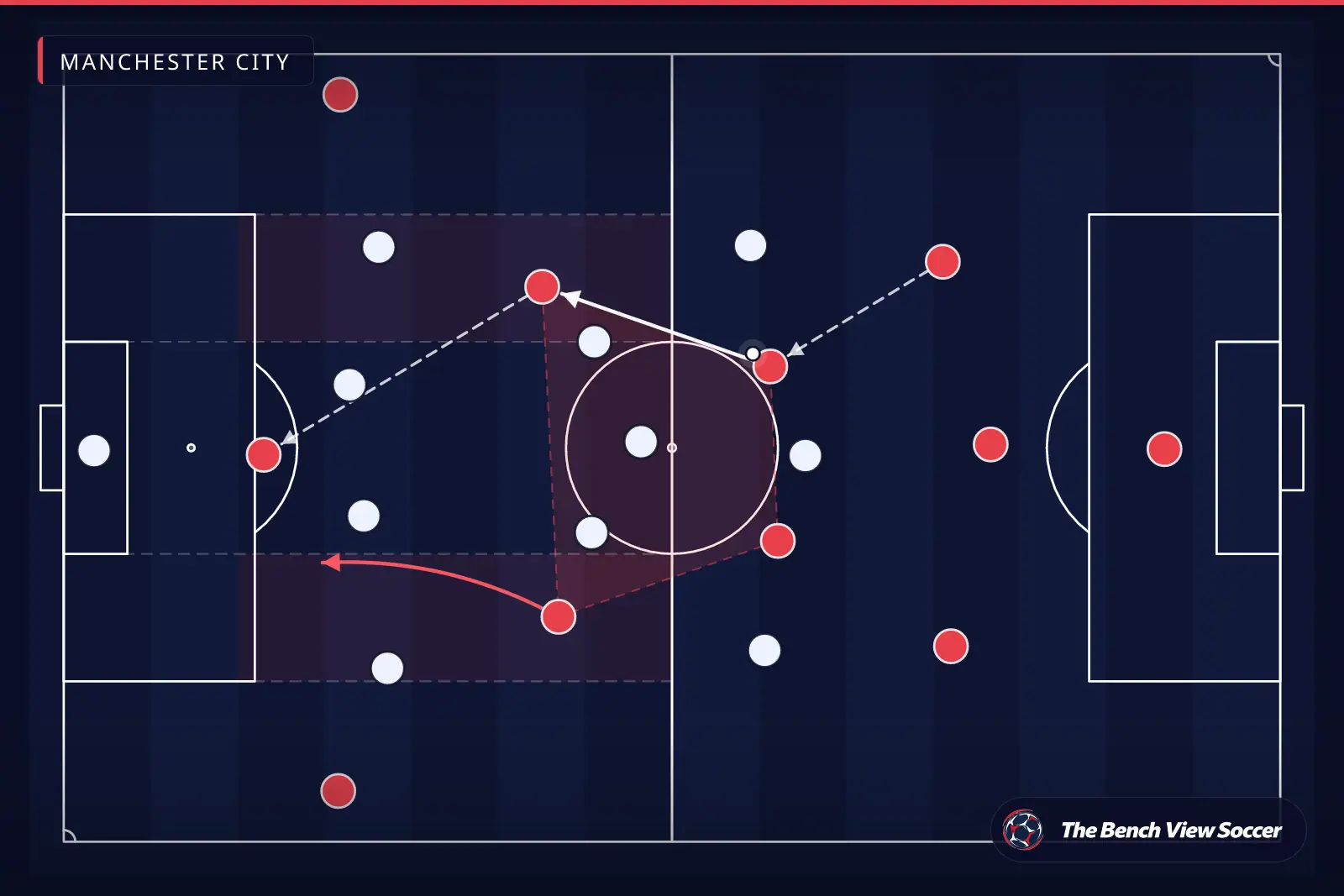
Positional detail matters. When receiving between the lines, the midfielder must check front and back lanes in the first 1–2 seconds: is a forward making a run? Is a pressing trigger imminent? Who is free for a quick one-two? Look at Rodri: his first check is body orientation toward the centre, immediate scan to the left and right, then a choice to release quickly to a full-back or circulate the ball to an inverted full-back.
Threat Assessment combines defensive pressure and passing risk. Under passive pressure, the primary solution is progress (dribble, line-breaking pass). Under high pressure, choose the simplest outlet (backward pass, one-touch combination) or a counter-press-resistant pass into a pocket of space. The secondary option is always a safety valve that keeps the team’s shape and resets the phase.
Real Match Examples
Elite-team situations that illustrate the flow
1) Manchester City (Pep Guardiola): Kevin De Bruyne often receives with his head up, then makes a three-step decision. If City’s right-back has width and the opposition is narrow, De Bruyne will probe for the diagonal into the half-space. If pressed, he triggers a short rotation with a midfielder to open a corridor. Guardiola’s system rewards quick, prioritized choices — players who hesitate get squeezed.
2) Barcelona (Xavi): Inverted full-backs and compact midfield lines force midfielders like Pedri/Busquets to choose between vertical passes into the half-space or stepping to carry. Barcelona’s philosophy reduces choices by structuring teammates as predictable outlets; the decision-flow becomes more about tempo than direction.
3) Real Madrid (Carlo Ancelotti): Luka Modrić shows the counter example — when the opponent sits deep, Modrić prefers carrying and creating mismatches, but when pressed he opts for third-man passes or diagonal switches. The flow adapts to game state: possession dominance allows risk; low-possession games require more conservative sequencing.
Key Principles
Key principles coaches should remember
- Prioritise time over options: Teach players to choose the best safe option within two seconds. More options often mean worse decisions.
- Structure teammates as outlets: Design positional rules so midfielders can predict safe passes (e.g., one full-back width, one supporting midfielder). Predictability reduces cognitive load.
- Scan first, act second: Habitual scanning (before receiving) increases success rate of progressive passes and carries — emulate De Bruyne’s head-up routine.
- Define risk thresholds: Train clear criteria for when to attempt line-breaking passes vs. when to reset. Pressure and scoreline should change the threshold.
Training Implications
How to train the decision-flow on the pitch
Design drills that replicate the time-pressure and positional constraints of matches. Use small-sided games with explicit scanning and release rules, and conditioned rondos that reward progressive decisions.
- Two-second scan rondo: 6v2 rondo where the receiver must scan and call the intended next player before touching the ball; if they fail the condition, defenders get an extra player.
- Triggered pressure possession: 7v6 possession where a coach’s whistle triggers an extra defender closing the ball carrier — this forces the carrier to choose primary/secondary options under pressure.
- Third-man progressive patterns: 7v7 with wide players fixed; midfielders must choose between carrying, third-man pass, or switch. Limit touches to simulate tempo and encourage quick decisions.
Finish sessions with phase-of-play sequences (build-up to finishing) to embed decision priorities into game rhythm. Encourage post-session video review focusing on the first two decisions a midfielder makes on every touch.
Apply This in Your Game
Reading about tactics is one thing. Our training units teach you to execute these concepts in real match situations.