Introduction
An inverted winger is a wide attacker who plays on the “opposite” side to their stronger foot: a right-footer on the left wing, or a left-footer on the right. For fans used to the classic image of a winger sprinting to the byline and crossing, inverted wingers can feel counter-intuitive—why put a left-footer on the right? The answer is simple: it opens new passing angles and goal threats. Instead of always racing outside, the inverted winger regularly receives wide, then cuts inside to shoot, combine, or create central overloads (more attackers in the middle than defenders can handle). This role becomes a key feature in modern European football across the UEFA Champions League, Premier League, and La Liga, especially with managers like Pep Guardiola, Jürgen Klopp, and Mikel Arteta. The best inverted wingers do not just “dribble inside”; they read spacing, lure full-backs, and decide when to stay wide to stretch the pitch and when to enter central zones to finish moves.
How It Works
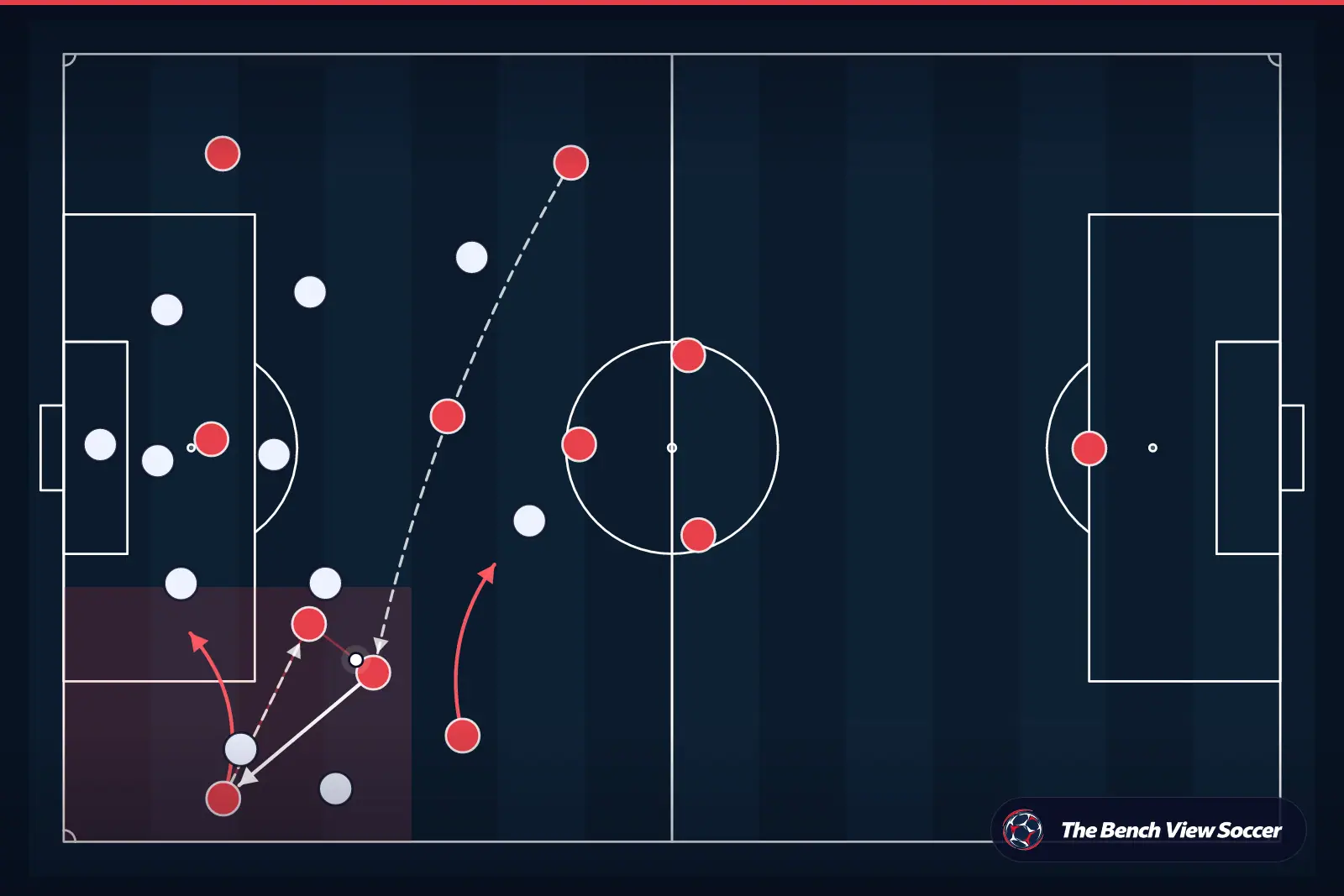
The inverted winger’s basic starting position is near the touchline to stretch the defence horizontally. This forces the opposition full-back to choose: stay tight and risk being beaten outside, or drop off and allow an easy pass forward. When the winger receives, the first job is scanning: Where is the full-back? Where is the nearest midfielder? Is the central lane blocked? From here, three main patterns appear. (1) Cut inside to shoot or slip a pass: because the stronger foot is now closer to the centre, the winger can open their body and threaten a far-corner shot or a through ball into the striker. (2) Combine in triangles: the winger connects with the nearest central midfielder and the overlapping full-back. The overlap is crucial; it gives the winger a “decoy outside run” that drags the defender wider, making the inside dribble easier. (3) Stay wide and switch: sometimes the best decision is not to cut inside. If the opposition packs the middle, the inverted winger holds width, recycles the ball, and triggers a switch of play to attack the weak side. Key details separate good from elite: the winger’s first touch goes away from pressure; their body shape stays half-open to see inside; and their timing is synced with the striker’s run (near post, far post, or dropping). The role also demands defensive work: in many teams the inverted winger presses inside lanes, blocking passes into midfield, because their starting position lets them curve the press toward the centre.
Match Examples
A clear Premier League reference is Liverpool’s 2017–18 season under Jürgen Klopp, especially in the UEFA Champions League run where Mohamed Salah starts wide right but constantly drives into the right half-space and central channel on his left foot. In the 2017–18 Champions League semi-final first leg against AS Roma, Liverpool’s wide forwards repeatedly receive wide, then attack inside while the full-backs provide width—this pattern produces quick shots and cut-back chances because Roma’s back line gets stretched and then attacked diagonally. Another strong example is Arsenal under Mikel Arteta in 2022–23 Premier League matches, where Bukayo Saka (left-footed on the right) receives near the touchline, tempts the left-back, and then cuts inside to combine with Martin Ødegaard between the lines. That relationship—Saka outside-to-inside, Ødegaard supporting inside, and Ben White overlapping—creates repeated two-versus-one situations. For a Champions League modern-positional-play model, Manchester City under Pep Guardiola in 2022–23 use Riyad Mahrez as a classic inverted winger on the right. In big knockout matches, City’s winger often holds width to pin the full-back, then chooses moments to step inside when the opponent’s midfield is occupied by City’s central overloads. Across these examples, the common theme is decision-making: the winger does not cut inside every time; they do it when the full-back is isolated, when the central midfielder can support, or when the striker’s movement opens the lane.
Related Concepts & Skills
Training Implications
To coach inverted wingers effectively, train decisions, not just dribbles. Start with a 1v1 “wide channel” drill: winger receives on the touchline with a defender in front, and a mini-goal placed centrally (for a cut-inside shot) plus a wide target zone (for an outside burst). Coach three cues: if the defender shows inside, go outside; if the defender shows outside, drive inside; if the defender is square and close, use a stop-start to create separation before attacking. Add a second phase to make it realistic: place an overlapping full-back as a passing option, and require the winger to choose between (a) pass and spin inside for a return, (b) hold the ball and release the overlap, or (c) cut inside to shoot. Next, run a 3v2 in the right/left flank plus half-space: winger, full-back, and interior midfielder attack two defenders. Score only counts if the move includes a “third-man” action (e.g., winger to midfielder to overlapping full-back) or a cut-in shot from the half-space. For scanning and body shape, enforce a rule: the winger must check their shoulder before the coach serves the ball; if they don’t, possession switches. Finally, integrate team pressing: in an 8v8, set the inverted winger’s job as blocking the pass into the opposition pivot (holding midfielder) while pressing the full-back. Mark a cone “shadow lane” into midfield—if a pass goes through that lane uncontested, the winger’s team loses a point. These constraints create habits: when to stay wide, when to attack inside, and how to connect with midfield and full-back support.
The Bench View app
Don’t just read football — train it
Everything you read here, turned into training you can follow step by step.
Physical training at home
AI daily sessions adapted to your level and position. No equipment needed.
Tactical training courses
Step-by-step courses on positioning, pressing, build-up and decision making.
- 7 days free
- No commitment
- Cancel anytime
Free account: 2 physical sessions + the first tactical course. PRO: 7-day free trial — cancel before day 8 and you pay nothing.