Introduction
Manchester City under Pep Guardiola becomes the modern reference point for “positional play” (often called juego de posición): a way of arranging players so the team always has stable passing options, good spacing, and controlled access to dangerous zones. For fans watching the Premier League or UEFA Champions League, City can look like they “just keep the ball,” but the bigger idea is how possession creates numerical and positional advantages. City does not circulate for decoration; they move opponents out of shape and then attack the gaps. The key word is overload: City frequently creates 3v2 or 4v3 situations around the ball, not by sending more players forward randomly, but by occupying specific lanes and heights. When the opponent shifts to stop the overload, City immediately uses the free player on the far side or between lines. This article breaks down how City builds these overloads, what cues trigger the next pass, and how the structure helps them defend transitions too.
How It Works
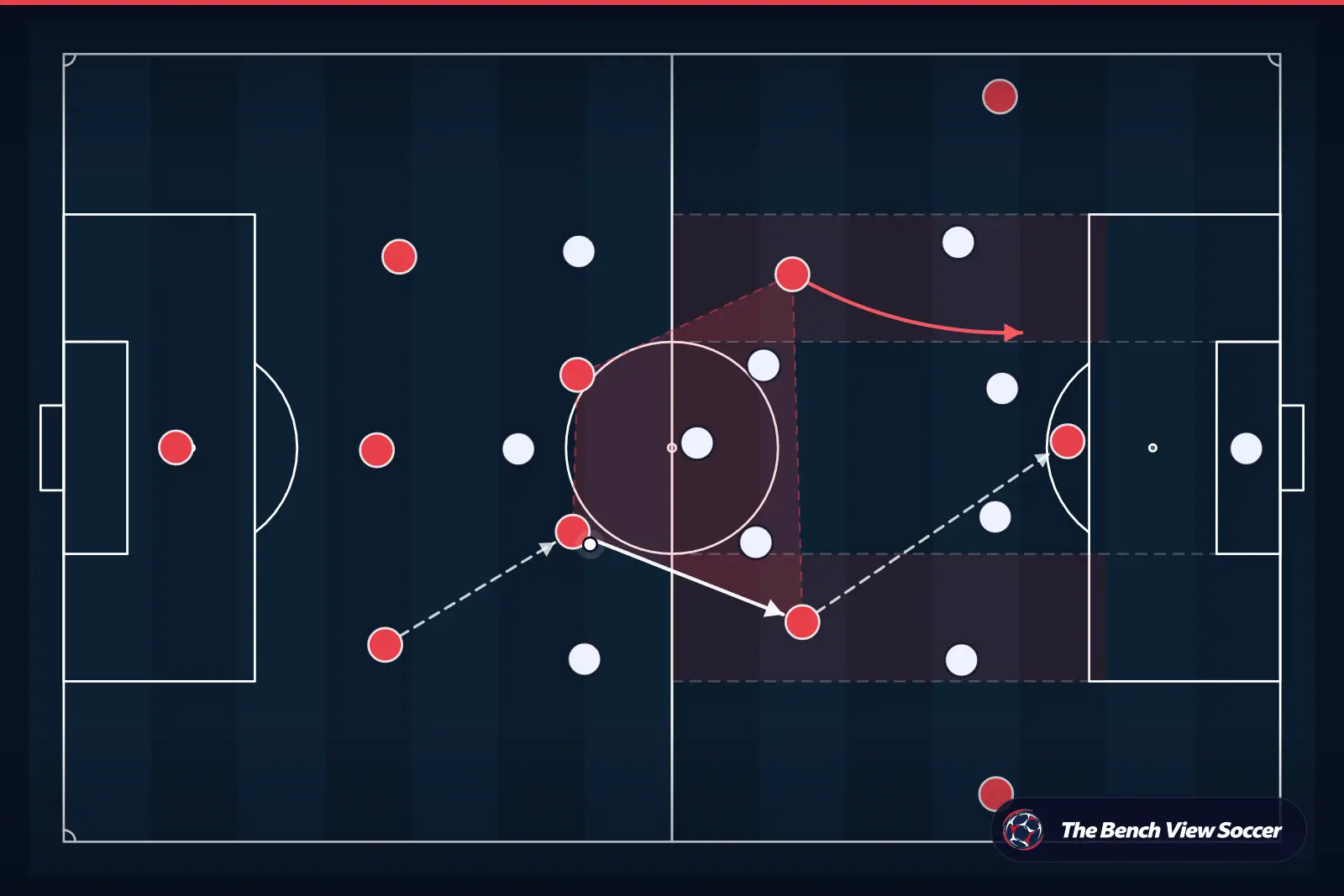
City’s positional play begins with spacing. They usually aim to occupy the pitch in “lanes”: left wing, left half-space (channel between full-back and centre-back), central lane, right half-space, and right wing. In buildup, Guardiola often creates a back line of three (3-2 shape) by keeping one full-back deeper or by inverting a full-back into midfield. “Inverting” means the full-back moves inside next to the holding midfielder instead of staying wide. This creates two big benefits: first, a stable platform to circulate under pressure; second, extra midfield numbers to form overloads. When City forms a 3v2 against a two-man press, the press either jumps aggressively (opening space behind) or stays passive (allowing City to progress). Ahead of that platform, City places “between the lines” players—often a No. 10 type or an advanced No. 8—who stands in pockets behind the opponent’s midfield. The wingers pin the opponent’s full-backs by staying high and wide, which stretches the defensive line horizontally. Meanwhile, one attacker (often the striker or an advanced midfielder) drops short to pull a centre-back out, creating a lane for a third-man run—this is when Player A passes to Player B, who immediately sets to Player C running into space. The overload is not just “more bodies”; it is also positional: City creates a 2v1 on a defender by placing one player outside and one inside, forcing that defender to choose. Once the opponent commits to protect the center, City switches play quickly to the far-side winger, who receives in time and space. The entire structure is designed so that if City loses the ball, they have nearby players to counter-press (win it back quickly) and prevent counterattacks.
Match Examples
A clear Premier League reference point is Manchester City vs Arsenal at the Etihad in 2022-23, when Guardiola’s City uses John Stones stepping into midfield to form a 3-2 base in possession. Arsenal presses with two forwards at times, but City’s extra midfield presence helps them find Rodri and a free No. 8 between the lines. City repeatedly builds overloads on one side, tempts Arsenal’s midfield to shift, then plays into Kevin De Bruyne or switches to the far side to attack space. Another useful example is Manchester City vs Real Madrid in the UEFA Champions League semi-final second leg in 2022-23. City’s wide players stay high to pin Madrid’s back line, while Bernardo Silva and De Bruyne operate in pockets that drag Madrid’s midfield out of compactness. City’s structure creates central overloads that allow them to play through pressure rather than around it, and their counter-press immediately attacks Madrid’s first pass after turnovers. A third reference is the 2023-24 Premier League matches where City often uses inverted full-backs (for example, a right-back moving inside) to create a 3-2-5 in settled possession. In these games, the overload is visible when City traps opponents on one flank with short triangles, then releases the opposite winger with a long diagonal. Watching these matches, focus on how City’s “extra man” is often not a forward runner but a midfielder created by role changes (like Stones in midfield) that makes the press mathematically and positionally difficult.
Related Concepts & Skills
Training Implications
For coaches, analysts, and even fan-players in India trying to apply these ideas, start with spacing before patterns. Run a 5-lane possession game: mark five vertical lanes with cones; require your team to keep at least one player in each wide lane and at least one in a half-space lane while in possession. This teaches natural width and prevents everyone crowding the ball. Next, build overload habits with a 4v2 rondo that has a rule: after five passes, the ball must be played to a “free pivot” positioned slightly away from the square (like Rodri), then immediately played out to the opposite side. This trains the idea of attracting pressure and switching. Add third-man runs with a simple drill: A passes into B (who is marked), B one-touches to C, and C plays a through ball into a runner; rotate roles and insist on body shape—receivers open their hips so they can see two options. To develop inverted full-back logic, play an 8v8 on a reduced pitch where one full-back is instructed to step into midfield in possession; freeze play to check distances: the inverted player should be 8–12 meters from the pivot, not on the same line as the centre-backs. Finally, coach counter-pressing as a non-negotiable: in small-sided games, set a rule that the team that loses the ball has five seconds to win it back; if they do, they keep possession. This creates the “City habit” of immediate reaction, and it links positional play to defensive stability rather than treating them as separate topics.
The Bench View app
Don’t just read football — train it
Everything you read here, turned into training you can follow step by step.
Physical training at home
AI daily sessions adapted to your level and position. No equipment needed.
Tactical training courses
Step-by-step courses on positioning, pressing, build-up and decision making.
- 7 days free
- No commitment
- Cancel anytime
Free account: 2 physical sessions + the first tactical course. PRO: 7-day free trial — cancel before day 8 and you pay nothing.