Introduction
Building from the back “under pressure” is the moment European football feels fastest: one bad touch near your own box and the opponent is shooting in seconds. For fans watching the Premier League, Manchester City under Pep Guardiola and Liverpool under Jürgen Klopp offer two of the clearest, most teachable models. Both want to start attacks with the goalkeeper and centre-backs, but they solve pressure in different ways. City often disorganise the press with calm passing, rotations, and a spare man; Liverpool often welcome pressure to create space behind it, then attack quickly once the first line is beaten. This article focuses on what actually happens on the pitch: where players stand, why they choose certain passes, and how they react when the opponent presses high. We keep it practical—so you can watch the next Manchester City vs Liverpool game in the Premier League and “read” the patterns, not just the highlights.
How It Works
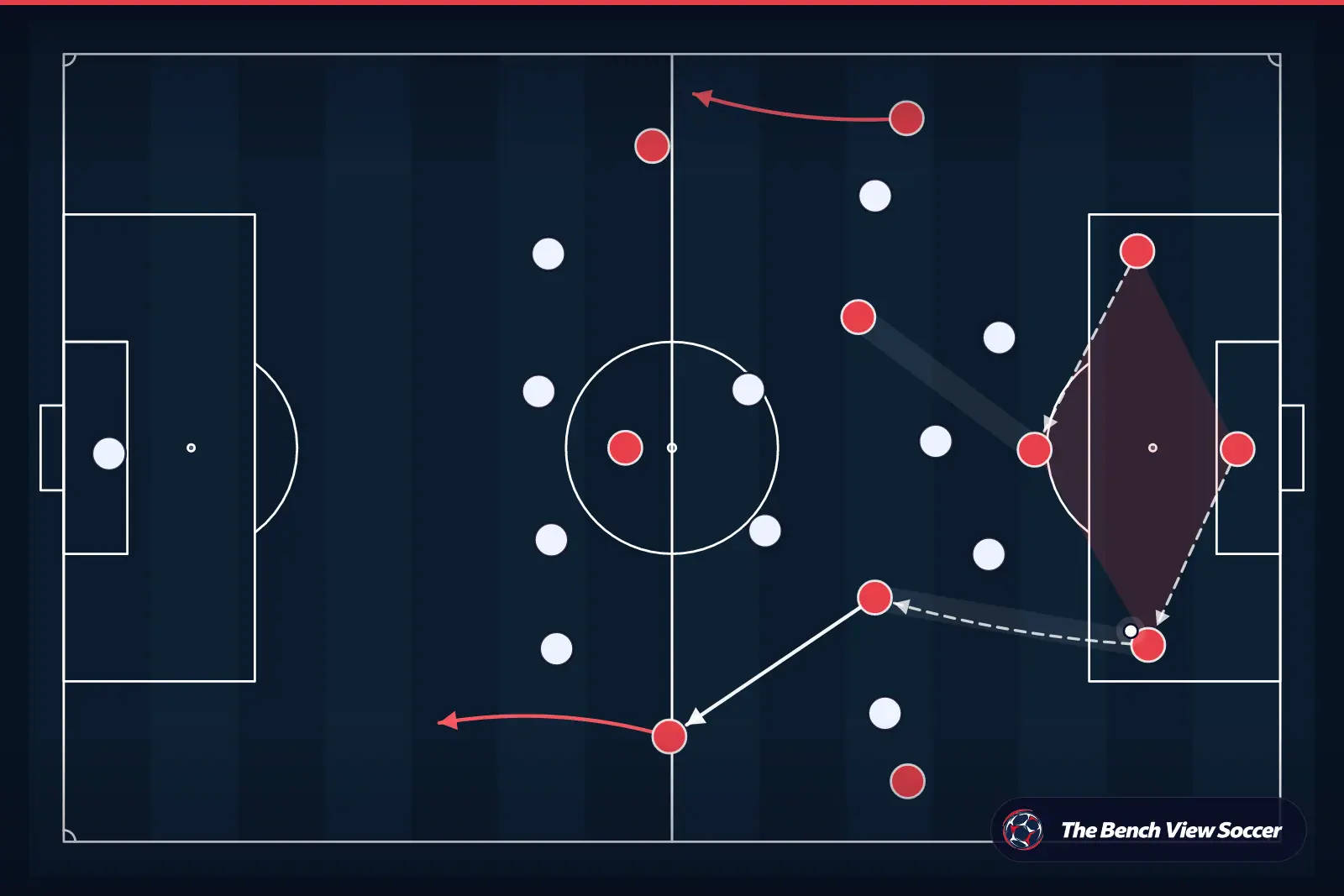
When a team builds from the back under pressure, the key question is simple: can the first line (goalkeeper + centre-backs + nearby midfielders) progress the ball past the opponent’s first wave? Manchester City usually create a numerical advantage near the ball. In Guardiola’s preferred structure, the goalkeeper (Ederson) plays as an extra outfield passer, the centre-backs split wide, and a midfielder (often Rodri) drops close to offer a safe option. Full-backs may step inside rather than hug the touchline, forming a “box” of four players in central areas. This central box gives City short passing angles so they can play through pressure instead of over it. If the opponent presses with two forwards, City keep three players behind the ball; if the opponent adds a midfielder to make it 3v3, City invite that jump and then find the free player on the far side. Liverpool’s build-up under Klopp tends to be more vertical and risk-accepting. Alisson and the centre-backs still play, but Liverpool are happy to hit a longer pass when the press becomes too tight. The idea is not “panic clearance”; it is a targeted ball into a channel for a forward to contest, or into midfield where a player can secure the second ball. Liverpool’s key detail is the timing of the next action: once the first pressure is beaten, the next pass goes forward quickly, often into the feet of a forward who sets it back (“bounce pass”) to release a runner. Under pressure, both teams value calm first touches, body shape (opening up to see both sides), and pre-planned outlets—but City usually escape with short combinations, while Liverpool more often escape with one pass that flips the field.
Match Examples
A useful reference point is the Premier League 2022–23 meeting at the Etihad (Manchester City 4–1 Liverpool). City build patiently with Ederson and split centre-backs, and they keep inviting Liverpool’s front line to commit. When Liverpool press with Mohamed Salah and Cody Gakpo, City often position Rodri and a second midfielder close to form multiple short exits. The moment Liverpool jump to lock one side, City look for the far-side release—switching play so the press has to run again. This is how City keep possession even under intense pressure: they treat Liverpool’s press like a puzzle to solve with angles and patience. For Liverpool’s approach, look at the Premier League 2023–24 match at Anfield (Liverpool 1–1 Manchester City). Liverpool’s build-up uses Alisson’s distribution and the willingness of their forwards to receive under contact. When City step up to squeeze, Liverpool often play into midfield with a firm pass, then use a quick set-back to escape the immediate marker and attack the next line. The pattern is: draw City forward, play through one pressure point, then accelerate. Another instructive example is the Premier League 2021–22 game at Anfield (Liverpool 2–2 Manchester City), where both presses are aggressive. City still try to create a spare man in the first phase, while Liverpool trigger pressure when a City defender receives facing his own goal or when the pass goes to the full-back near the sideline. Watching these matches with one question helps: “Who is the free player, and how do they get free?” The answer changes based on the press, and that is the tactical story.
Related Concepts & Skills
Training Implications
To train building from the back under pressure, you need habits that survive stress. First, run a 6v4 or 7v5 build-up game in one half: goalkeeper + back four + two midfielders versus four or five pressers. The goal is to play out and dribble/pass through a marked “exit gate” near the halfway line. Add a rule: every player must scan (turn head) before receiving, and coaches pause the drill if a player receives without looking. Second, teach “body shape” with a simple constraint: centre-backs and the pivot must receive side-on whenever possible, so they can see both the pressing player and the far-side option. Third, rehearse two exit plans, not one. Plan A is short combinations (City-style): GK to CB to pivot to opposite CB, then to a full-back or winger. Plan B is a coached long pass (Liverpool-style): GK or CB hits a diagonal to a target forward, while two midfielders sprint to win the second ball. Make players call “A” or “B” based on pressure, so decision-making becomes automatic. Fourth, add realistic pressing rules: the defending team earns double points if they win the ball within eight seconds—this creates true match pressure. Finally, use video feedback on simple metrics: how many times the team plays through the middle, how many times they escape via the far side, and how often they lose the ball because the receiver is square and closed. These are actionable benchmarks Indian academies and amateur teams can adopt immediately.
The Bench View app
Don’t just read football — train it
Everything you read here, turned into training you can follow step by step.
Physical training at home
AI daily sessions adapted to your level and position. No equipment needed.
Tactical training courses
Step-by-step courses on positioning, pressing, build-up and decision making.
- 7 days free
- No commitment
- Cancel anytime
Free account: 2 physical sessions + the first tactical course. PRO: 7-day free trial — cancel before day 8 and you pay nothing.