

Introduction
Receiving under pressure is one of the subtle, game-changing details that separates elite playmakers from merely good midfielders. It’s not just about technical ability; it’s a combination of body shape, awareness, support angles, and immediate decision-making. When a number 6 or 8 can reliably take the ball in tight spaces, shield, turn, or release a forward pass, an entire attack opens up. Coaches from Pep Guardiola to Xavi Hernandez insist their midfielders master these moments because one controlled first touch or a clever body feint erodes opposition pressing structure.
This article breaks down the anatomy of an effective receive under pressure for central midfielders and playmakers. We’ll examine positional details — where to position the body, how to use a cover shadow, and which passes to expect — then link these concepts to elite-team examples and concrete training implications for age-group and senior sessions. If you coach midfielders or play the role yourself, mastering these details will lift your team’s ability to progress the ball against compact, aggressive defenses.
Tactical Breakdown
Why receiving under pressure matters: when a midfielder can accept the ball while under immediate pressure and still advance play, the opposition’s press loses bite. The receiving player becomes a pivot — able to turn, play a penetrating pass, or offload to a supporting runner. The success comes from three interacting layers: body shape, support geometry, and tempo control.
Body shape is about presenting a half-turn or three-quarter turn to the passer so your first touch opens the channel you want to attack. Players like Kevin De Bruyne and Toni Kroos rarely take a flat, square first touch when the press is near; they take the ball on the back foot or with the inside of the boot to create instant lanes. The torso, hips and head should already scan the field before the ball arrives.
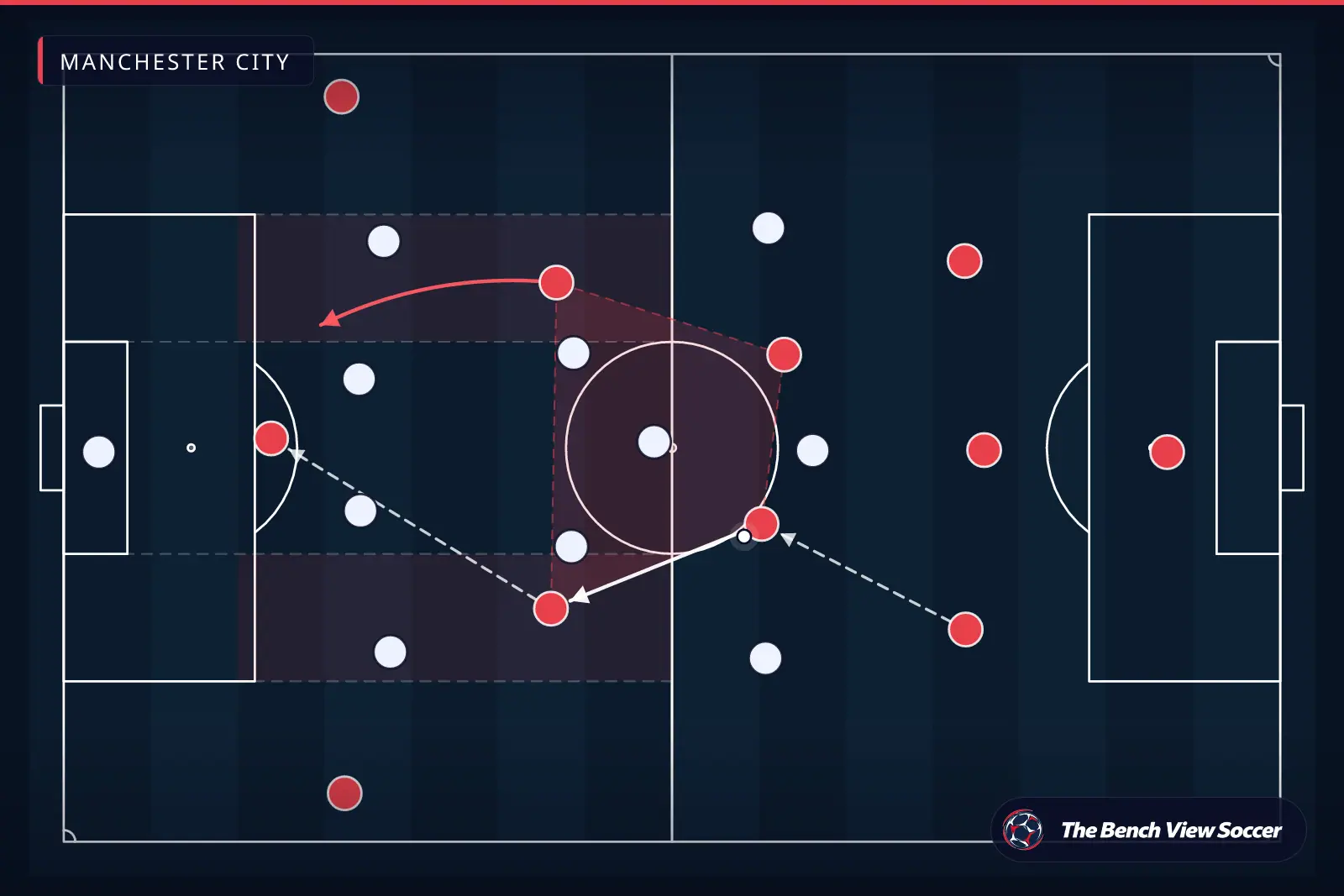
Support geometry dictates where your teammates position to offer safe options. A wide half-space runner, a short rotation from a 6 dropping between center backs, or a nearby fullback creating a horizontal outlet reduces the risk of isolation. Rodri’s role at Manchester City demonstrates this: City use triangle shapes so the receiving midfielder always has at least one body available to play out under pressure.
Tempo control and the fake separate good receives from great ones. Sometimes the best play is to take a heavy touch into space to draw the defender, then release quickly. Other moments call for a deceptive pause — a shoulder drop or fake pass — to invite the press, creating room behind. Playmakers must read the pressure source (who is committing) and choose between driving, turning, or passing in under one second.
Real Match Examples
Manchester City — Pep Guardiola: City’s midfield often shows the textbook receive under pressure. Rodri drops between center backs while Kevin De Bruyne or Bernardo Silva show for the ball. De Bruyne’s half-turn touches and quick vertical deliveries turn tight presses into progressive transitions. Guardiola rewards midfielders who can receive on the back foot and immediately access runners in behind.
FC Barcelona — Xavi Hernandez: Under Xavi, players like Frenkie de Jong and Pedri exemplify receiving with body orientation and short, incisive passing lines. Barcelona’s low center of possession allows de Jong to take the ball in small corridors, use his body to shield, and then slip passes into the half-spaces. Their frequency of short triangles and third-man runs reduces successful opponent presses.
Real Madrid — Carlo Ancelotti: Toni Kroos and Luka Modric show another variant: receiving with the head up to switch play. Real Madrid often invite pressure centrally and then exploit the switch. Kroos’ first touch is directional, enabling long diagonals that punish aggressive central pressing. These teams show the same principles applied to different tactical identities.
Key Principles
Key Principles Coaches Should Remember
- Scan before contact — train midfielders to look over their shoulder before the pass arrives so body shape and first touch are anticipatory, not reactive.
- Create supporting triangles — ensure the receiving player always has a short and wide option to avoid isolation under pressure.
- Make the first touch decisive — touch into space or on the back foot to buy time; a directional touch makes the next action easier.
- Use deception and tempo — teach fakes, shoulder drops and micro-pauses to manipulate the press and create passing lanes.
Training Implications
Designing drills: build exercises that force midfielders to receive under evolving pressure rather than static passing. A useful progression: 1v1 pressure to receive and turn, then 2v2 with a supporting outlet, then small-sided games with restricted touches to replicate decision speed.
Exercise example: set up a 6v4 rondo with two neutral wide players. The target midfielder must receive from a backline passer, evade a directed press (the 4 defending team members), then play a forward pass to a neutral. Limit touches on the midfielder in early repetitions, then remove the limit to focus on composure under game-like conditions.
Coaching cues: emphasise head up, body three-quarter, first touch away from pressure, and scanning for the third-man. Video feedback is valuable: show how De Bruyne’s chest and shoulder positioning creates immediate passing lanes. Progress from technical repetition to tactical constraint games so the movement becomes instinctive in match contexts.
Apply This in Your Game
Reading about tactics is one thing. Our training units teach you to execute these concepts in real match situations.