Introduction
“Press-resistant” is one of those phrases you hear constantly in Premier League coverage, especially when Liverpool and Manchester City are discussed in UEFA Champions League and Premier League contexts. It simply means a player can receive the ball under pressure, stay calm, and still help the team progress the attack instead of panicking into a turnover. For fans learning tactics, this is a great entry point because it connects technique (first touch, passing) with team structure (spacing, support angles). Under Pep Guardiola, Manchester City uses the ball as a form of control: players must resist pressure so City can keep opponents running and disorganised. Under Jürgen Klopp (and now Arne Slot), Liverpool uses resistance slightly differently: to play through pressure and then accelerate the next action, often into quick attacks. In both models, press-resistance is not a “nice extra”; it is a core requirement for midfielders, full-backs, and even centre-backs because modern top teams face aggressive pressing every week in the Premier League.
How It Works
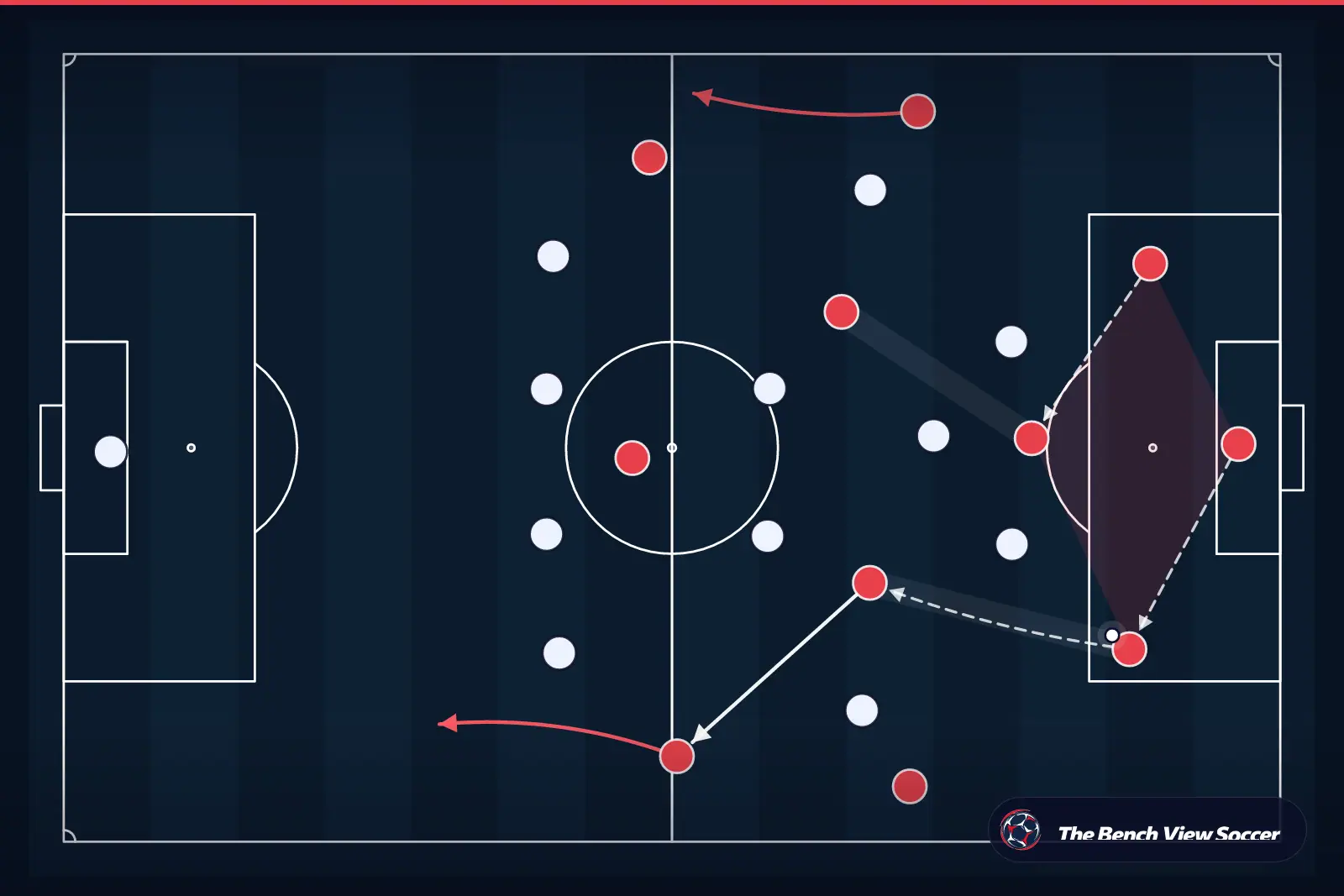
Liverpool and Manchester City look for press-resistance as a repeatable process, not a single skill. The first part is scanning: the player checks shoulders before the pass arrives, so the decision is made early. Next is body shape: opening the hips to face multiple options, so one touch can escape a presser rather than trapping the player on the touchline. City’s structure under Guardiola gives constant short options—triangles and diamonds around the ball—so the press-resistant player rarely dribbles just to “show skill.” Instead, the player uses a touch to invite pressure, then plays the third-man pass (A passes to B, B sets to C who is free). Rodri and Bernardo Silva often do this by receiving on the half-turn and passing through the line. Liverpool’s version often includes more vertical intent: a midfielder like Alexis Mac Allister or a full-back stepping inside receives under pressure, protects the ball, and then releases quickly to a runner. The key detail: both teams value players who can protect the ball with their body, use small feints, and choose the safest progressive option. Press-resistance is about reducing turnovers in dangerous zones, because losing the ball while building up exposes the defence to immediate counter-attacks.
Match Examples
A clear Manchester City reference point is the 2022–23 UEFA Champions League semi-final second leg vs Real Madrid at the Etihad. Madrid tries to press City’s build-up early, but City’s midfield and defenders stay composed: Rodri and John Stones (who often steps into midfield) receive with pressure behind them, turn out, and keep City in control. The result is not just possession for its own sake; it is possession that pins Madrid back until City finds the free player between lines. For Liverpool, look at the 2019–20 Premier League season where they win the title under Jürgen Klopp: teams frequently press Trent Alexander-Arnold and the central midfield to stop Liverpool’s switches and early crosses. Liverpool’s solution often relies on press-resistant first touches and quick release passes to escape the first wave, then a rapid switch of play into space. Another strong example is the 2023–24 Premier League match at Anfield: Liverpool vs Manchester City (a high-intensity draw). City presses high in moments, but Liverpool’s midfield and defenders show why press-resistance matters: when they play through the first press, they immediately create attacking situations in the wide channels. In these matches, you see the same lesson: press-resistance is not only about surviving pressure; it is about turning pressure into an advantage by moving the opponent out of shape.
Related Concepts & Skills
Training Implications
To train press-resistance, focus on habits you can repeat in local coaching sessions, academies, or even small-sided games with friends. First, build scanning into every drill: before receiving, players must call out a number held up by the coach or a teammate behind them; this forces head movement and better awareness. Second, practice “receive on the half-turn” with a simple rule: the receiver must take the first touch across their body into space, not straight back where the pressure comes from. Third, use rondos (keep-away circles) with constraints: limit touches to two, but allow an extra touch only if the player uses their body to shield first—this teaches protection and decision-making. Fourth, add a directional rondo (two mini-goals on the outside): the moment a player breaks pressure, they must find a forward pass within three seconds, mirroring Liverpool’s quick acceleration after escaping the press. Fifth, coach support angles: teammates must create a triangle around the ball carrier—one option short, one option at an angle, one option slightly higher—so the carrier can bounce the ball out like City. Finally, review clips after sessions: pause just before the pass arrives and ask, “Where is the pressure? What is the safest progressive option?” This develops calm choices under stress, which is the heart of press-resistance.
The Bench View app
Don’t just read football — train it
Everything you read here, turned into training you can follow step by step.
Physical training at home
AI daily sessions adapted to your level and position. No equipment needed.
Tactical training courses
Step-by-step courses on positioning, pressing, build-up and decision making.
- 7 days free
- No commitment
- Cancel anytime
Free account: 2 physical sessions + the first tactical course. PRO: 7-day free trial — cancel before day 8 and you pay nothing.