Introduction
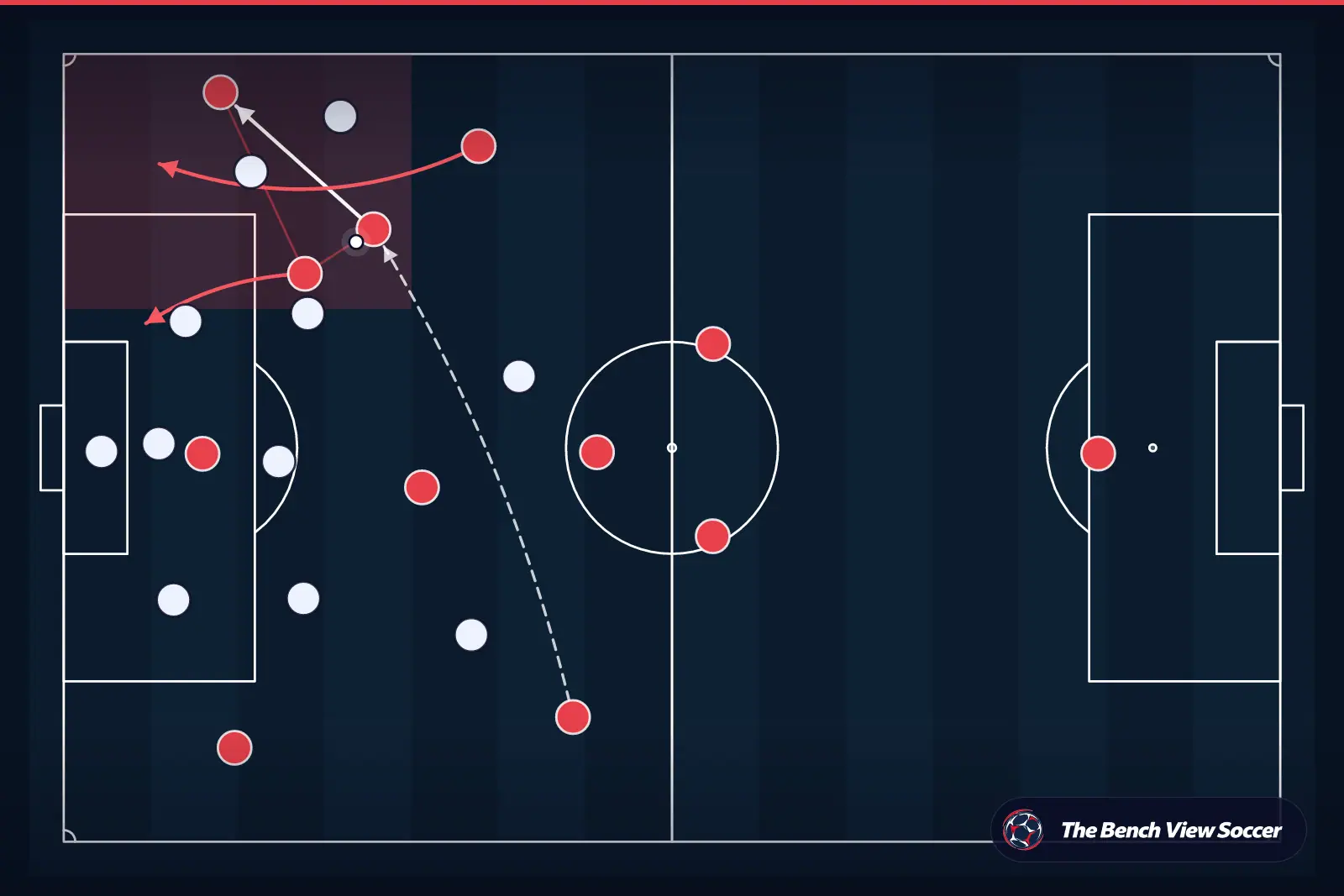
Pep Guardiola’s teams rarely “outmuscle” opponents in the traditional sense; they outnumber them in the right zones. This is the art of overloading: creating a local numerical advantage near the ball so the opponent has to choose—press and open space elsewhere, or stay compact and allow controlled progression. For fans learning European tactics, overloading is a practical idea: it explains why Manchester City can keep the ball under pressure, why passing triangles keep appearing, and why certain players seem “free” even against strong defensive blocks. You see it in the Premier League every week, but the same principles show up in the UEFA Champions League, where small advantages decide ties. Guardiola has used overloads at FC Barcelona, FC Bayern München, and Manchester City, adapting them to different leagues and player profiles. The core aim stays consistent: use positioning and movement to create a 3v2, 4v3, or even 5v4 around key zones, then exploit the next space once the opponent collapses.
How It Works
An overload is not just “put more players on one side.” Guardiola builds overloads with structure: he wants multiple safe passing options and a clear next action. First, City (or any Pep team) sets a rest-defense base—usually two or three players stay behind the ball to stop counterattacks. Then he creates a “ball-side box”: for example, the right-back steps into midfield (an inverted full-back), the nearest central midfielder stays close, the winger holds width to pin the opponent’s full-back, and a forward drops in to connect. This creates a cluster that can outpass a press because there is always a spare man. The key is orientation: players stand on different lines (back line, midfield line, between the lines) and at different angles, so one pass opens the next. When the opponent shifts extra defenders to the overload, Guardiola uses the release: a quick switch to the far side, a third-man run (player A passes to B, B lays off to C running free), or a vertical pass into the half-space. Overloads also manipulate man-marking. If an opponent follows midfielders tightly, Pep pulls markers away with decoy drops, then attacks the vacated lane with a runner from deep. The overload is a tool to control decisions: it makes the opponent defend more than one threat at once, and that is where the numerical advantage becomes a tactical advantage.
Match Examples
1) Manchester City vs Real Madrid, UEFA Champions League semi-final second leg, 2022–23: City’s left-sided overload is constant. Jack Grealish holds width to fix Dani Carvajal, while Bernardo Silva and İlkay Gündoğan rotate inside. John Stones steps into midfield next to Rodri, forming a double pivot that gives City extra numbers against Madrid’s first press. As Madrid collapses toward the ball, City creates space for switches or for Kevin De Bruyne to receive in the right half-space. City’s two goals come from sustained pressure where Madrid’s shape gets stretched and second balls are won because City has more bodies around the zone. 2) Manchester City vs Arsenal, Premier League 2022–23 (title run-in): City uses overload-to-isolate. When Arsenal presses, City forms a midfield box with Stones/Rodri plus De Bruyne and Gündoğan. This draws Arsenal’s midfield inward. The next action is to find the free player—often Erling Haaland or a wide runner—after Arsenal’s line jumps. City’s ability to keep one more player than Arsenal around the ball helps them play through pressure and attack the space behind. 3) Bayern München vs Juventus, UEFA Champions League Round of 16 second leg, 2015–16 (Guardiola’s Bayern): Bayern creates overloads in the central corridor by pushing full-backs high and tucking midfielders inside. When Juventus defends in a narrow block, Bayern keeps adding a third and fourth player around the ball, forcing Juventus to step out. Once the step-out happens, Bayern plays into the next line quickly, creating crossing or cutback situations. This match shows that overloads are not only for short passes; they also create better crossing angles and cleaner entries into the box. 4) Barcelona vs Manchester United, UEFA Champions League final 2010–11: Barcelona overloads midfield with Sergio Busquets, Xavi, and Andrés Iniesta plus Lionel Messi dropping off the front line. United’s central players get outnumbered, and their defenders hesitate: step out with Messi and leave space behind, or stay and allow Messi to turn. Barcelona’s dominance is a classic example of using an overload to control the game’s rhythm and territory, not just to create one big chance.
Related Concepts & Skills
Training Implications
To coach overloads, you need constraints that force players to create and use extra numbers. Start with a 6v4 rondo in a 15x15 meter square: the six attackers must keep the ball with a maximum of two touches, but they score a point only when they play a “third-man” pass (A to B, B one-touch to C) that breaks a defender’s line. Rotate defenders every 60–90 seconds to keep intensity. Next, use an overload-to-switch game: 7v7 on a half pitch with two wide channels. Rule: goals count only if the attack includes (1) at least five passes on one side (an overload), then (2) a switch pass to the opposite channel within three seconds. This teaches the release after the opponent collapses. Add a positional game for inverted full-backs: set up a back four and two midfielders against five pressers in a 25x30 meter zone; the full-back must step inside to create a 3v2 in midfield before the team can play forward. Coach three clear details: body orientation (receive side-on), spacing (one player wide, one between lines, one behind the ball), and communication (“man on,” “turn,” “bounce”). Finally, film training and review 3–5 clips with players: pause and ask, “Where is our spare man?” and “What is the next space after we overload?” This builds decision-making, not just patterns.
The Bench View app
Don’t just read football — train it
Everything you read here, turned into training you can follow step by step.
Physical training at home
AI daily sessions adapted to your level and position. No equipment needed.
Tactical training courses
Step-by-step courses on positioning, pressing, build-up and decision making.
- 7 days free
- No commitment
- Cancel anytime
Free account: 2 physical sessions + the first tactical course. PRO: 7-day free trial — cancel before day 8 and you pay nothing.