

Introduction
Why a single forward pass can change a game
Vertical passing and the ability to break defensive lines is the defining detail that separates good midfielders from elite playmakers. For a central midfielder the moment of decision — to progress horizontally, probe with a pass between lines, or play a penetrating vertical ball — determines whether an attack fizzles or explodes. That decision depends on body shape, timing, angles and an understanding of teammates' movement. In this piece we unpack those details, show how managers and players use them at the top level, and explain why coaches should prioritise the skill in training.
This article pulls the core lessons from our video on vertical passing and breaking lines, focusing on central midfield roles. Expect practical analysis, real examples from elite teams and concrete coaching implications you can take to training and match prep.
Tactical Breakdown
What we mean by vertical passing and breaking lines
Vertical passing is an intent-driven action aimed at advancing the ball through one or more of the opponent's positional layers. Breaking lines means bypassing the first or second defensive structure with a pass or carry so that the next attacking unit receives the ball in a higher-value zone. For central midfielders the two main vectors are:
- Direct verticals — short, incisive passes into the space between the opposition defence and midfield (the half-spaces or the pocket behind the midfield line). These require tight weight, early recognition and a receiving runner or attacker who occupies that pocket.
- Diagonal/long verticals — longer line-breaking deliveries that switch play or find strikers between centre-backs. These demand vision, timing and an ability to read defensive depth.
Positional nuance matters. A deep-lying pivot like Rodri or Toni Kroos creates vertical danger by shifting the line of engagement and playing long diagonals; an 8 or advanced playmaker such as Kevin De Bruyne looks for front-foot pockets to thread quick in-between passes. Body orientation is a repeated theme: a player who receives side-on or with their head up compresses decision time and can deliver sharper vertical balls. Equally important is the concept of the third-man run. A midfield pass that draws a defender and then releases a third player is often the cleanest way to break compact, organised defences.
Real Match Examples
Elite-team examples and situations
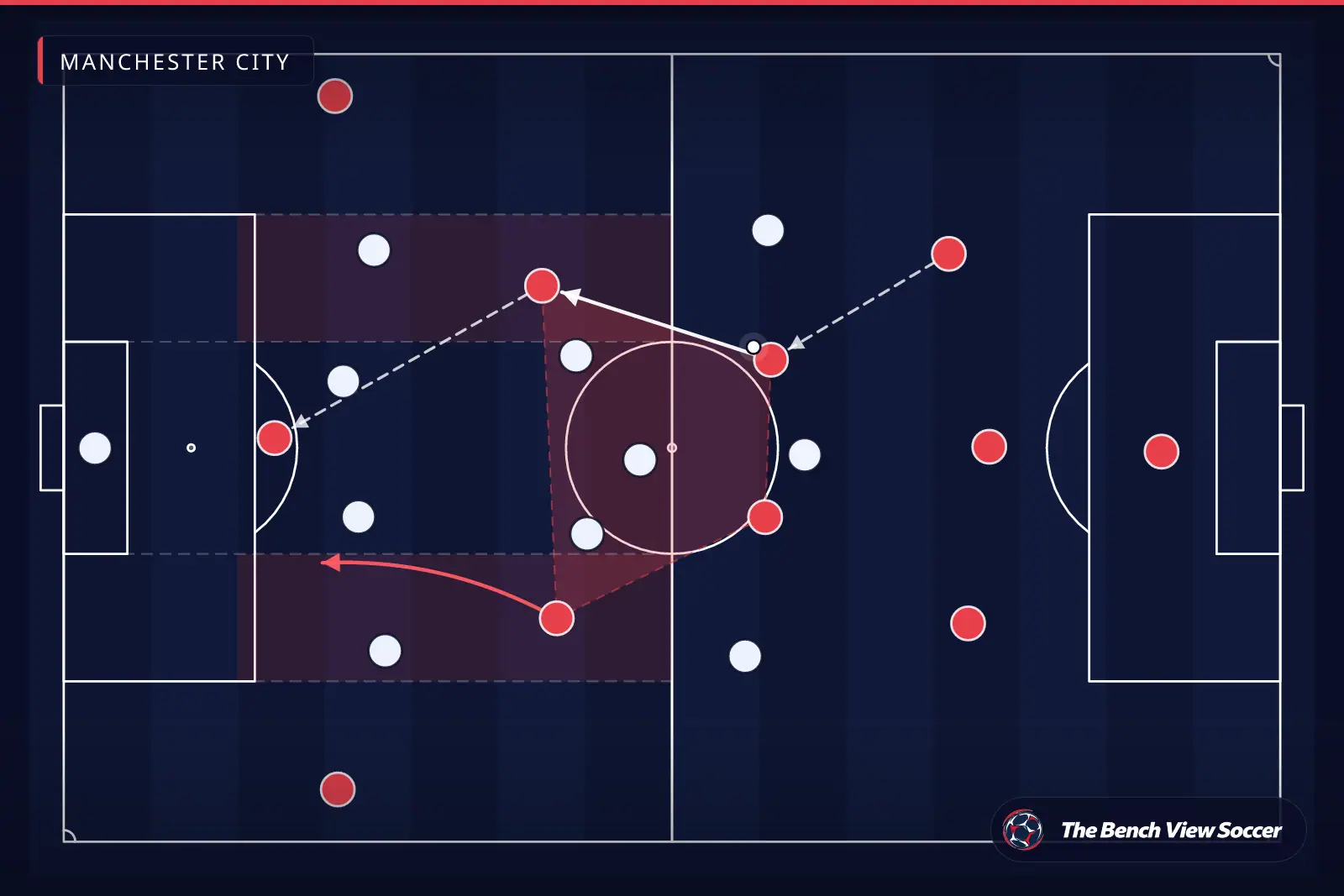
Manchester City under Pep Guardiola — City are the textbook example of vertical passing layered into positional play. Kevin De Bruyne and Ilkay Gundogan regularly exploit half-spaces and play penetrating balls between the lines into strikers or inside forwards. Guardiola's focus on interchanging positions creates the running angles City needs to make those passes effective.
Liverpool under Jurgen Klopp — Klopp's teams combine vertical passing with movement and counter-pressing. Thiago Alcantara, when fit, and Jordan Henderson have played vertical drivers that release Salah or Mané in transition. The pattern: quick recovery, one-touch vertical to the feet of a wide forward or an inside channel run, then finish.
Real Madrid with Toni Kroos and Luka Modric — Kroos provides long, accurate vertical diagonals behind opposing full-backs to Karim Benzema. In their 2021-22 Champions League run Real used Kroos's line-splitting passes to destabilise compact blocks and create overloads in wide half-spaces.
Key Principles
Key principles coaches should remember
- Timing over force — a well-timed, slightly under-hit pass to a running attacker beats a perfectly struck ball that arrives too early or late.
- Body orientation and head up — midfielders must receive in positions that allow immediate vertical options; training should punish side-on, static receiving where possible.
- Create and exploit pockets — movement off the ball (third-man runs, diagonal sprints) is as important as the pass; coaching must pair passing patterns with coordinated runs.
- Risk management — vertical passes break lines but can expose counters; pivot players must balance aggression with cover and structure.
Training Implications
How to train vertical passing and line-breaking
Design drills that reproduce the decision-making and constraints of a match. Start with rondos that impose directional progress: add a target player or gate that awards points only for passes that break a defined defensive line. Progress to 5v5 patterns where midfielders must play a vertical pass after a fixed number of touches, encouraging scanning and first-time passing.
Use third-man run exercises: three attackers and two defenders with a pivot supplying the ball. The pivot must play into the channel created by the third player. Add pressure and fatigue to replicate match conditions so players learn to time passes when opponents compress space.
Finally, integrate transitional drills with recovery and cover roles for teammates. Vertical passing is most effective in teams where everyone understands the subsequent defensive responsibilities. Track success metrics like line-break passes per 90 and target combinations between midfield and attack to measure progress.
Apply This in Your Game
Reading about tactics is one thing. Our training units teach you to execute these concepts in real match situations.