

Introduction
Real Madrid’s midfield rarely looks “fixed” for long. Even when the team sheet lists a clear three—say Jude Bellingham, Federico Valverde, and Aurélien Tchouaméni under Carlo Ancelotti—the game quickly becomes a moving puzzle. One midfielder drops to build play, another runs beyond the striker, and a third shifts wide to protect a full-back or open a passing lane. This is the art of rotation: players swap zones at the right time so the team keeps control without becoming predictable. For Indian fans learning tactics, it helps to think of rotation as planned movement that creates better passing angles and confuses man-marking. In La Liga and the UEFA Champions League, Madrid often faces compact blocks and intense pressing, so they need constant midfield fluidity to progress the ball, protect transitions, and keep the attack connected. This article breaks down how Madrid rotates, why it works, and what you can learn from it on the training ground.
How It Works
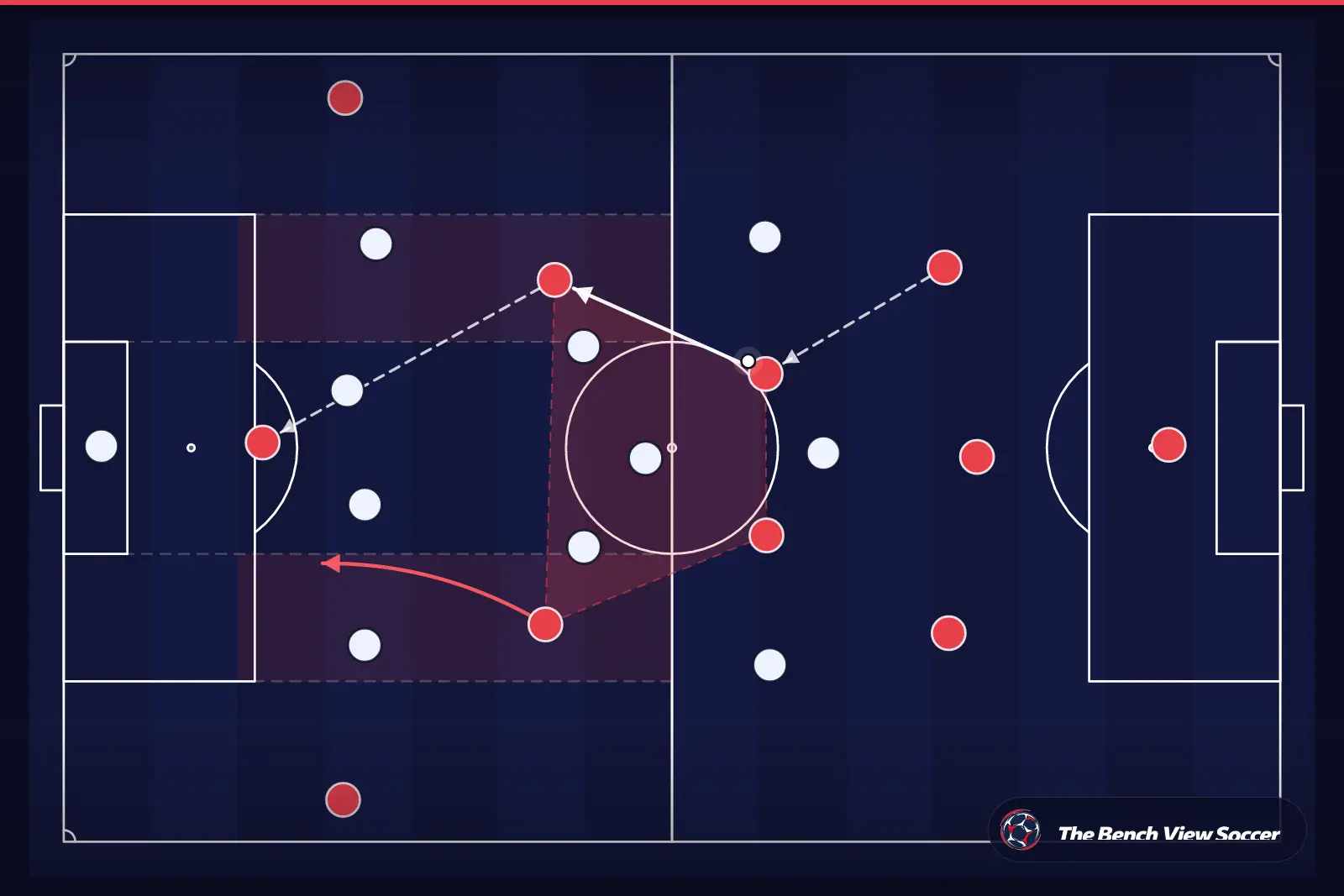
Real Madrid’s rotations are not random running; they are coordinated exchanges that protect team structure. Start with roles. One midfielder frequently acts as the “base” in possession, staying closer to the centre-backs to help first phase build-up. In 2023–24 and 2024–25 patterns, Tchouaméni or Eduardo Camavinga often performs this job, sliding into space to receive and then switching play. Ahead of him, Valverde becomes the connector who can play central, drift right, or sprint into the last line. Bellingham often becomes the “arriver”—a player who times late runs into the box—while also dropping between lines to receive. The key principle is: when one player vacates a zone, another fills it so the team is not open. For example, if Valverde moves wide to support Dani Carvajal, Bellingham can hold a central pocket, while the base midfielder shifts slightly towards the vacated side to prevent counterattacks. Madrid also uses full-backs and wingers to complete rotations. When Vinícius Júnior comes inside, the left-sided midfielder can drift wide to maintain width or cover. When the right winger stays wide, Valverde can underlap (run inside the wide player) to reach the half-space, which is the channel between the winger and central midfielder zones. This movement creates two benefits: it gives the passer a diagonal option (harder to press than straight passes) and it forces defenders to choose—follow the runner and open space, or hold shape and allow a free receiver. Against man-oriented pressing, Madrid’s rotations aim to “lose” markers by switching positions quickly after a pass. The movement is usually triggered by the ball: as soon as the pass goes to one side, a midfielder on the far side shifts to become available for the next pass, keeping the team one step ahead.
Match Examples
A clear reference point is the 2023–24 UEFA Champions League semi-final against Bayern Munich, especially the first leg at the Allianz Arena. Bayern’s midfield tries to control central spaces, so Madrid uses Valverde’s right-sided drifting to help Carvajal and to open passing lanes into Bellingham. When Valverde moves wider, Madrid’s central access changes: the base midfielder stays available behind the ball, and Bellingham adjusts his height—sometimes dropping to receive, sometimes pushing closer to Vinícius and Rodrygo. That constant reshuffling makes it difficult for Bayern’s midfield line to decide who presses whom. In La Liga 2023–24, Madrid’s matches against Barcelona also show rotation under pressure. Barcelona under Xavi often presses with intensity and looks to force play wide. Madrid responds by rotating the midfield triangle: one player drops to help the centre-backs, another holds a position between lines, and the third slides towards the ball-near side to create a “third-man” option (passer → teammate → free player). Even when the game state changes—Madrid leading or chasing—the rotations remain, but the risk level changes: when protecting a lead, the base midfielder stays more disciplined, and the advanced midfielder chooses fewer high-risk runs. Another useful example comes from the 2021–22 Champions League run under Ancelotti, when Luka Modrić and Toni Kroos orchestrate control. In the semi-final tie versus Manchester City, City’s pressing aims to lock Madrid in. Madrid’s response often includes Modrić stepping into wider pockets to escape pressure, while Kroos drops to receive and switch play. The names differ from the Bellingham-era midfield, but the mechanism stays consistent: rotate to create a free man, then play forward quickly before the opponent resets.
Related Concepts & Skills
Training Implications
You can train midfield rotation without needing professional-level complexity, but you must be strict about spacing and timing. Start with a 6v3 rondo (keep-ball drill) in a rectangle: six attackers on the outside and inside, three defenders pressing. Assign three midfielders roles: Base, Connector, Arriver. Rule 1: after every pass into the Connector, the Base must shift one zone towards the ball side, and the Arriver must change height (either step closer to receive between lines or drift wide). This builds the habit that rotations are tied to the ball, not random movement. Next, run a small-sided game 7v7 with two mini-goals and marked lanes: left, centre, right, plus two half-space channels. Give the midfield trio a scoring condition: a goal counts double if the move includes a rotation (two midfielders swap lanes) followed by a forward pass into a half-space. Coaching points: demand that the player leaving a zone points and calls for the replacement; demand that the replacement arrives before the ball is lost, so your team maintains “rest defence.” Finally, add a transition constraint to make it realistic. After losing possession, the nearest midfielder presses for three seconds while the other two recover into a triangle behind him. This mirrors Madrid’s idea: rotate to attack, but always return to a protective shape. Track success with simple metrics: how many times you find a free midfielder after a rotation, and how often you concede a counterattack through the centre. Improvement comes when rotations create forward options without breaking your defensive balance.
Apply This in Your Game
Reading about tactics is one thing. Our training units teach you to execute these concepts in real match situations.