

Introduction
World Cup 2026 expands squads and keeps the modern allowance of five substitutions, and that changes how coaches plan matches. Substitutions are no longer only about replacing tired legs; they are planned as tactical “chapters” that shift a team’s shape, tempo, and risk level. For Indian fans learning European football ideas, the key is to watch the bench like you watch the ball: a change of player often equals a change of structure. A manager might start in a 4-3-3 to press high, then move to a 3-2-5 attacking shape to chase a goal, or close the game in a compact 5-4-1. At elite level—think Pep Guardiola’s Manchester City, Carlo Ancelotti’s Real Madrid, or Julian Nagelsmann’s Germany—substitutions are pre-planned around match states: leading, drawing, or chasing. The World Cup adds another twist: short tournament recovery and opponent-specific preparation mean coaches plan substitution “packages” for different rivals. Understanding these packages helps you read what the manager wants to happen next, not just what is happening now.
How It Works
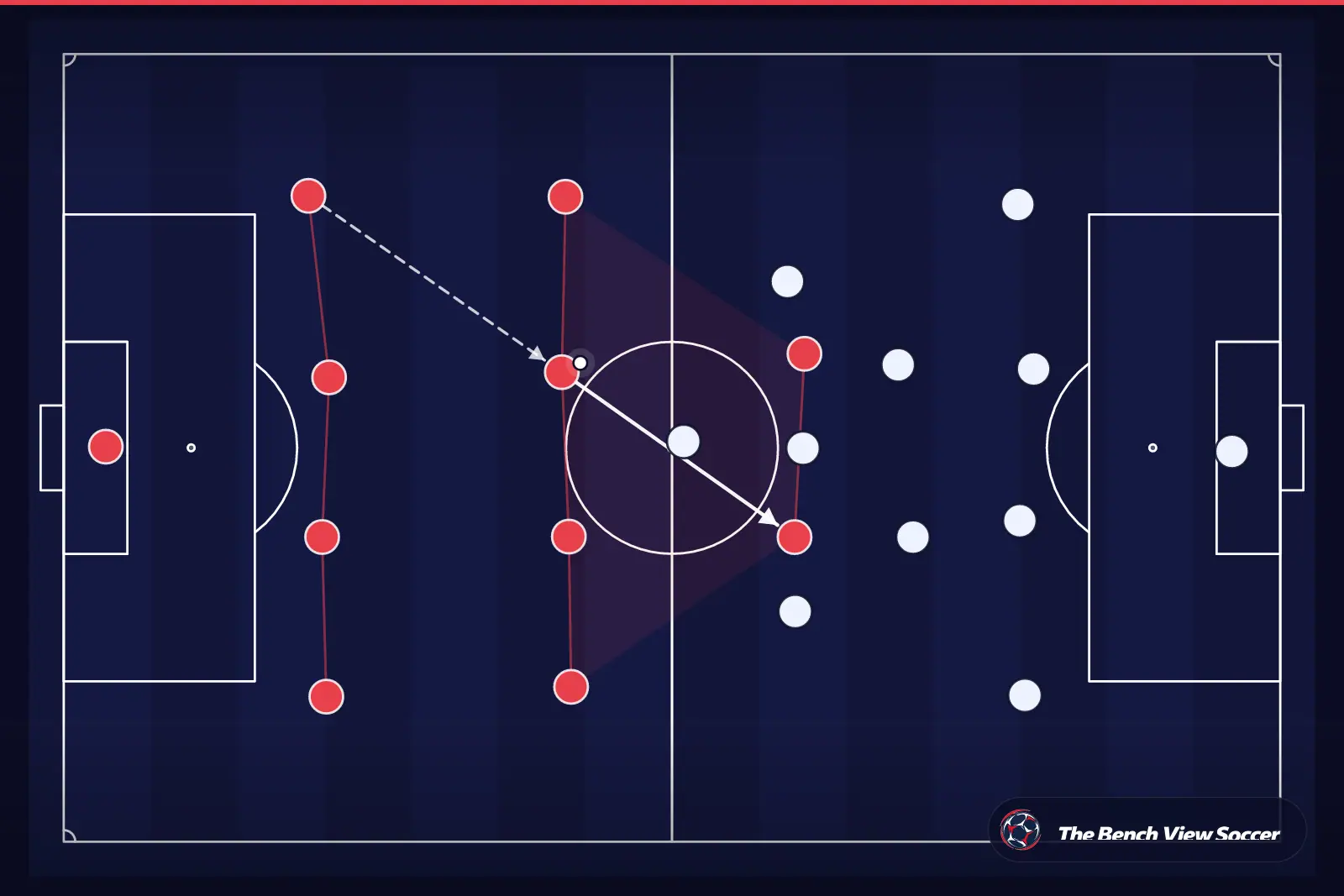
Coaches plan substitutions around three big levers: changing the base formation, changing the roles inside the same formation, and changing the team’s pressing and rest-defense (how you protect yourself when attacking). First, a sub can change the “back line math.” Bringing on a centre-back or a wing-back often signals a move from a back four to a back five (for example, 4-2-3-1 becomes 5-4-1). This makes the wide areas safer and helps defend crosses, but it can reduce the team’s ability to keep the ball in midfield. Second, a sub changes role profiles even if the shape looks similar: swapping a classic winger for an inside forward changes where the team attacks; replacing a “No. 6” (holding midfielder) with a more adventurous “No. 8” increases forward runs but may open counterattacks. Third, substitutions are used to adjust pressing. Fresh forwards allow a higher press with more sprints; fresh midfielders allow tighter man-marking or better coverage of passing lanes. In modern European football, many teams attack in a 3-2-5 or 2-3-5 shape even if they “start” in a 4-3-3. A substitution can make that transformation cleaner: a full-back comes off for a more attacking wing-back to hold width, or a midfielder comes on to invert (move inside) and create a two-man pivot. At World Cup 2026, expect pre-planned minute windows (around 55–65 and 70–80) where coaches introduce a specific profile: a runner to threaten behind, a target forward to pin centre-backs, or an extra midfielder to overload the centre.
Match Examples
To see how planned substitutions change shape, start with UEFA Champions League 2024-25 patterns under Pep Guardiola at Manchester City: City often begins with a 4-3-3 on paper but attacks with one full-back stepping into midfield to form a 3-2 base. When Guardiola introduces an extra attacker late (for example, moving from a controlling midfielder profile to a second winger), City’s attacking shape becomes more aggressive: the wide players stay higher and the team commits more bodies into the box, but the “rest-defense” behind the ball becomes thinner. In contrast, Carlo Ancelotti’s Real Madrid in La Liga 2023-24 uses substitutions to protect leads by adding a more defensive midfielder or an extra defender, turning a 4-4-2 defensive block into a 5-4-1 in the final phase, especially when the opponent starts crossing frequently. A clean international reference is the FIFA World Cup 2022 final, Argentina vs France. Lionel Scaloni starts with an aggressive plan and later introduces substitutions that shift Argentina’s energy and defensive coverage. When Argentina loses control in the second half, the changes are not only “fresh legs”; they alter how Argentina defends wide spaces and how quickly they can carry the ball forward after regaining it. Didier Deschamps’ earlier double substitution in the first half also shows a key principle: a manager can change the pressing intensity and the team’s ability to win second balls by changing profiles, not just positions. Another strong tournament example is UEFA Euro 2020 (played in 2021), Italy under Roberto Mancini. Italy’s substitutions often maintain the 4-3-3 look but change the midfield balance: fresh legs in the “No. 8” roles keep the press coordinated and allow the wingers to stay high. In knockout football, these examples matter because a single substitution can decide whether your team controls the middle, attacks the box with enough numbers, or survives the last 10 minutes against waves of crosses.
Related Concepts & Skills
Training Implications
If you are a coach, analyst, or serious student, train substitution planning as a repeatable process, not improvisation. First, build a “profile map” of your squad: list which players can play as a ball-winning No. 6, a line-breaking No. 8, a touchline winger, an inside forward, a target striker, and a defensive full-back. For each profile, write one tactical purpose (for example: “target striker = pin centre-backs, enable direct play, create second-ball chances”). Second, design two pre-planned shape shifts and rehearse them weekly: (1) Chasing a goal: 4-3-3 to 3-2-5 by asking one full-back to stay wide high and one midfielder to hold the pivot; coach the back three distances and who covers counterattacks. (2) Protecting a lead: 4-2-3-1 to 5-4-1 by introducing a third centre-back or wing-back; coach the wide midfielder’s recovery runs and the striker’s role as an outlet. Third, run 15-minute “scenario blocks” in training: start at 60’ with your team 0-1 down, or 1-0 up, and allow only one substitution window. The goal is to teach players the new positions, pressing rules, and passing options immediately after the sub. Fourth, track simple metrics: how many times you progress into the final third in five minutes after a substitution, how many counters you concede, and whether your defensive line becomes stretched. Finally, coach communication: the captain and pivot midfielder repeat the new shape (“back five,” “double pivot,” “two strikers”) and pressing rule (“press on back pass,” “drop to mid-block”) within 30 seconds of the change. At World Cup intensity, speed of understanding is the real advantage.
Apply This in Your Game
Reading about tactics is one thing. Our training units teach you to execute these concepts in real match situations.