Introduction
The “false nine” sounds like a niche idea, but it remains one of the most influential attacking tools in modern European football. In simple terms, a false nine starts as the centre-forward on the team sheet but does not stay pinned between the opposition centre-backs. Instead, he drops into midfield zones to create confusion: defenders follow and leave space behind, or they hold their line and allow him time to turn. For fans watching the Premier League, UEFA Champions League, and La Liga, it is a great concept to learn because it links almost every big tactical theme—pressing, spacing, counter-pressing, and midfield overloads—into one role. This article compares how Pep Guardiola’s Manchester City and FC Barcelona use false-nine ideas in different eras and contexts. City often use it as part of a highly structured “positional play” system with wingers stretching the pitch, while Barcelona’s classic example uses it to unlock tight defences through quick combinations and relentless movement. The point is not nostalgia: it is understanding why this role still solves today’s problems.
How It Works
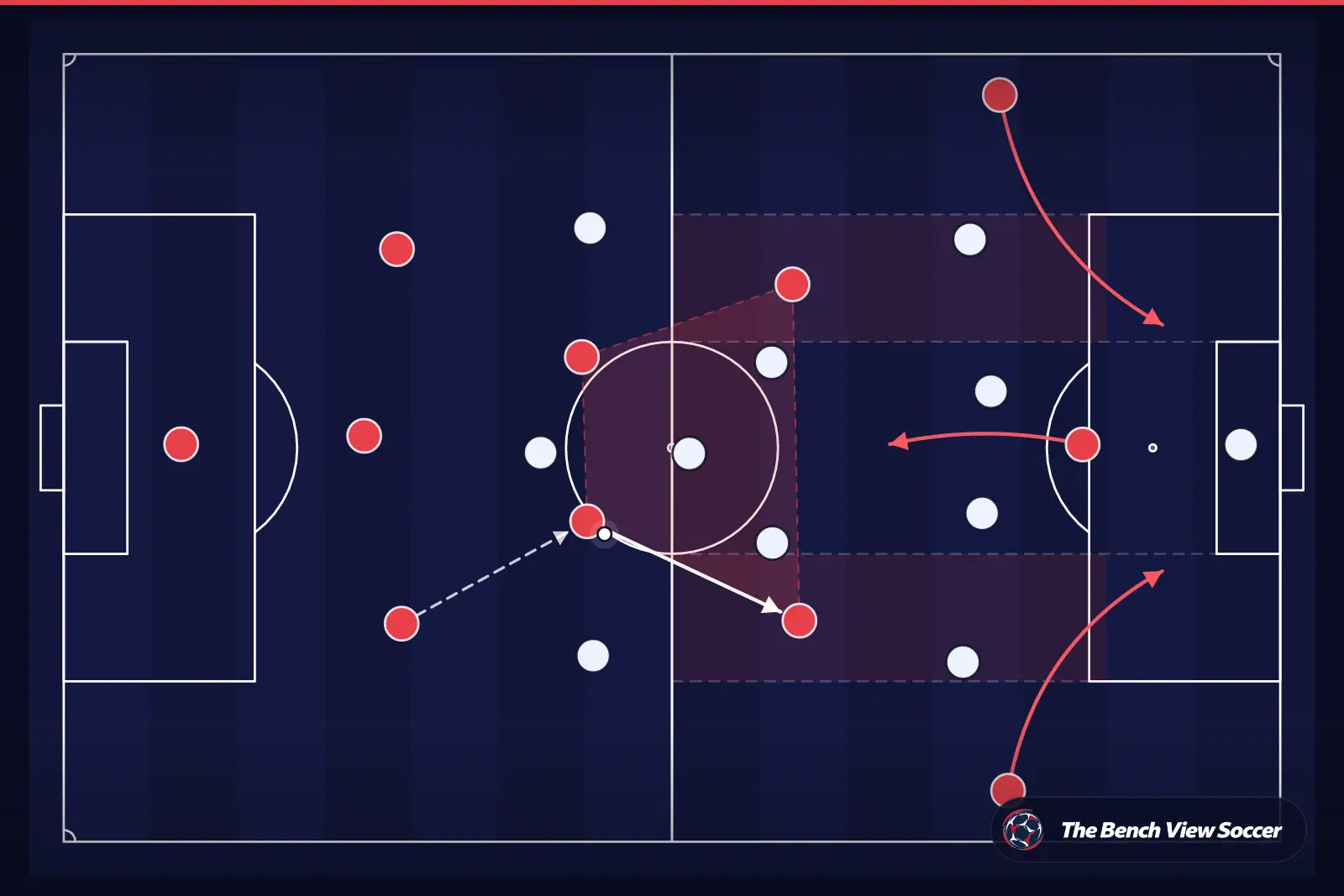
A false nine matters because it changes the opposition’s defensive reference points. Normally, centre-backs track a striker who stays high; their line and spacing are stable. When the striker drops, the defence must decide: follow him into midfield (risking space behind) or pass him on to a midfielder (risking a free player between the lines). Manchester City under Pep Guardiola use the false nine to create central overloads and clearer passing lanes into the “pocket” behind the opponent’s midfield. A player like Phil Foden, Bernardo Silva, or Julián Álvarez can start as the nominal striker, drop toward the No.10 space, and draw a centre-back a few metres out. That small movement is enough for City’s wingers—often wide and high—to attack the gap with diagonal runs. Barcelona’s most famous version comes from Guardiola’s 2008–09 to 2011–12 period, where Lionel Messi drops from striker into midfield while Xavi Hernández and Andrés Iniesta control the ball and timing. The false nine also helps pressing: when possession is lost, the false nine is already closer to midfield, so he leads an immediate counter-press (quick pressure right after losing the ball) to win it back. In both clubs, the key is not the “striker who drops” alone; it is the choreography around him: wide players hold width, midfielders occupy different vertical lines, and full-backs choose when to overlap or move inside.
Match Examples
Manchester City’s modern false-nine use is clear in the 2021–22 Premier League run-in, particularly the title-decider vs Aston Villa at the Etihad (May 2022). City often attack with fluid front positions: the central attacker drops to link play, while wide players stay high to stretch Villa’s back line. The equaliser and winning goal come from City’s ability to flood the half-spaces and the box in waves rather than relying on one fixed striker. Another strong example is City vs Paris Saint-Germain in the 2020–21 UEFA Champions League semi-final second leg, where City’s front line rotates constantly and central dropping movements help them play through PSG’s midfield pressure and then counter-press quickly when they lose the ball. For Barcelona, the classic false-nine reference is the 2010–11 UEFA Champions League final vs Manchester United at Wembley. Messi starts centrally but repeatedly drops into midfield, which creates a dilemma for United’s centre-backs: step out and leave space, or hold and let him receive between the lines. Barcelona’s midfield trio, plus the false nine, dominate the centre and keep United defending deeper and deeper. Another iconic match is Real Madrid vs Barcelona, 2008–09 La Liga at the Santiago Bernabéu (the 2–6). Barcelona’s false-nine dynamics—Messi dropping and attackers running beyond—help them break Madrid’s defensive structure through quick combinations and third-man runs (where a player passes to one teammate, who sets it for a third runner). These examples show the same principle across different leagues and eras: the false nine is less about “no striker” and more about manipulating defenders to open the most valuable spaces.
Related Concepts & Skills
Training Implications
To coach or practise false-nine principles—whether in an Indian academy, college team, or weekend group—focus on movements and spacing rather than copying celebrity roles. First, run a 6v6+2 possession game (two neutral players) in a 30x25 metre grid. Assign one player as the “false nine” who must drop into the central zone before the team can play a through pass. This builds the habit of creating a central free man and timing runs beyond. Second, add a rule: if a centre-back follows the false nine, the nearest winger must immediately make a diagonal run behind; if the centre-back holds, the false nine must receive on the half-turn and play forward within two touches. You are training decision-making based on the defender’s choice. Third, practise a finishing pattern: pass into the false nine between lines, set to a midfielder, then release a wide runner into the box for a cutback (a low pass pulled back from the byline). Fourth, include a counter-press drill: after any shot or lost pass, the nearest three players have five seconds to win the ball back; the false nine must be one of the three. Track success rate, not just effort. Finally, coach communication cues—shouts like “set,” “turn,” and “go”—so the false nine’s drop creates synchronized runs instead of random movement.
The Bench View app
Don’t just read football — train it
Everything you read here, turned into training you can follow step by step.
Physical training at home
AI daily sessions adapted to your level and position. No equipment needed.
Tactical training courses
Step-by-step courses on positioning, pressing, build-up and decision making.
- 7 days free
- No commitment
- Cancel anytime
Free account: 2 physical sessions + the first tactical course. PRO: 7-day free trial — cancel before day 8 and you pay nothing.