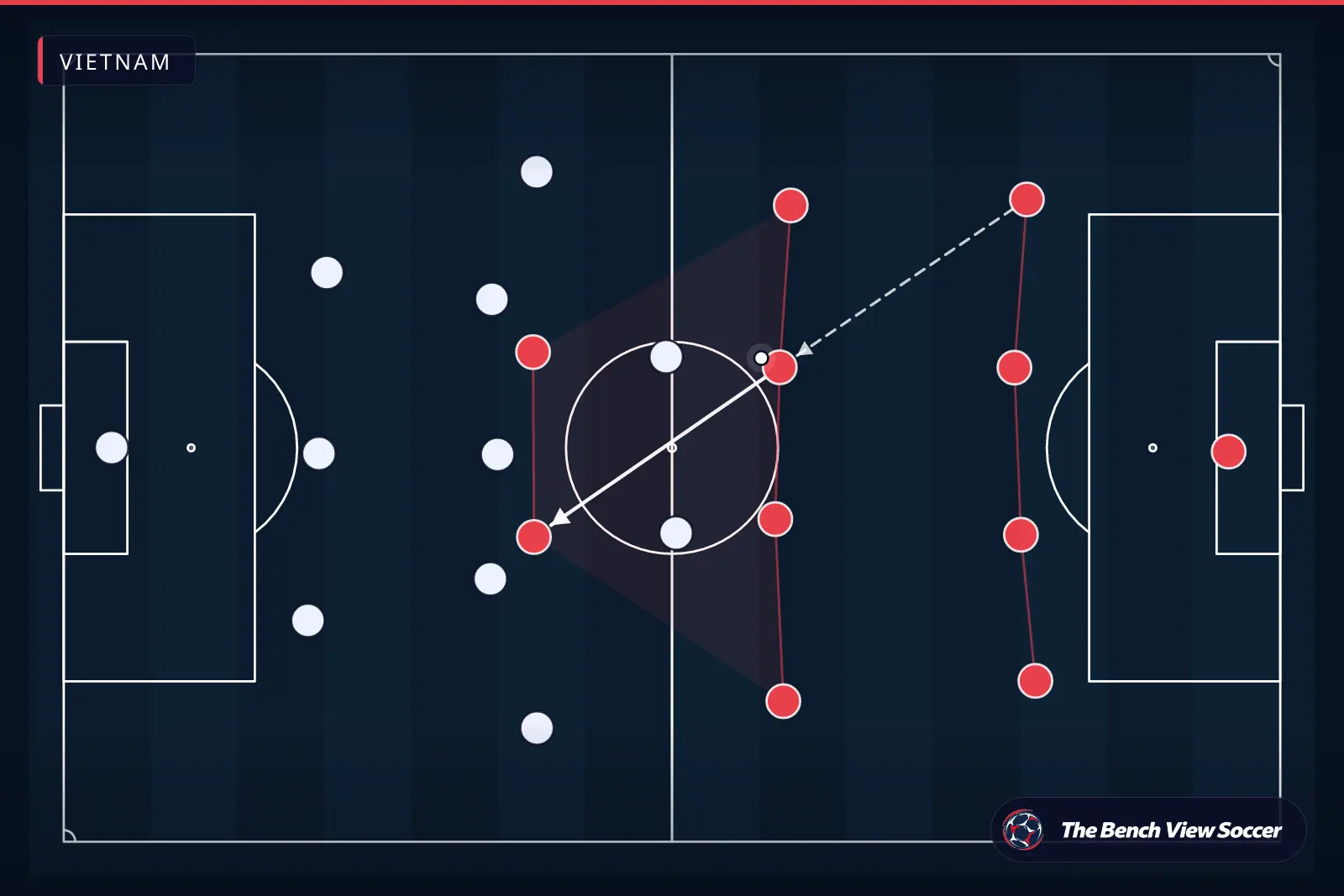
best football formations for Vietnamese players
Vietnam’s recent surge under Park Hang-seo and the national pride after Asian Cup 2023 qualification changed how we think about táctics in Vietnamese bóng đá. Fans of Hanoi FC, Hoang Anh Gia Lai and Ho Chi Minh City FC watch how formation choices amplify technical strengths and team spirit. Young players inspired by Nguyen Quang Hai want formations that suit low center-of-gravity, agility and quick linking play.
This guide explains the best football formations for Vietnamese players, how to pick one, practical steps to train it, real V.League 1 examples and clear coaching tips. It’s written for motivated players and coaches who want to convert local strengths—speed, pressing and technical combos—into match-winning patterns.
What is best football formations for Vietnamese players?
Best football formations for Vietnamese players are systems that maximize midfield density, quick vertical passing and aggressive pressing while protecting space behind full-backs. In practice that means flexible 4-2-3-1 and 4-3-3 shapes, with occasional 3-5-2 to exploit wing-backs and overload flanks in V.League 1 contexts.
How to choose the right formation?
- Assess player profiles: list your technical midfielders, mobile forwards, and athletic wing-backs. Know who can press and who needs protection.
- Match strengths to shape: pick 4-2-3-1 for a creative No.10, 4-3-3 for wide pressing and counterattacks, or 3-5-2 if you have strong wing-backs and two mobile strikers.
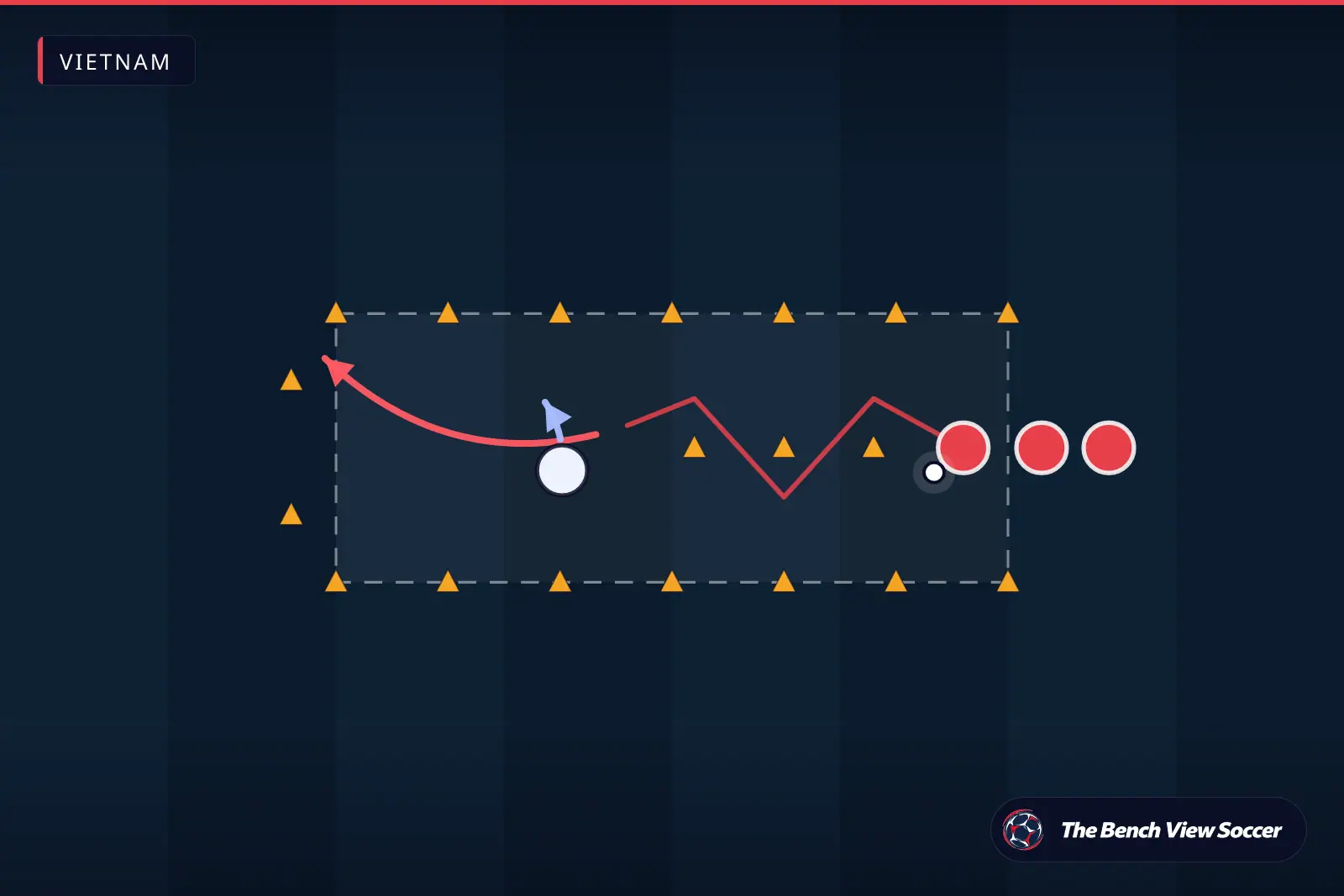
- Train core patterns: practice transitional moments—defence-to-attack, quick counterpress, and central overloads—so players instinctively occupy the right channels.
- Adapt per opponent: vs physically dominant teams, tighten to 4-1-4-1 for compactness; vs weaker full-backs, push wing-backs high in a 3-5-2 or 4-3-3.
- Iterate weekly: review V.League 1 match clips, adjust roles (pressing triggers, defensive lines), and focus training on three match scenarios for the coming game.
Real examples from V.League 1?
Hanoi FC often uses a disciplined 4-2-3-1 that protects central lanes while giving a creative No.10 freedom—this mirrors national team patterns seen under Park Hang-seo. Hoang Anh Gia Lai, with technically gifted attackers, prefers a 4-3-3 to stretch opponents and create one-on-one opportunities down flanks. Ho Chi Minh City FC has experimented with 3-5-2 when wing-backs like modern full-backs can provide width and overloads.
At club and international level, coaches exploit quick vertical passing and pressing triggers. Nguyen Quang Hai’s ability to receive between lines and turn quickly is a perfect fit for the 4-2-3-1; teams with energetic midfield trios find success in compact 4-3-3 setups in the AFF Championship and SEA Games.
Best tips to set up these formations?
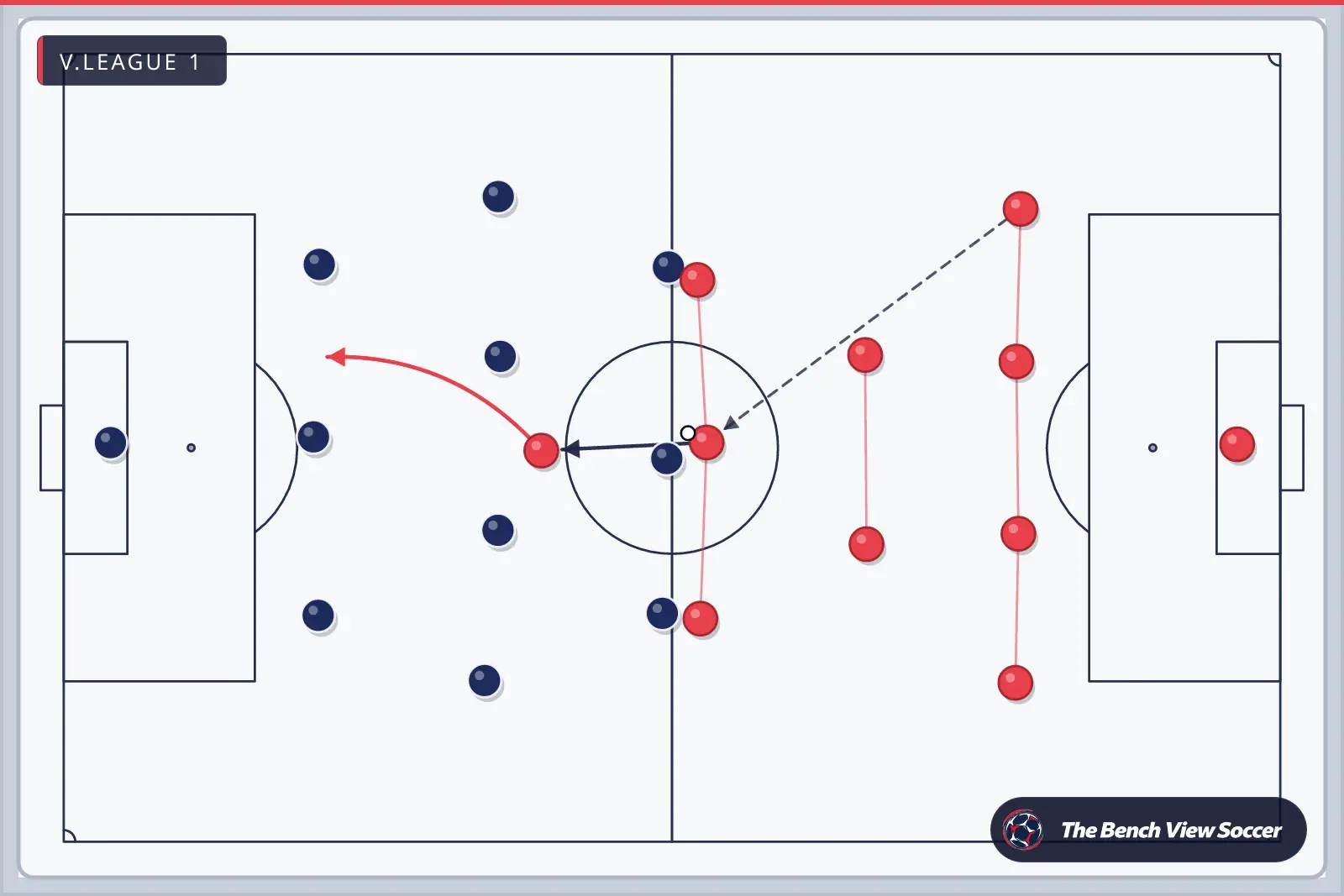
- Train pressing patterns: teach triggers for immediate counterpress (bad touch, risky passes) so your team wins seconds back.
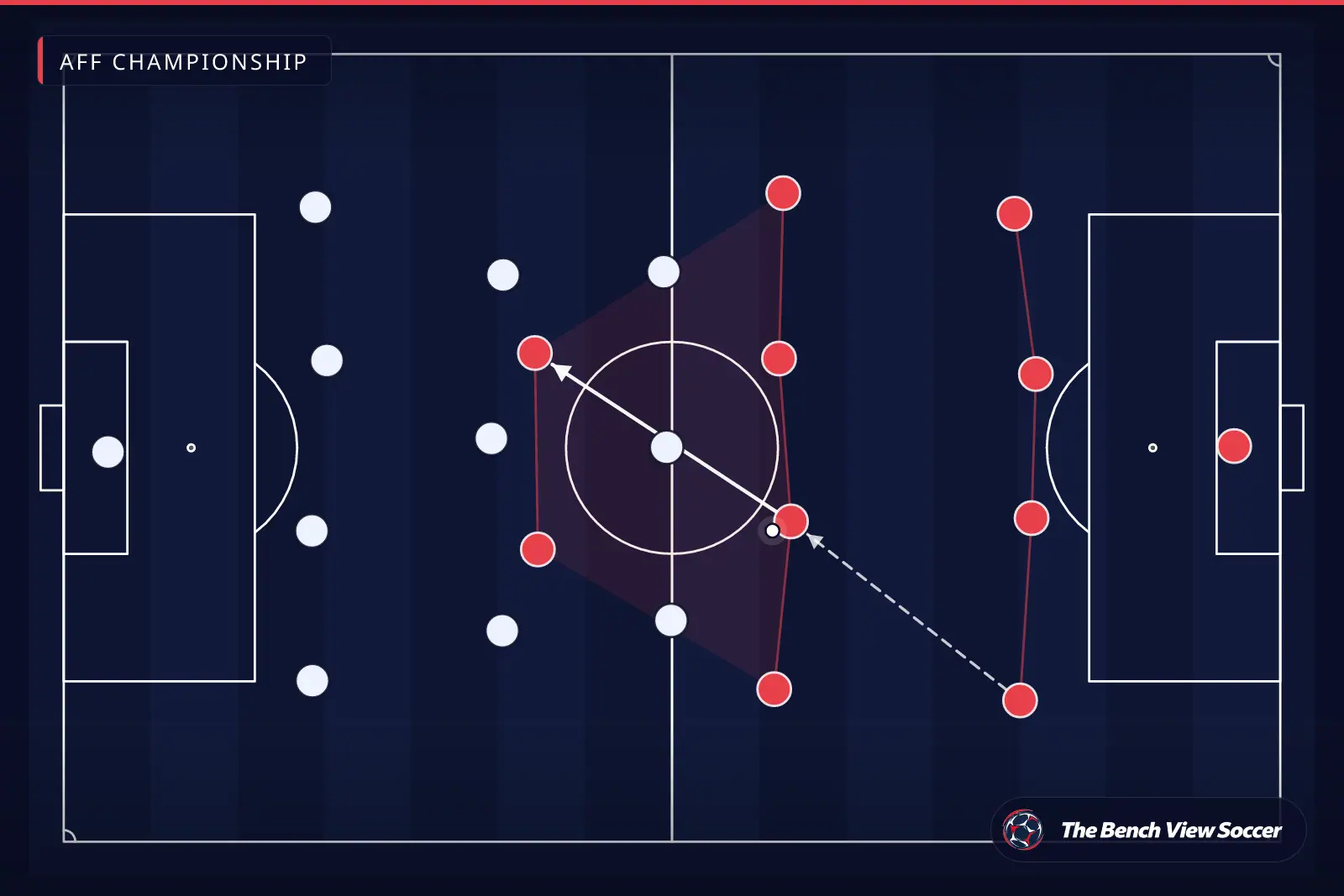
- Prioritise midfield mobility: use one pivot + one box-to-box or double pivot to control transitions and protect the backline.
- Practice quick vertical combos: train 2–3 touch lanes (pivot to No.10 to striker) to exploit narrow spaces.
- Develop full-back timing: in 4-3-3 or 3-5-2, full-backs/wing-backs must time overlaps to avoid leaving gaps behind.
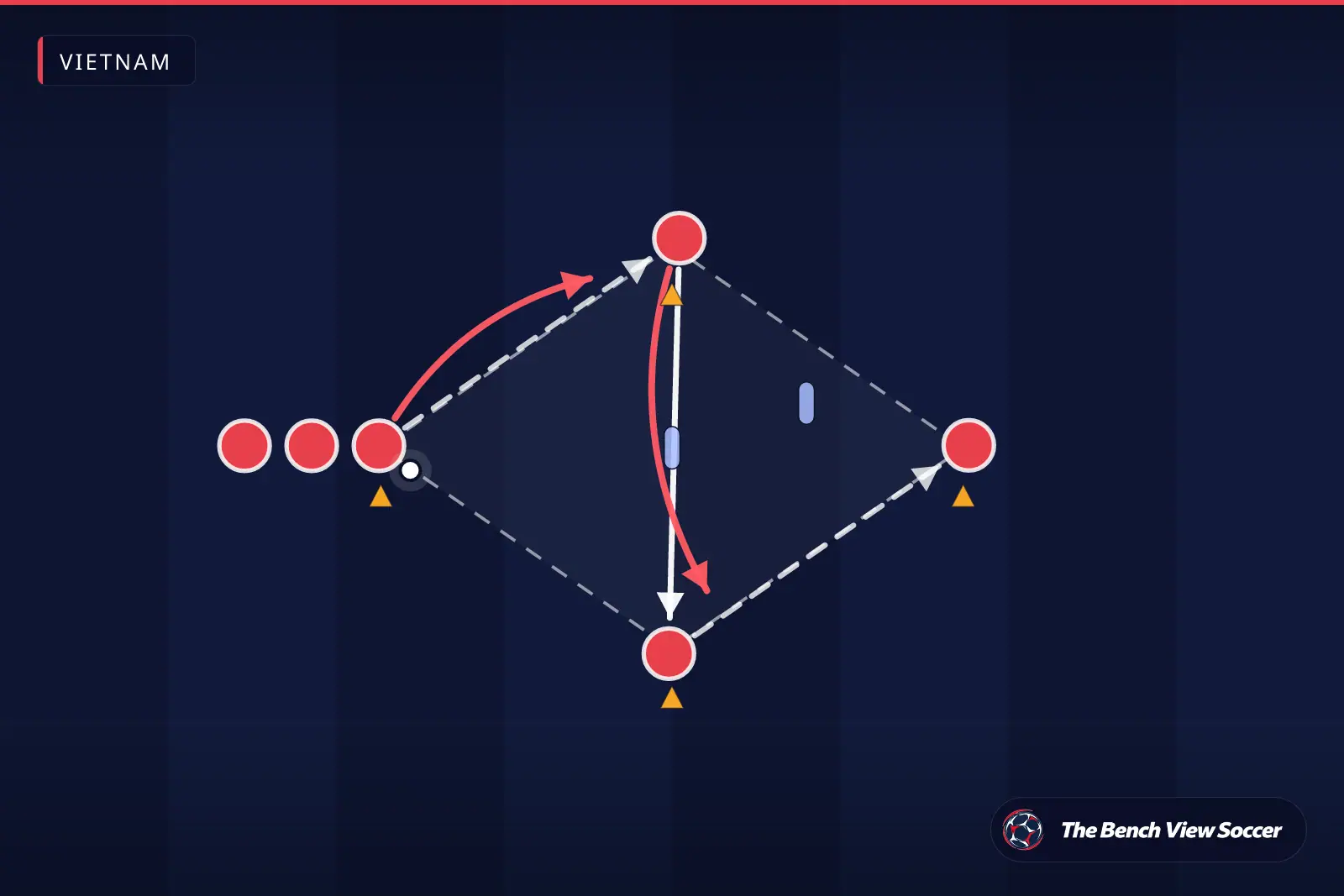
- Small-sided rehearsals: use 7v7 drills focusing on overloads and switching play to simulate V.League 1 tempo.
Mistakes to avoid?
- Over-committing full-backs without cover: leads to counterattacks exploiting space behind—use a holding midfielder as insurance.
- Neglecting pressing triggers: random pressing wastes energy; train triggers and roles so pressing is coordinated and sustainable.
- Rigid systems over player fit: forcing players into a shape they don’t suit kills creativity—adapt the formation to strengths, not the other way around.
- Ignoring set-piece defence: many V.League 1 and AFF games are decided by set-pieces—assign clear roles and rehearse marking routines.
Frequently Asked Questions
Which formation suits youth teams in Vietnam best?
For youth development, 4-2-3-1 builds technical awareness and positional play while protecting defensive structure. It teaches transitions, allows a creative No.10 to learn decision-making, and trains two pivots to shield young defenders—perfect for academies like Hoang Anh Gia Lai.
Related Resources
Can Vietnamese teams play a possession style?
Yes. A possession-oriented 4-3-3 with mobile midfielders is effective if players are comfortable on the ball and trained in pressing triggers. Focus on quick passing sequences, rotation, and patience to break compact defensive blocks common in AFF Championship matches.
When should a coach switch to 3-5-2?
Switch to 3-5-2 when you have strong wing-backs and want to overload flanks or play two mobile strikers. It helps dominate wide areas in V.League 1 matches, but requires disciplined centre-backs and high work-rate from wing-backs.
How important is fitness for these formations?
Fitness is crucial—Vietnamese bóng đá benefits from high-intensity pressing and rapid transitions. Conditioning allows players to maintain pressing shape and execute repeated sprints, which makes formations like 4-3-3 and 4-2-3-1 sustainable through 90 minutes.
Start our free courses on The Bench View Soccer.