

Dirk Kuyt has been appointed as interim coach of Fenerbahçe a week before the club meet his former team Liverpool in the Champions League. The appointment of a recently named interim manager so close to a high-profile fixture alters immediate preparation, squad psychology and short-term tactical priorities.
What happened
Former Netherlands forward Dirk Kuyt was named interim boss of Fenerbahçe. The appointment comes one week before Fenerbahçe face Kuyt’s old club, Liverpool, in the Champions League.
The tactical reading
The timeline and context of this appointment suggests the immediate tactical approach will prioritise clarity, defensive organisation and a limited set of match plans rather than wholesale philosophical change. With one week to prepare, an interim coach typically focuses on stabilising the team, reinforcing existing strengths and making targeted tweaks that players can absorb quickly. Kuyt’s own background as a forward may shape emphases at training — pressing triggers, transitional patterns, and forward-facing movement — but the short lead-in points to pragmatic implementation over experimental overhaul.
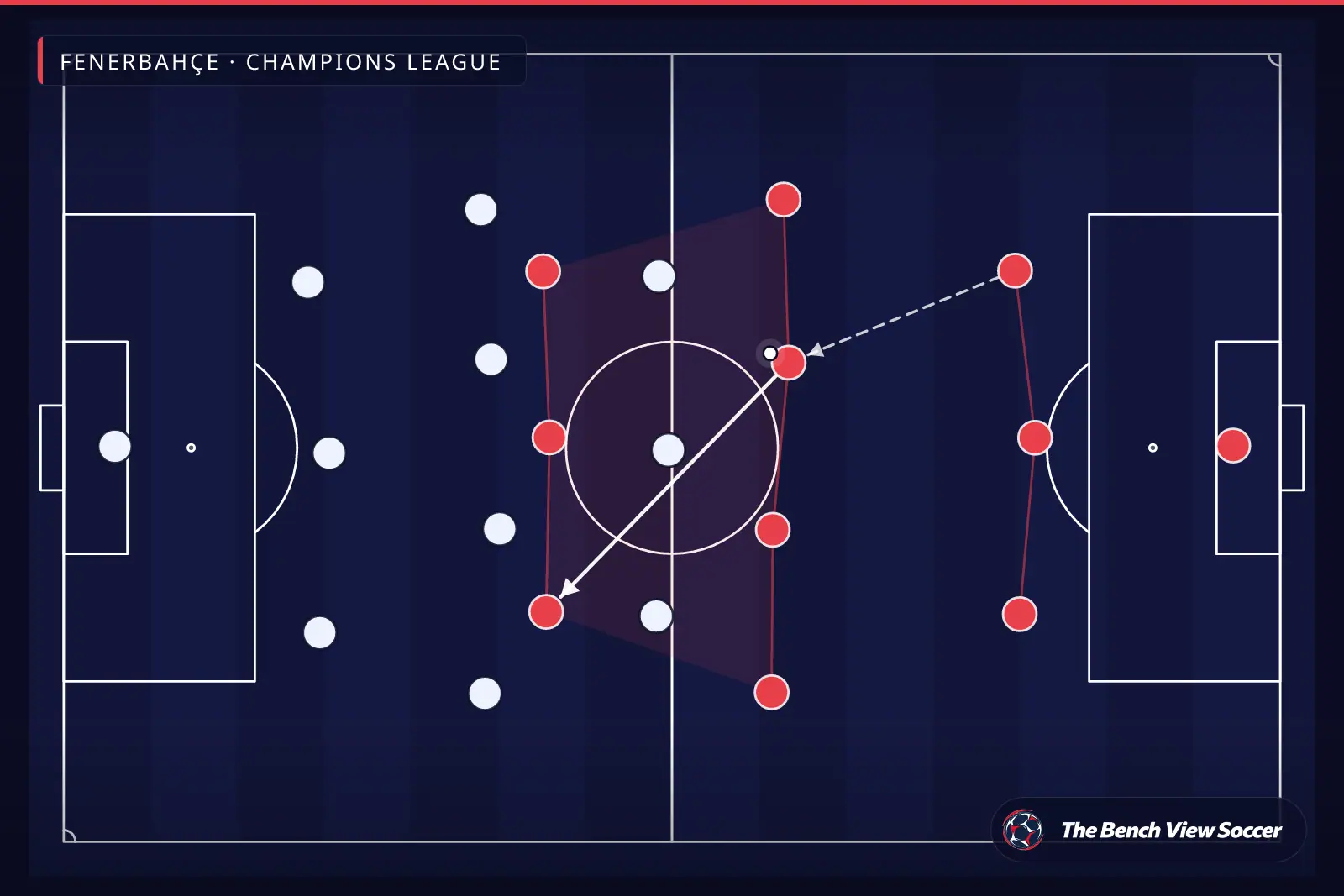
Given the proximity of the Liverpool fixture, the likely structure of preparations points to two complementary strands: defensive compactness and selective counter-threats. Reinforcing defensive organisation is a quick way to reduce immediate risk. That means simplifying roles around shape, distance between lines and out-of-possession triggers so all players understand responsibilities without lengthy tactical rewiring. Simultaneously, carving out a small number of attacking patterns that exploit transition moments or set-piece chances is a practical way to create potential scoring opportunities without requiring long-term assimilation.
Key roles under such a short-term plan typically involve leaders in central defence and central midfield who can execute and communicate the coach’s instructions in-game, and forwards who can press in situational phases. The coaching will probably stress collective press triggers (when to engage and when to sit) and fast transition routines that encourage forward runners to exploit space behind higher lines. These are the kinds of manageable, high-impact areas an interim coach can change quickly while preserving broader team coherence.
The trade-offs of a pragmatic, short-term approach are clear. Simplification reduces tactical nuance, potentially making the team more predictable to an opponent who has time to prepare. Conversely, focusing on a few sharp, rehearsed actions increases the chance of those actions being executed under pressure. For a one-week build-up to a major match, the balance often tips toward reducing defensive risk and maximising the effectiveness of a handful of rehearsed attacking moves.
Key tactical points
- Prioritise defensive shape and compactness: short preparation favours clear, repeatable out-of-possession responsibilities over complex positional systems.
- Use pressing triggers as a quick organisational tool: defined moments to engage reduce individual decision-making under pressure.
- Prepare 2-3 transitional attacking routines: rehearsed counter-attacks or quick forward combinations are easier to implement than entire attacking philosophies.
- Rely on on-field leaders for in-game adjustment: the coach must delegate situational management to experienced players to manage complexity during the match.
- Accept predictability in exchange for execution: a simpler game plan increases the chance of clean execution in a short timeframe.
What to watch next
In the matches that follow this appointment, watch how the team’s out-of-possession organisation changes — especially whether there are new pressing triggers or clearer distance management between back line and midfield. It will be telling to see whether the coach chooses to make only defensive refinements or also introduces distinct transition patterns for attack.
Also monitor the role of senior players on the pitch: will they assume more clear leadership to implement in-game adjustments? The extent to which the squad visibly simplifies its tactical instructions and commits to a few rehearsed patterns will indicate whether the interim approach is pragmatic stabilisation or the start of a longer-term tactical shift.
Train it
Practical exercise: a 6v6 plus two floaters drill to rehearse defensive compactness and fast transitional attack. The emphasis is on collective press triggers, quick counter-attacks and immediate shape recovery after loss.
- Coaching point 1: Define clear pressing triggers (e.g., back pass, weak first touch) so players engage as a unit rather than individually.
- Coaching point 2: On turnover, encourage the two floaters to occupy forward channels quickly to give immediate passing options for counters.
- Coaching point 3: After a lost ball, work on rapid shape recovery—compact the central zones first, then close wide lanes—so defensive responsibilities are reinstated within a few seconds.
Sources
The Bench View ऐप
सिर्फ़ फ़ुटबॉल पढ़ें नहीं — ट्रेन करें
यहाँ जो कुछ आप पढ़ते हैं, उसे कदम-दर-कदम ट्रेनिंग में बदला गया है।
घर पर फ़िज़िकल ट्रेनिंग
आपके स्तर और पोज़िशन के अनुसार AI डेली सेशन। किसी उपकरण की ज़रूरत नहीं।
टैक्टिकल ट्रेनिंग कोर्स
पोज़िशनिंग, प्रेसिंग, बिल्ड-अप और निर्णय लेने पर कदम-दर-कदम कोर्स।
- 7 दिन मुफ़्त
- कोई प्रतिबद्धता नहीं
- कभी भी रद्द करें
मुफ़्त अकाउंट: 2 फ़िज़िकल सेशन + पहला टैक्टिकल कोर्स। PRO: 7 दिन का मुफ़्त ट्रायल — 8वें दिन से पहले रद्द करें और कुछ भी भुगतान न करें।
और विश्लेषण
डिर्क क्यूट की फ़ेनरबाहचे अस्थायी नियुक्ति: लिवरपूल से पहले टैक्टिक बदलाव
28 अक्टूबर 2026
आर्टेटा बुकायो साका की सहनशक्ति को लेकर सतर्क; फॉरवर्ड को संभावित छह हफ्ते की अनुपस्थिति का सामना
23 अक्टूबर 2026
वार्नॉक: 'सिर्फ़ काफी नहीं' — कोमो के खिलाफ 4-1 हार पर यूनाइटेड की आलोचना
23 अक्टूबर 2026
ब्रूनो फर्नांदेस का घर लूटा गया — इटली में मैनचेस्टर यूनाइटेड के साथ
22 अक्टूबर 2026