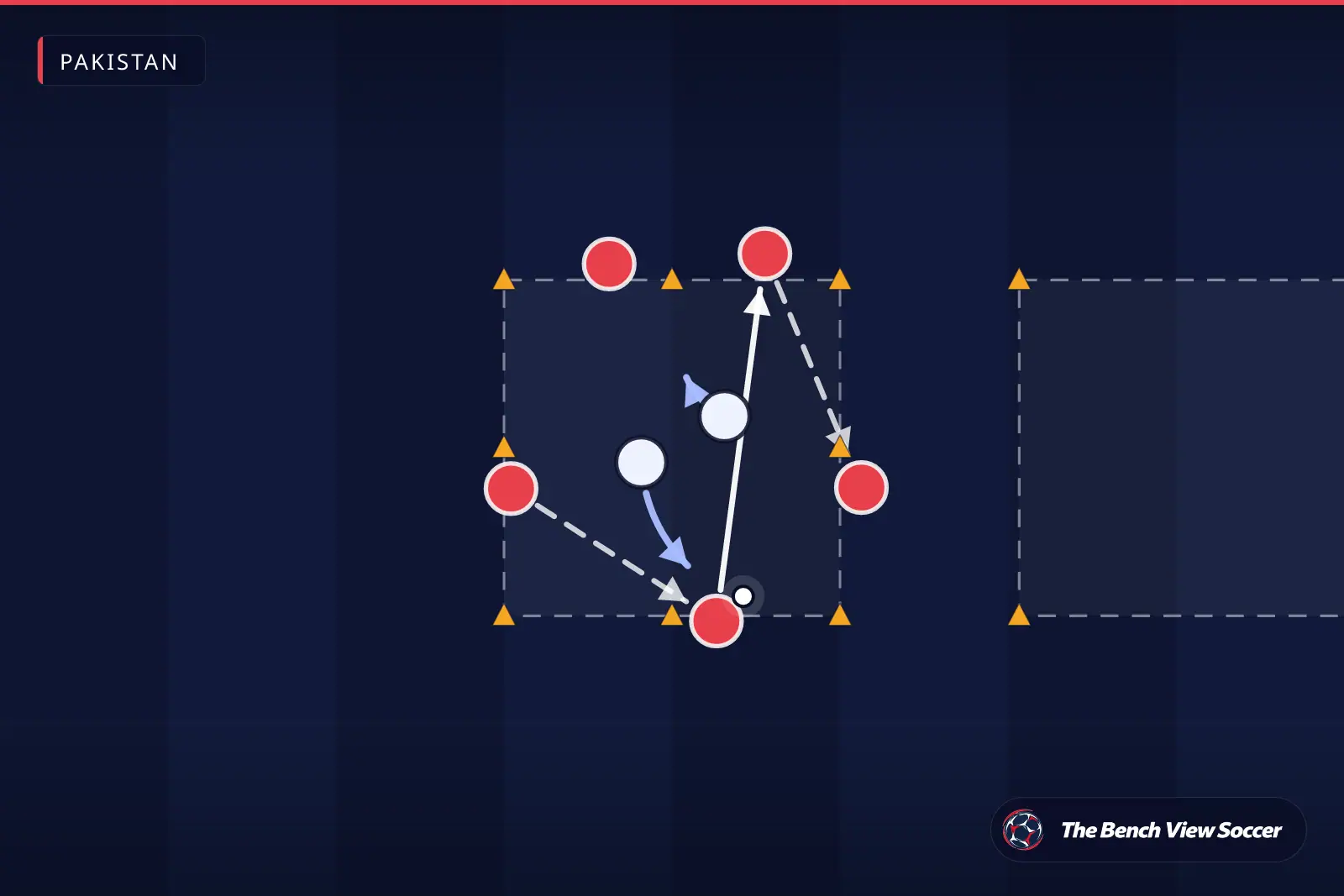
football drills for beginners Pakistan
Pakistan is waking up to football. With PFF restructuring, stronger youth programs and big moments like SAFF Championship campaigns and Asian qualifiers, many young players want to learn. If you have little space at home or a small ground, these football drills for beginners Pakistan are built for you.
This article explains five easy home/small-space drills, clear progress steps, common mistakes and practical tips. No prior skills are required — just a ball, a wall or a few markers and 15–30 minutes a day.
What is football training for beginners in Pakistan?
Football training for beginners in Pakistan means simple, regular practice that develops basic control, passing, dribbling, first touch and confidence. It focuses on small-space drills you can do alone or with a partner, fits busy schedules and prepares players for school teams, local clubs, Pakistan Premier League trials and national youth camps.
How to start football drills at home?
- Choose a safe, flat space: a courtyard, balcony, driveway or small park area — about 3–6 meters wide if possible.
- Gather simple gear: a size 3/4/5 ball (age appropriate), a wall, cones or bottles, and a small target (shoe, sock or box).
- Warm up 5–7 minutes: light jogging, leg swings, ankle circles and dynamic stretching.
- Pick 2–3 drills and do each for 8–12 minutes with short rests. Increase time as fitness improves.
- Cool down and reflect: stretch two minutes, note one thing to improve next session.
What are five easy home drills for beginners?
These five drills are perfect for beginners across Pakistan. Do them in the order below or mix them depending on time.
1. Wall Pass and Control
Purpose: Improve first touch and passing accuracy.
- Stand 2–3 metres from a wall. Use a soft court or concrete wall.
- Pass the ball into the wall with the inside of your foot and control the rebound with your first touch.
- Repeat using left and right foot for 2 minutes each. Count consecutive good controls and try to increase.
- Progress: use one-touch returns, then add a move (turn or step-over) after control.
2. Cone Dribble (Small Space)
Purpose: Dribbling under tight control using short touches.
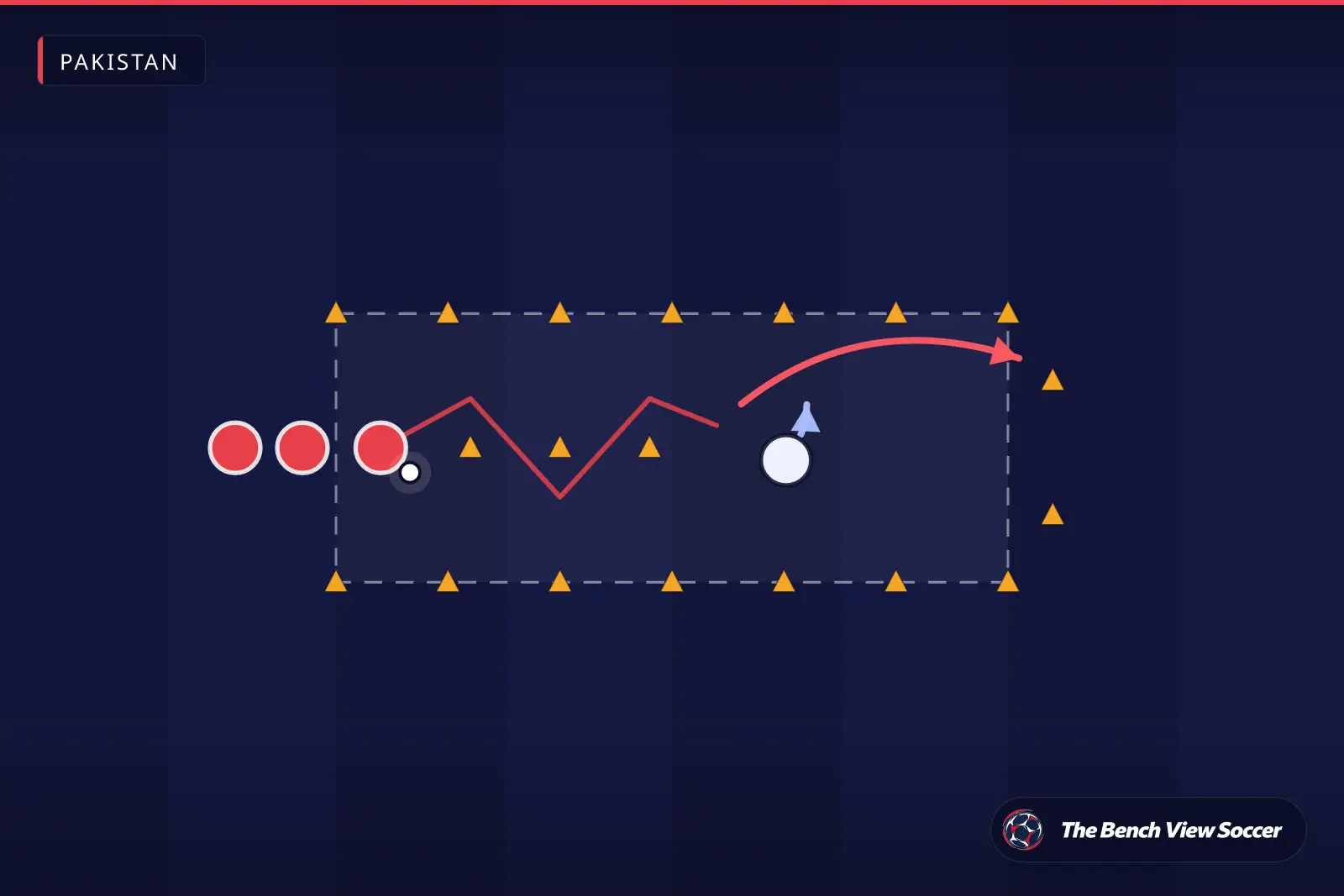
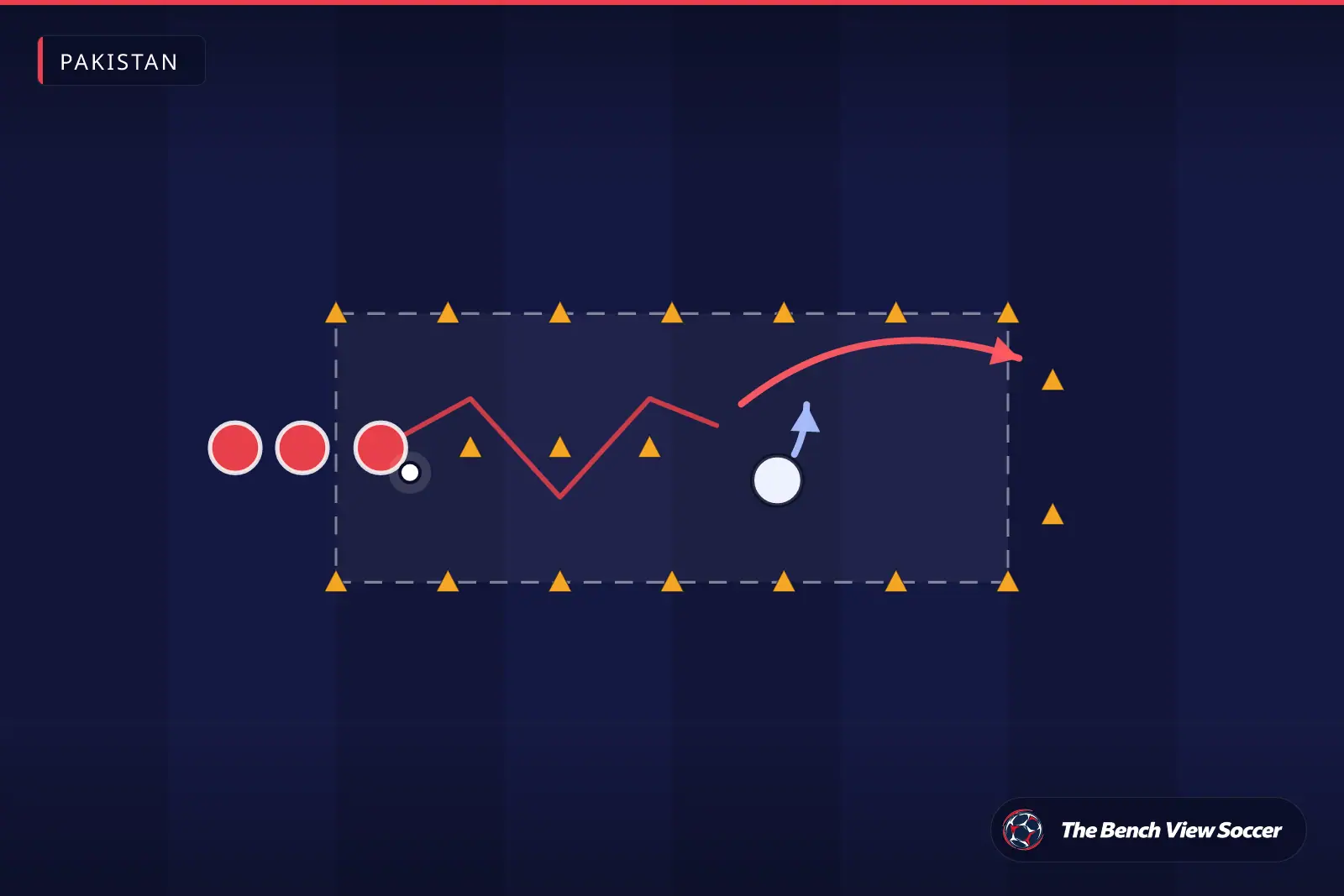
- Place 4–6 cones or bottles 1–1.5 metres apart in a line or zig-zag.
- Dribble through using the inside and outside of your foot. Keep the ball close.
- Time yourself for each run. Aim to keep control while getting faster.
- Progress: reduce spacing, use weaker foot only, add a feint between cones.
3. Toe-Taps and Inside/Outside Touchs
Purpose: Improve ball familiarity and rhythmic control in very small spaces.
- Stand with the ball between your feet. Do toe-taps (tap top of ball with both feet, alternating) for 30 seconds.
- Switch to inside touches: move ball side-to-side using inside of foot for 30–60 seconds.
- Finish with outside touches (use outside of foot) for 30–60 seconds. Keep eyes up if possible.
- Progress: combine moves and increase speed while staying balanced.
4. Passing Target Challenge
Purpose: Passing weight and accuracy with small targets.
- Set up a small target (box, bucket, sock in a pipe) 3–5 metres away.
- Pass the ball into the target using inside of foot. Score one point per hit.
- Do 10 passes with right foot, 10 with left. Try to beat your score each round.
- Progress: move target farther or create moving targets (roll target by hand).
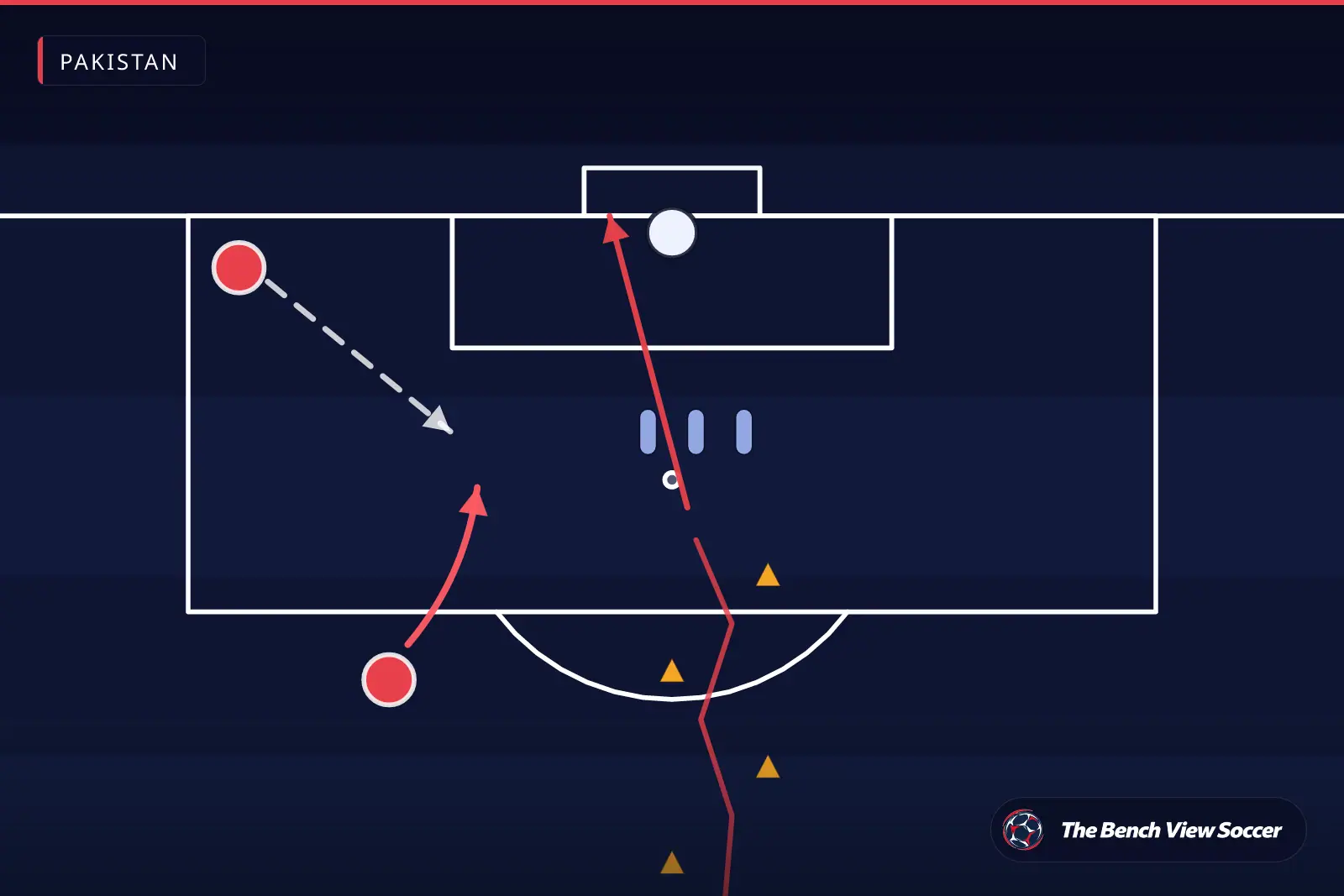
5. Shooting Accuracy (Small Goal or Target)
Purpose: Finish with precision even in tight spaces.
Related Resources
- Use two cones or shoes to make a small goal or mark a target on a wall.
- From 5–8 metres, shoot for the corners. Focus on placement rather than power.
- Take 12 shots: 6 with right foot, 6 with left. Track how many hit target.
- Progress: step up distance or practice low-driven shots for accuracy under pressure.
What are real examples from Pakistan Premier League?
Local clubs in the Pakistan Premier League train young players with similar small-space routines. Many PPL academies use wall passes, cone circuits and target shooting to build basic skills. Coaches who worked on Pakistan’s SAFF Championship campaigns emphasise daily repetition and small-sided games. Asian qualifiers exposed the need for tight control and fast passing — the same basics you train at home.
Best tips to improve as a beginner?
- Practice 15–30 minutes every day — consistency beats long, rare sessions.
- Use both feet equally; start weak-foot work early to build balance.
- Record short videos to review technique and track progress every week.
- Focus on quality touches. Slow and correct is better than fast and sloppy.
- Join local youth sessions or Pakistan Premier League academies when ready to apply skills in games.
What mistakes should beginners avoid?
- Trying to hit top speed too soon — build control first, then speed.
- Relying only on the stronger foot — always practice the weaker foot.
- Skipping warm-ups or cool-downs — higher injury risk and slower progress.
- Comparing too much with others; measure progress against your own past sessions.
Frequently Asked Questions?
Do I need special gear to start?
No. A ball, flat space and simple markers (stones, bottles, cones) are enough. Shoes with grip help, but many begin barefoot or in trainers. As you progress, use a proper football and shin guards for training with others.
How often should beginners train?
Start with 3–5 short sessions per week, 15–30 minutes each. Consistency matters more than long single sessions. Gradually increase to daily training and longer durations as fitness and skill improve.
Can children practice these drills safely at home?
Yes. Choose a clear, soft area and supervise younger children. Use age-appropriate ball size, keep sessions short, and emphasise warm-ups to prevent injury. Encourage fun and praise for effort.
How do these drills connect to national programs?
These basic drills build foundations used by PFF coaches and Pakistan Premier League academies. Strong basics help players get noticed in local trials, youth camps and can lead to opportunities in SAFF and Asian qualifier pathways.
Football is growing fast in Pakistan. Start these football drills for beginners Pakistan today, practice regularly, and you’ll see steady improvement. For structured learning and coaching tips, Start our free courses on The Bench View Soccer.