Pakistan football training program
Pakistan is entering a decisive phase for football. With PFF restructuring and renewed investment in grassroots, millions of young players are hungry for coaching, competition and clear development pathways. A well-designed Pakistan football training program channels that energy into measurable skill, fitness and tactical growth.
This guide is written for motivated players and young coaches across Pakistan who want practical steps to join, benefit from, or build a Pakistan football training program. It mixes beginner-accessible drills with coaching depth tied to Pakistan Premier League and national team contexts like SAFF Championship campaigns and Asian qualifiers.
What is Pakistan football training program?
A Pakistan football training program is a systematic plan of regular practice sessions, strength and conditioning, tactical lessons, and competitive matches tailored to local players. It focuses on age-appropriate skill progression, coach-led evaluation, and creating links to club trials, Pakistan Premier League academies, and national youth selections.
How to join and progress in a Pakistan football training program?
- Find a local coach or academy: Look for registered coaches, school programs, or PFF-affiliated academies with structured weekly sessions and clear age groups.
- Commit to a training schedule: Train at least 3 times weekly—two technical/tactical sessions plus one fitness and recovery day—to build consistency and resilience.
- Track measurable goals: Record sprint times, passing accuracy, ball juggling counts, and match minutes to show progress to coaches and scouts.
- Compete regularly: Join district leagues, trials for Pakistan Premier League clubs, or youth tournaments tied to SAFF or regional qualifiers to gain visibility.
- Seek feedback and iterate: Request regular evaluations from coaches, work on weak areas, and adapt your training plan every 8–12 weeks based on performance data.
Real examples from Pakistan Premier League
Pakistan Premier League clubs are increasingly scouting local academies and community programs. For example, players who impressed during PPL club trials often came through district-level coaching centers that emphasized small-sided games and high-repetition technical drills. During recent SAFF Championship campaigns and Asian qualifiers, national selectors noted that players with structured academy backgrounds adapted faster to tactical systems and fitness demands.
Clubs in the Pakistan Premier League now run youth intake days where promising players are fast-tracked into reserve teams and receive individualized conditioning plans. These PPL pathways demonstrate how a Pakistan football training program can link grassroots sessions to national-level opportunities.
Best tips to succeed in a Pakistan football training program?
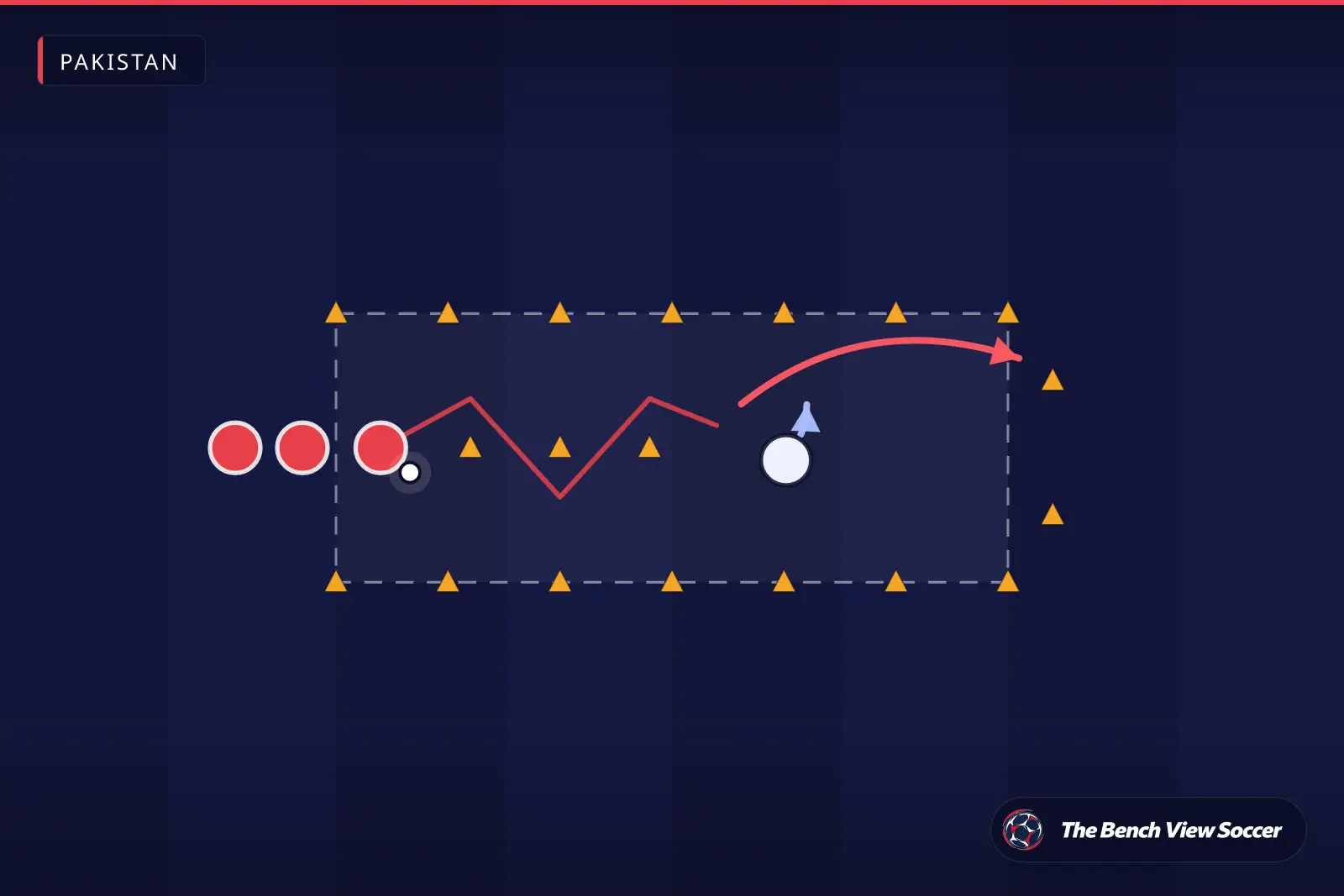
- Prioritize ball mastery: Spend 15–30 minutes daily on close-control drills, weak-foot touches, and first-touch games to build confidence under pressure.
- Use small-sided games: 3v3 and 5v5 formats accelerate decision-making and technical execution more than 11v11 training alone.
- Build football fitness, not just gym fitness: Incorporate repeated sprint ability, agility ladders, and game-specific endurance to mirror match demands.
- Watch and analyze matches: Study Pakistan Premier League games and national team fixtures to learn movement, pressing triggers, and transitional patterns.
- Communicate and lead: Develop on-field communication and positional awareness; coaches value players who organize teammates during set plays and transitions.
- Be coachable: Seek feedback, record sessions, and apply corrections consistently—improvement is incremental and coach-driven.
Mistakes to avoid?
- Overemphasizing physical power without technical control—strength helps, but technique wins tight matches.
- Skipping recovery and injury prevention—young players in Pakistan often train hard but neglect mobility and load management.
- Chasing quick trials over steady development—attending every trial without consistent training leads to burnout and poor long-term progress.
- Neglecting game intelligence—focus on pattern recognition and decision-making, not only drills and reps.
Frequently Asked Questions
How often should I train in a Pakistan football training program?
Train at least three times a week—two technical/tactical sessions and one fitness/recovery session. For accelerated development, four to five sessions with match play on weekends yields faster gains and better visibility for Pakistan Premier League trials.
Related Resources
Can school teams connect to Pakistan Premier League pathways?
Yes. Strong school programs often feed district scouting events and club trials. Coordinate with PFF-affiliated coaches, attend club intake days, and maintain performance records to showcase progress to Pakistan Premier League scouts.
Do I need special equipment to join a Pakistan football training program?
Basic gear—good boots, shin guards, a quality ball and cones—is enough. As you progress, add agility ladders, resistance bands, and GPS tracking where available. Most development emphasizes skill, consistency, and coaching over fancy equipment.
How can coaches in Pakistan improve their training programs?
Coaches should focus on age-appropriate curricula, measurable testing protocols, coach education through PFF workshops, and building partnerships with Pakistan Premier League clubs. Emphasize small-sided play, periodized plans, and clear talent pathways to senior football.
Start our free courses on The Bench View Soccer.