Introduction
In the fast-paced world of football, every second counts, especially in the final third where games are often decided. One of the essential skills that can elevate an attacking midfielder's game is the ability to execute 1-2 combinations, also known as wall passes. This simple yet effective tactic can break down even the most organized defenses.
1-2 combinations allow players to create space and time for themselves and their teammates, making it a vital component of modern attacking play. In this article, we will delve into the intricacies of this tactic, explore its tactical significance, and provide practical training implications to help players and coaches incorporate this skill into their repertoire.
Tactical Breakdown
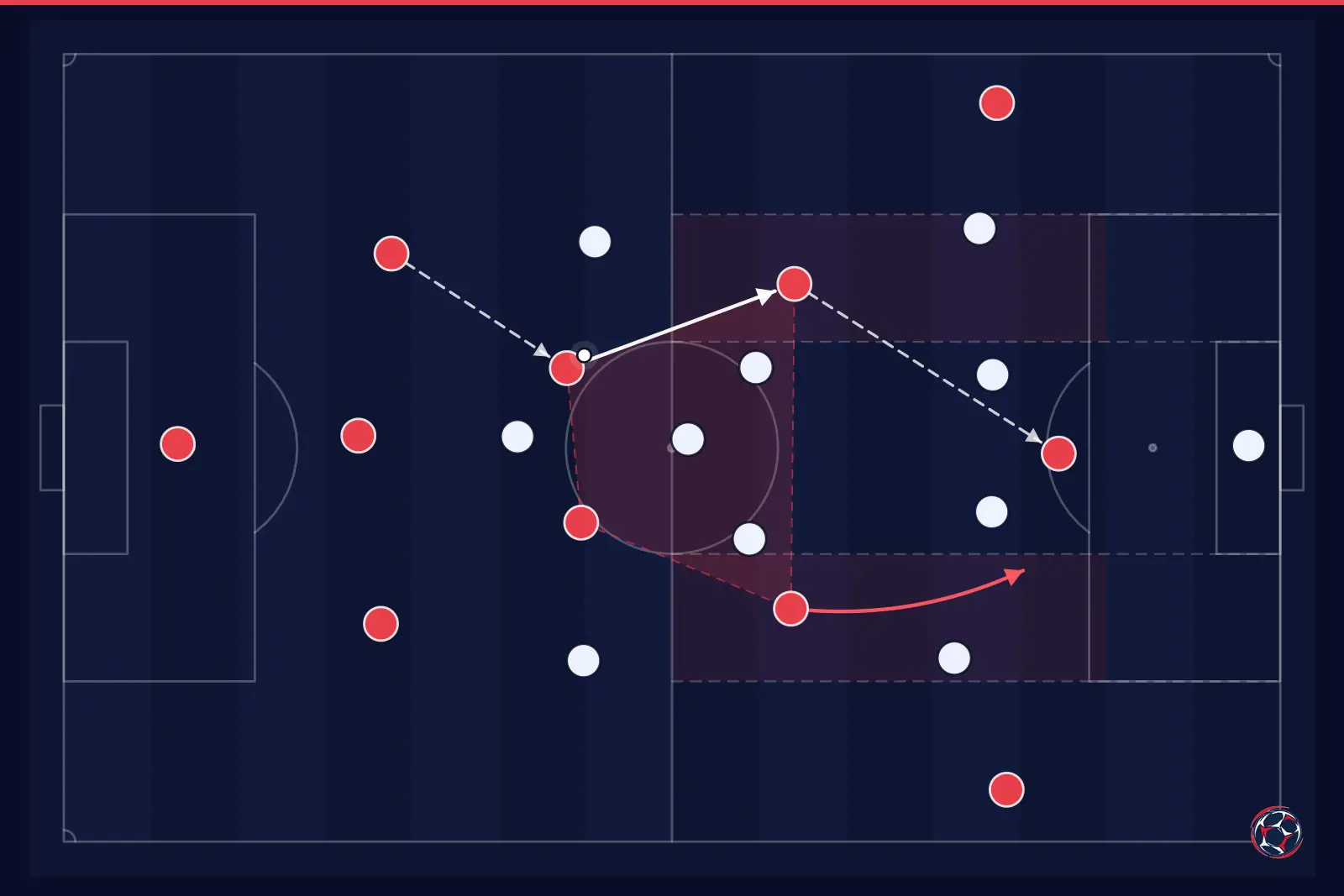
The 1-2 combination is a fundamental attacking maneuver that involves two players working together to navigate through defensive lines. Typically, the first player receives the ball and quickly plays it back to the second player, who has made a forward run. This rapid exchange not only confuses defenders but also creates space for the attacking midfielder to exploit.
In a standard setup, the attacking midfielder (AM) will position themselves just outside the opponent's penalty area. When receiving the ball, the AM should use their body to shield the ball while assessing the movement of their teammate. The key to a successful 1-2 is timing—both players must be aware of each other's movements. The AM should make a decisive first touch to push the ball into space before returning it to their partner, ideally in a way that allows them to continue their run into the box.
To maximize the effectiveness of 1-2 combinations, positioning and angles are crucial. The AM should exploit the half-spaces, which are the areas between the center and wide zones, allowing them to draw defenders out of position and create gaps. This tactic is often utilized by teams like Manchester City under Pep Guardiola, where players like Kevin De Bruyne and Phil Foden excel at quick exchanges to unlock defenses.
Real Match Examples
One of the most iconic examples of 1-2 combinations in action can be observed in Manchester City's approach to the game. During a Premier League clash against Liverpool, Kevin De Bruyne executed a seamless 1-2 with Gabriel Jesus just outside the 18-yard box. The quick interplay drew defenders towards Jesus, allowing De Bruyne to slip into the space created and finish with precision.
Another notable instance occurred in the Champions League, where Barcelona’s Lionel Messi and Andres Iniesta showcased exquisite 1-2 combinations. In a match against Bayern Munich, Messi received the ball on the edge of the box, performed a quick give-and-go with Iniesta, and found himself one-on-one with the goalkeeper, demonstrating how effective this tactic can be in high-pressure situations.
Key Principles
Key Principles for Coaches
- Timing is Everything: Ensure players understand the importance of timing their runs and passes accurately.
- Body Positioning: Players should maintain an open body position to facilitate quick decision-making and execution.
- Exploiting Space: Encourage players to identify and exploit half-spaces for maximum effectiveness.
- Communication: Foster verbal and non-verbal communication between players to enhance understanding during gameplay.
Training Implications
To train 1-2 combinations effectively, coaches should set up small-sided games that emphasize quick passing and movement. Create scenarios where attacking midfielders can practice receiving the ball in tight spaces and executing give-and-goes. Incorporate drills that focus on decision-making, such as varying the number of defenders and encouraging players to recognize when to perform a 1-2.
Additionally, integrating video analysis of elite players executing 1-2 combinations can help players visualize the tactical application. Encourage players to practice this skill in different game situations, ensuring they develop the confidence and competence necessary to implement it during competitive matches.
The Bench View app
Don’t just read football — train it
Everything you read here, turned into training you can follow step by step.
Physical training at home
AI daily sessions adapted to your level and position. No equipment needed.
Tactical training courses
Step-by-step courses on positioning, pressing, build-up and decision making.
- 7 days free
- No commitment
- Cancel anytime
Free account: 2 physical sessions + the first tactical course. PRO: 7-day free trial — cancel before day 8 and you pay nothing.